Posted on

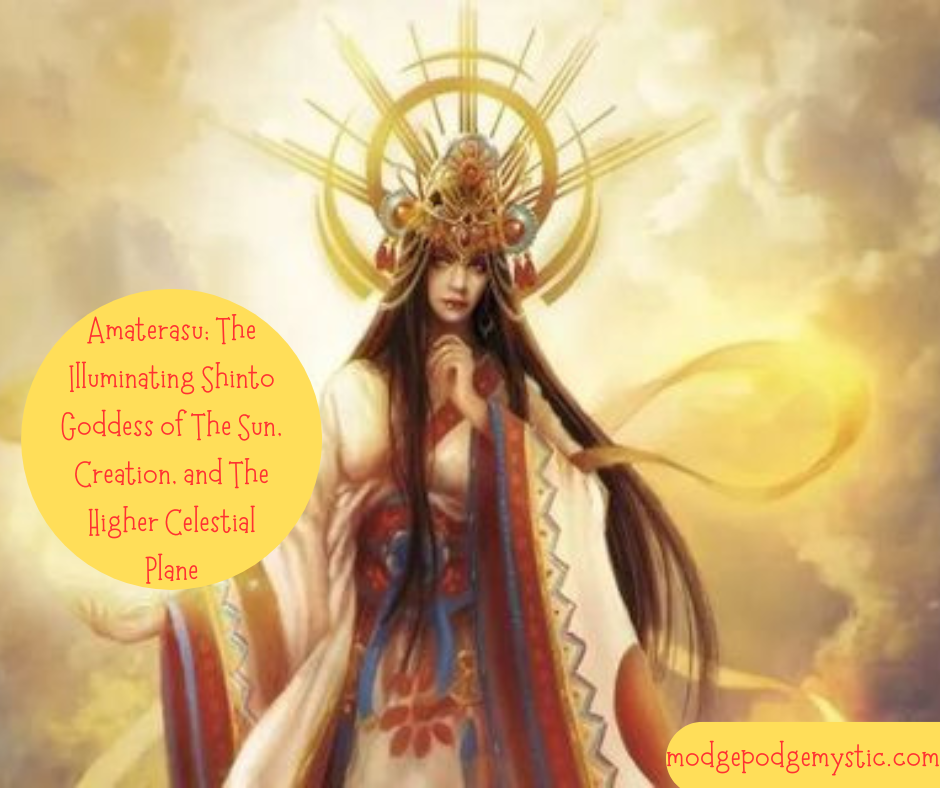
Amaterasu; The Illuminating Shinto Goddess of The Sun, Creation, and The Higher Celestial Plane

Amaterasu is the primary deity of the Shinto religion in Japanese mythology, revered as the goddess of the sun, universe, and creation itself, and considered the highest manifestation of the spirit of the universe. As the source of all light, life, and creation, the sun goddess sustains heaven and earth with a light so compelling that her father appointed her ruler of the universe when he first laid eyes on her. 

As the embodiment of the sun, she assimilates all of its qualities and provides comfort and assurance to all those who look to her for guidance and protection. Having served as the mother of the imperial family she is revered as the goddess of the state, and is both nurturing and maternal.

 Born from the drops of water that fell from his face, Amaterasu is deeply connected to mirrors, which are seen as sacred objects that contain a sliver of her spirit. Her blessings permeate many aspects of Japanese life, from protecting warriors in battle to ensuring bountiful harvests. Revered throughout history, even the imperial family claims descent from Amaterasu. Her benevolent light continues to guide the Japanese people through dark times. Let me shine her illuminating light for you to see and learn all that her rays touch and influence in your life!

Who is Amaterasu?

She has a shimmering aura that spreads across the skies and touches all corners of the world. Amaterasu signifies a new day with hope, energy, and growth. From the moment of her creation Amaterasu Omikami, the sun goddess of Japanese mythology, was said to be so radiant that she illuminated both heaven and earth. Goddess Amaterasu is the Goddess of the Sun worshiped in Japan. 

Possessing the rising sun as a symbol, every morning she is greeted by the people through prayers. Amaterasu is one of the main Goddesses of Shinto. In Shinto it is common for Goddesses and Gods to be called “Kami”, therefore it is common to see the name Amaterasu-ōmikami which means something close to “Great” Kami that illuminates the heavens.”

Goddess Amaterasu is described as a radiant and kind Goddess who brings light, joy, and prosperity to her people. Her femininity and nurturance blend with her forceful solar nature. Her influence extends beyond physical aspects; she is linked to enlightenment, wisdom, and artistic inspiration.  She is also credited with first using silkworms and looms for weaving.

She is the daughter of the divine creators of the world, Izanami and Izanagi, and she has two brothers: Tsukuyomi, the God of the Moon, and Susanoo, the God of Storms and seas. It was written that Amaterasu had painted the landscape with her siblings to create ancient Japan.

Amaterasu, Japan’s sun goddess of legend, is known for her powerful and benevolent ways. One story tells of her brother’s misdeeds causing her to retreat into a cave, and the other gods’ plan to coax her out again, resulting in the birth of dance and music which we will talk about later.

The radiant god is believed to be the ancestor of Japan’s imperial family, and her divine power is said to have been passed down through generations. She is associated with Shintoism, Japan’s native religion, with sunlight representing purity and enlightenment. 

A sacred mirror reflects her true form and is venerated in Shinto shrines throughout Japan. It symbolizes truth and self-reflection, encouraging us to embrace our own radiance and divinity. Amaterasu has played a fundamental role in Japan’s culture, from ancient times to today. Her influence runs deep, becoming part of the country’s collective identity.

What does she look like?

Amaterasu is a revered deity known for her ethereal beauty and enchanting presence. Often depicted as graceful, the sun goddess has long, lustrous black hair, radiant skin, and bright eyes. Her attire consists of flowing kimonos crafted from the finest silks and satins. Such richly detailed depictions of the goddess have helped to cement her place as one of the most beloved and celebrated figures in Japanese folklore and culture.

Ruler of the higher celestial plane

Amaterasu is also known for her role as the ruler of the Higher Celestial Plane. In this realm, she was responsible for bringing light to the world through the sun that she embodied. Amaterasu is the rising and setting sun: without her, all forms of life would cease to exist. As ruler of the heavens, she governs over all spirits (kami), and her divine powers brought about the cultivation of rice and wheat: she is also credited with first using silkworms and looms for weaving. Amaterasu’s role as the ruler of heaven is to ensure the continuity of life by maintaining order.

Her tie to the imperial state

The Japanese monarchy is regarded as the oldest continuous hereditary monarchy in the world, with its roots extending all the way back to the 7th century BC. Like many other ancient monarchies, the Emperors of Japan trace their ancestry to a divine source, though it may be said that there are certain differences between the divinity of the Japanese Emperor and those of other rulers who claimed divinity.

It is said that the first emperors of Japan were direct descendants of Amaterasu. It is believed that Amaterasu sent her grandson Jimmu to Earth 3,000 years ago to be the first ruler of Japan, beginning the divine family of Japanese emperors. Even her sacred sword (Kusanagi-no-Tsurugi), her jewel (Yasakani in the Magatama) and her mirror (Yata no Kagami), the goddess’s main symbol, are still guarded to this day as Imperial Treasures.

Goddess of creation

Amaterasu is believed to be one of the oldest gods. She played an important role in creating Japan and its people. Her divine light illuminated the world and caused many phenomena. Amaterasu is the rising and setting sun: without her, all forms of life would cease to exist. As ruler of the heavens, she governs over all spirits (kami), and her divine powers brought about the cultivation of rice and wheat.

Amaterasu The spiritual guide

Amaterasu is the spiritual guide and protector of the Japanese people. Many festivals are held in her honor. She symbolizes hope, prosperity, and purity. She gets this role because of her incredibly high status as the kami of the higher celestial plane. Since this is said to be a realm she has domain over it would of course make her the spiritual guide to the people.

Amaterasu and duality

Since I am a grey witch and live in the liminal spaces every single deity I work with I look for how they can connect to duality. How do they represent the universal concept of duality that every being is meant to achieve in the universe. I feel with light deities this gets overlooked often and is much more focused on with dark deities. Amaterasu does this very well, in the fact that she is the sun that can both bring and sustain all life and it can smother it and snuff it out. If you think about it we as humans love the sun and NEED it to survive but, our bodies aren’t really made for it either. Our skin burns, we sweat, and we can only tolerate low heats of it. 

The same thing with her being a deity of  light. Light can illuminate and shine brightly to allow us to see. It can also shine so brightly It can blind us and send us off in the direction. She also does this by being the kami to embody all of the universe. How can she encompass all of the universe and she not be steeped in duality?

Amaterasu and the Divine feminine 

The myth of the Goddess Amaterasu emphasizes female power. The absence of the Goddess and the resulting aridity and darkness of the world demonstrate the importance of the woman, who must be respected, recognized and honored as a source of life and energy. You also see her importance with the divine feminine in being a solar deity and her simply being a goddess. It is common across cultures especially in the west and after christianity that the sun is represented as a masculine energy with a god.

Her Association with Other Elements of Nature

Amaterasu is not only the goddess of the sun, but also holds significance in the association with other elements of nature. In Japanese mythology, she is responsible for sending forth the four winds and for creating the typhoons that are prevalent in Japan.

She is also associated with the regulation of the tides, agriculture, and rainfall. These associations with natural elements have given Amaterasu significant power in shaping the lives and culture of the Japanese people.

Mythology and stories

The birth of Amaterasu

According to the beliefs of the Shinto religion, Amaterasu is the child of Izanami and Izanagi, the two primordial gods responsible for the creation of the Japanese islands. Izanami is recognized as ‘she who invites,’ while Izanagi is known as ‘he who invites.’ Amaterasu’s birth is shrouded in myth, with multiple versions of the story found in Japanese sacred texts. The Nihon Shoki includes two versions of the tale, while the Kojiki or Furukotofum contains the most widely accepted account of her conception

The Nihon Shoki

The Nihon Shoki, or Chronicles of Japan, is a highly esteemed history book that dates back to classical Japan. As the second-oldest text in Japanese history, it is more detailed and comprehensive than its predecessor, the Kojiki. Its value to historians stems from the fact that it contains the most extensive historical records of ancient Japanese history. Along with this, it also includes a collection of myths about the origins of Japan and a genealogy of the Imperial family. 

In the Nihongi, there are two versions of the origins of Amaterasu. In the first version, the divine beings Izanagi and Izanami no Mikoto are said to have descended from heaven and created Japan’s islands, mountains, rivers, and seas. They were, however, most concerned with bringing forth the high Kami who would rule over all these lands. First, they brought forth Amaterasu Omikami, who emanated light from every horizon. In their joy, the divine parents sent the child to heaven to reign over the highest celestial plain (Takama No Hara). Following Amaterasu’s ascent to heaven, Tsukiyomi no Mikoto, the Moon Kami, came into existence and was sent to join Amaterasu as her brother and husband, Soon after, her brother Susano-O no Mikoto, the Storm Kami, was created and sent to control the seas.

In the second version of the myth found in the Nihongi, the divine progenitor is solely named Izanagi (“Amaterasu – New World Encyclopedia” 2019). In this particular narrative, Izanagi desired to create a deity worthy of governing the universe. After careful consideration, he took hold of a white-copper mirror in his left hand and created Amaterasu Omikami. Then he took another mirror of the same material in his right hand and used it to produce Tsukiyomi no Mikoto. Lastly, Izanagi turned his head and looked askance, leading to the emergence of Susano-O.

The Kojiki

The Kojiki, also known as the Furukotofumi or “Records of Ancient Matters,” is a priceless artifact that provides valuable insights into the ancient history of Japan. It was compiled during the first half of 680 C.E. at the command of Emperor Temmu and remains the oldest surviving book of its kind. 

According to the Kojiki, the final and most widely accepted version of Amaterasu’s birth involves Izanagi and Izanami creating the islands of Japan and the entire natural universe. That is until Kagu-Tsuchi’s birth. Unfortunately, upon emerging from his mother’s womb, Kagu-Tsuchi singed his mother, causing Izanami to become gravely wounded. Despite attempts to save her, Izanami ultimately succumbed to her injuries and passed away. Amid his grief, Izanagi sought to retrieve his beloved Izanami from Yomi, the underworld. With a heavy heart, he journeyed to the land of the dead and searched for her. However, upon finding her, he was devastated to discover that her flesh was decaying and covered in maggots. Despite his desperate pleas, Izanami could not leave the realm of the dead and return with him to the world above. 

Barely escaping Yomi, Izanagi went to purify himself and bathed in a nearby river, cleansing himself of any remnants of the underworld that may have clung to him. As he washed his face, something miraculous occurred. When he rinsed his left eye, a radiant figure emerged – Amaterasu, the goddess of the sun. Overcome with wonder and amazement, Izanagi continued to wash his face. Soon after, he rinsed his right eye, and then Tsukiyomi no Mikoto, the god of the moon, emerged. Finally, as he rinsed his nose, Susano-O no Mikoto, the god of storms, appeared before him. As a result of great sorrow and loss, three mighty deities emerged, each representing a distinct aspect of the natural world.
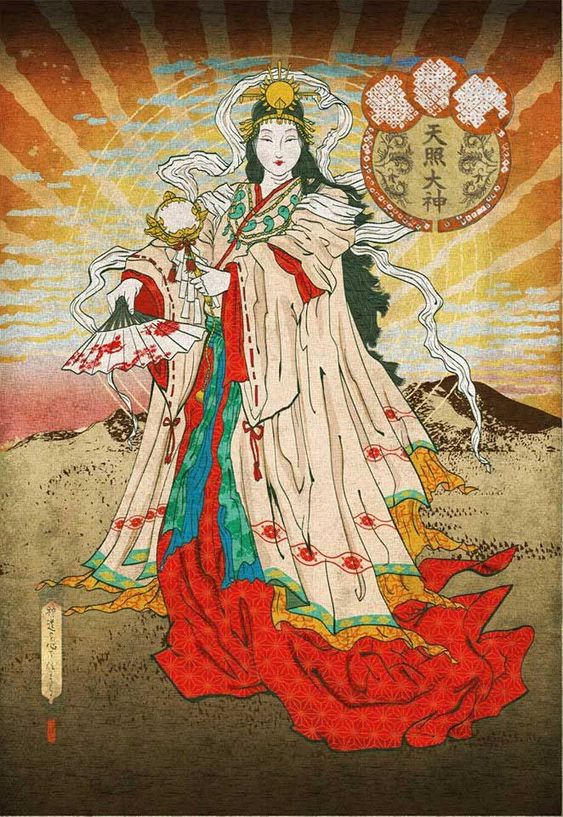
Amaterasu hides inside the Ama-no-Iwato

The main story involving Goddess Amaterasu Goddess tells when she hid in a cave due to sadness. According to Kojiki, the main book that tells the Shinto myth of creation, Susanoo caused many problems and, for that reason, he was expelled from the skies. The main problem he caused greatly upset Amaterasu, let me tell it below.

There was a long-standing rivalry between Amaterasu and her other brother, Susanoo. When he was to leave Heaven by order of Izanagi, he went to bid his sister goodbye. Amaterasu was suspicious, but when Susanoo proposed a challenge to prove his sincerity, she accepted. Each of them took an object of the other’s and from it birthed gods and goddesses. Amaterasu birthed three women from Susanoo’s sword while he birthed five men from her necklace. Claiming the gods were hers because they were born of her necklace, she decided that she had won the challenge. 

The two were content for a time, but her brother became restless and went on a rampage, destroying Amaterasu’s rice fields, hurling a flayed pony at her loom, and killing one of her attendants in a fit of rage. Amaterasu, who was in fury and grief, hid inside the Ama-no-Iwato (“heavenly rock cave”), thus effectively hiding the sun for a long period of time. The world, without the illumination of the sun, became dark.

The fields begin to die, the vegetation does not grow anymore, the cold takes over everything. Not even the Gods can reverse the situation. No one can persuade Amaterasu to leave the cave. Fearing eternal darkness, the God of Wisdom Omoikane has a great idea. The Gods organized a party at the entrance of the cave. A mirror was raised so Amaterasu could see her own reflection. 

Goddess Uzume began to dance. She was so happy dancing that she ended up losing her clothes, exposing her breasts. She then says that the Gods have found another Goddess as beautiful and radiant as Amaterasu. Then she recites the verses: 

Hito futa miyo. Itsu muyu nana. Ya koko no tari. Momo chi yorodzu. Which means: Gods, look at the entrance to the cave. The Majesty appears! Rejoice! Our hearts are happy. Look at my breasts and my limbs.

Listening to the noise and laughter of the other gods, Amaterasu decides to spy out of the cave. Seeing her image reflected in the mirror, and dazzled by her own beauty, Amaterasu emerges from the cave. She was received with songs of praise and let herself be carried back to her golden palace, illuminating the world again. This story is also thought to be the birth of dance and music.

Amaterasu and Tsukuyomi: The legend of night and day

Another important story involving the Goddess Amaterasu is found in the Nihon Shoki (Chronicles of Japan). Tlegend begins with Tsukuyomi and Amaterasu serving as the deities of heaven as husband and wife. One day, Uke Mochi, the goddess of food, invited Amaterasu over for a feast: not being able to go, Amaterasu sent Tsukuyomi instead.

Tsukuyomi meets Ukemochi and she prepares a banquet for him, creating all her food through her mouth. Tsukuyomi finds everything very disgusting and kills Ukemochi, leaving Amaterasu deeply saddened. Since then, Amaterasu and Tsukuyomi are no longer together.After their separation, the sun goddess Amaterasu and the moon god Tsukuyomi took control of the sky separately, one illuminating the day while the other cast a soft glow over the night.

Festivals And Rituals

A leading figure in Japanese spiritual and cultural traditions, Amaterasu’s legacy endures to this day. Many devotees seek blessings and guidance from the Goddess through many shrines and temples across Japan. 

The Grand Shrine of Ise is the most prominent shrine dedicated to Amaterasu in Ise, Mie, in western Honshū. The shrine is believed to enshrine the body of Amaterasu, and it is considered the holiest site for Shintoists. It is customary to rebuild the Inner Shrine at Isé every twenty years as per Shinto tradition, ensuring that it remains pure and new. Visitors worship outside the southern gate, while only priests and members of the imperial family can enter the innermost sanctum. It is customary for Shinto believers to make a pilgrimage to the shrine at least once in their lifetime.

There are also other significant shrines that worship Amaterasu, such as the Amanoiwato Shrine and the Atsuta Shrine.The Amanoiwato Shrine is located in the cave where Amaterasu famously hid during the story of her retreat, while the Atsuta Shrine is believed to house the sword that was passed down from Amaterasu’s grandson, Ninigi.

Amaterasu’s importance to Japanese history is evident in the imperial regalia of Japan, which have been passed down from her grandson Ninigi. These three artifacts – a mirror, a sword, and a jewel – are believed to be the symbols of the Japanese imperial family and their rule.

The mirror is said to represent wisdom, the sword bravery, and the jewel benevolence. The regalia are kept in the Tokyo Imperial Palace and only brought out for coronations and other important rituals.

In Japan, there are annual street processions to honor Amaterasu on July 17th and a winter solstice celebration on December 21st: commemorating Amaterasu’s emerging from the cave, bringing light and warmth back into the world.

Correspondences

First, what is a correspondence? A correspondence is an item or symbol that is meant to connect you to a specific energy thru it’s representation. It is seen also as an item to respect, honor, and venerate that energy as well whether it be a deity, an archetype energy , or the zodiac energy the moon is currently in like I will list below for you to use.

  • Planet- The sun, Higher celestial plane, the universe
  • Animal-The raven and white wolf, horses, snakes, sometimes kitsunes but most often they are connected to Inari okami
  • Element- Fire, but she is uniquely connected to all elements
  • Sex- Feminine
  • Symbol- Sun, Rooster, Crow, Pheasant, Raven, Mirror, Sword, infinity symbol
  • colors- Yellow, Gold, Orange, Red
  • Themes- sun, higher celestial plane, the universe, queen of the kami, light, the imperial family, The nation of japan, joy, happiness, laughter, dance, vitality, energy, protection, wisdom, strength, nourishment, purity, health, abundance, radiation, unity, blessings, community, and kinship.
  • Chakra-Solar plexus, Crown chakra, root chakra
  • Herbs-Heliotrope, Sandalwood, Rose, Grapefruit, Lemon, Bergamot, rice, chamomile, marigold, carnation, sunflower, juniper, chrysanthemum, Sakura cherry tree
  • Stones/ crystals- Sunstone, Gold, Danburite, Citrine, Tigers Eye, Yellow Jasper, amber, carnelian, Rose Quartz
  • Metal- gold

Why work with Amaterasu?

This beautiful Goddess will bring the joy back to your life. Helping you find joy in all aspects of your life, helping you to laugh and have fun. She will help you relax and enjoy the little things in life and just be in the moment. Call on her when you are feeling overwhelmed and worried or feeling down and she will bring some spark back into you. Helping you see the bright side of things and to give you a powerful boost of shining light, shining joy and lots of laughter!

Ways to work with Amaterasu

Everyone’s relationship with deities is different and we all work with and believe in them differently. You might believe in multiple gods and goddesses and work with them each as though they are close, personal friends. Or maybe you believe the old gods are reflections of Universal energy and simply archetype energies that you can learn a lesson from. However you incorporate deities in your practice is up to you. But here are our ideas to get you started. To work with Amaterasu, it’s important to approach her with respect, reverence, gratitude and by building a relationship with her.

Study, get to know her

As with every deity I have ever written about or taught about, The first way to get to know a deity, specifically a goddess like Amaterasu is to study all you can about her. Read more about the myths we went over above, learn about the other kami connected to her, look at the brilliant art she is the centerpiece of throughout centuries, study the culture and religion she is central to;Japan and shintoism. When working with a deity it is all about building a true relationship with them and you do this first by getting to know who they are.

Create a Kamindana in your home to connect to and honor her

To add her to your home and to create a sacred space to go and meet with her you can create a kamidana dedicated to her. A kamidana is a miniature Shinto shrine designed for home worship. It is very similar to having an altar dedicated to any of the deities I have talked about before. You can learn how to create a kamidana to add to your home for her in my previous blog post here; https://modgepodgemystic.com/shintoism-the-way-of-the-kami/

Offerings

Everyone likes receiving presents. Amaterasu is no different, especially since she is such a revered deity and so central to every part of Japanese life and culture.  You don’t have to give her offerings every day, but when you feel it is appropriate. You can place these offerings at your kamidana or when performing any work to connect to her like meditation, prayer, and visualization.

The best offerings for Amaterasu include:

  • Rice crackers
  •  cooked rice dyed with saffron
  •  paper origami figures
  • Grain or rice as an offering, inside a brass or gold offering dish/bowl 
  • A magick mirror dedicated to Amaterasu
  • Sandalwood oil
  • A special cloth, like silk

Greet her at sunrise

Amaterasu is everywhere through the sunlight. Even on cloudy days, she graced the earth with her warmth and kindness. There is no need to summon a Goddess who is already so present among us, but it is common to greet her at sunrise and reflect her light with a mirror through the rooms of the house letting her enter the rooms to bring peace, energy and life. Otherwise your greeting can be as simple as giving a respectful bow and clapping. How to do this; at first, bow twice to greet the kami. Then clap twice, and make a pray with your both hands together. At last, bow again to show gratitude towards the deity.

Mirror Guidance 

Another way of summoning the Goddess can be done at times when you wish advice from the Goddess. For being the Goddess of the Sun, Amaterasu can light up your mind and overshadow illusions that may be blocking your path. To do this ritual, first, take a mirror. It can be any mirror you have in your home or a mirror that you want to use especially for these occasions. Bow before the mirror, greeting the Goddess as the Japanese do. Then look into your own eyes and call Amaterasu eight times, the number of infinity. Concentrate and listen to the words of the Goddess.

To learn how to work with mirrors more in your life to connect to here you can watch my previous class all about mirror magic below!

Sunbathing

Obviously Amaterasu is a solar goddess and therefore she enjoys warmth, sunlight, and hot climates. So why not get out in the sun and do a little sunbathing? It feels great, gives you energy, and allows you to soak up the magical energy the sun has to offer us humans as the vital energy of our existence.

Perform solar magic

Like we just talked about, Amaterasu  is a solar goddess so a very obvious way to connect to and work with her would be performing and working with any kind of solar magic. There are so many different ways to work with solar magic and the sun from meditating under its bright rays, making sun water, drawing down the sun and more. To learn all about solar magic and connecting to the sun and how to do so you can read about it here in my previous blog post; https://modgepodgemystic.com/solar-magic-a-guide-to-harness-the-bright-vibrant-and-confident-magical-energy-of-the-sun/

Call on her for abundance

Since, Amaterasu is the deity of the sun, and the reason we have all sustenance to survive and thrive as humans she is amazing to work with for abundance! Call on her when doing any abundance spells, working or rituals for a more boosted and amplified affect. To learn how to work with the energy of abundance you can read all about it in my guide here; https://modgepodgemystic.com/all-about-the-magic-of-abundance-prosperity-and-good-fortune/

Meditation, visualization and Dream work

One of the best ways to channel divine energy and tap into goddesses like Amaterasu  is through meditation, visualization and dreaming.  These practices allow you to open up and receive/ connect to divine energy in a very intuitive, clear, and transformative way.  You will find a plethora of guided meditations on YouTube that will lead you to your spirit guide or god/goddess.. Try those if you have a hard time meditating on your own. I have many classes on youtube as well on previous deities you can watch where I even summon and guide you to them in sacred space. In addition, ask Amaterasu to visit you in your dreams and teach you lessons that you currently need to learn. Then record every encounter with her in your journal, book of shadows, or grimoire.

Meditation to connect with Amaterasu Omikami

Light some incense, maybe a candle and close your eyes.  Take three deep breaths, relaxing your whole body. Hold your intention in connecting to Amaterasu Omikami. You could say this in your head three times, ‘My intention is to connect with Amaterasu Omikami.’

Imagine you are in the middle of a field and its just before dawn. There is high grass around you with meadow flowers. Light is starting to show on the horizon and you can see that far off in the distance there are trees. You sit down and watch the light get stronger and then the sun starts to rise. You say Amaterasu Omikami I wish to connect with you, please connect. The sun then rises high in the sky and shines down on you with so much light and warmth. You hear a voice ‘I am Amaterasu Omikami. You are my shining light just as I am yours. I will help you to balance your energies and bring you joy. You can call on me when ever you need, for I am a Mother to you and I will help you and comfort you.’ You then talk to Amaterasu Omikami.

When you have finished your conversation with Amaterasu Omikami, you thank her and know you can contact her any time. The sun sets and the day turns to night. When you are ready, take three deep breaths and come back to the room.

Write down your experience. What was Amaterasu Omikami like? What message did she have for you? Did she answer your questions? What did she look like? What was the gift she gave you?

Prayers

One very powerful way to connect to a deity is through prayer. It is common in Japan for Devotees to utter heartfelt prayers to Amaterasu to receive her bountiful blessings of prosperity, health, and guidance.

“I honor you, Amaterasu. I ask you to turn your light upon me. I honor you with this piece of silk (or jewelry) and ask that it become a talisman of power. Goddess of the sun, bless me.”

The most well known prayer to Amaterasu no Omikoto. It goes like this:

Lovely Lady of the Heaven’s
Goddess and Guardian of the Japan People.
Amaterasu, with Awe we see your beauty Rise.Tranquil Queen of Heaven
When I look up to the Royal Sky
I see thee Shining in Great Glory. behind a screen of Clouds, The Sun
Amaterasu, For Thousands of ages Your Children have served you.
As your Brillant light did shine,
Now in their Hour of Greatest Need,
We ask you to shine the full measure of your blessing on your children,
May it shine from each Bosom, and Shrine. May it shine from each home, and each field. May it shine forth from each child you touch. Amaterasu, may the children of your children remember this moment with Awe, and sing your name with great Praise. Let them look heavenward and sing For Thousands of ages may she shine.
For Thousands of ages may we serve her. May we serve her with reverence.May we serve her with Love

Move your body through Dance

Amaterasu is a solar deity, and the kami of the entire universe which makes her a very vital goddess. What better way to connect to vitality than by getting up and moving our bodies? To connect to her more directly, do this through dancing to honor one of the popular myths which credit the birth of dance and music in Japan to her. 

Light work and Energy work

Since Amaterasu is a solar deity, a light deity, and the kami of the universe and higher celestial plane she is one of the best goddesses to call on when working with your own energy, the energy of the environment around you, and the universe as whole. She has the ability to guide you to your higher self, your sacred contracts and the divine in a very intense and illuminating way. Unlike when working with a dark goddess and being shown your shadows she illuminates the brightest and best part of yourselves that may shine too brightly for you to always see. To learn more about how to do energy work you can learn about in my previous blogpost here; https://modgepodgemystic.com/working-with-the-basics-of-life-and-magic-energy/

Pilgrimages

Followers embark on pilgrimages to sacred sites associated with the goddess, such as Ise Grand Shrine. These journeys symbolize strong devotion and spiritual unity with Amaterasu. So, if at all realistically possible try and do this at some point in your life to connect to her in a deep way.I have yet to experience this one but, it is a goal of mine to one day do!

Sacred Objects

 Worshippers create ornate talismans, known as omamori, that are said to possess Amaterasu’s divine presence. These talismans bring protection and good luck to their owners.

Live in accordance to the practices of shintoism

Amaterasu is the central figure to shintoism, and Japanese culture. So, one of the best ways to connect to her and honor her would be by encompassing the principles and affirmations of that belief system. To learn more about how to do that you can read my previous blog post on it here; https://modgepodgemystic.com/shintoism-the-way-of-the-kami/

Conclusion

Amaterasu has been a revered guiding force since her arrival into this world. Even after thousands of years, she continues to shine as a symbol of hope and inspiration for those who believe in her divine presence. Call on her when you are feeling overwhelmed and worried or feeling down and she will bring some spark back into you. Helping you see the bright side of things and to give you a powerful boost of shining light, shining joy and lots of laughter! Allow her to guide you to higher celestial plane and shine her illuminating rays on all that you are and provide you with all that you need! 

To expand your knowledge about her and meet her in a guided session or if you learn better through listening instead of reading. You can watch my free class with Divination Academy on youtube below!

About Me : I have been a solitary grey magic practitioner for 15 + years. First and foremost, I consider myself a mystic and seeker of all knowledge. I am dedicated to the restoration, and re-enchantment of Magic in society, across this realm, and in each and every soul I come across in life! I am here to create a container that promotes healing, duality, and raw authenticity. I do this by guiding you on your personal journey to understanding your unique magic and sacred contracts. I facilitate this for you through embracing your shadow, duality and learning to live in energetic balance while not wearing a mask. When you work and learn from me you do so from your “darkness” as much as your “light” and in a way to truly harness and accept it not to just go thru it on the way to your light. But, I teach you how to truly embrace it, work with it, and use it alongside your light as a partner. I hold up a mirror for you to be able to see your authentic reflection looking back. Then have the courage to take the next step and do the uncomfortable but vital inner work to completely remove your mask. By facing all of your past wounds, traumas, and hurts. Allowing you to see both the dark and light within your story and take each chapter and alchemize it into something that is so powerful. your unique internal flame will shine so bright you will always be able to go within and find it on a dark cold night. You will learn how to truly live in duality and energetic balance to allow growth, and alignment with your sacred contracts and purposes. to finally move on and truly let the things that hold you back in this life from healing and manifesting go. To see everything I offer; like personalized shadow work sessions, womb healing, eBooks for you to work through on your own, Tarot sessions for guidance and more! Go to my shop!

Posted on 4 Comments

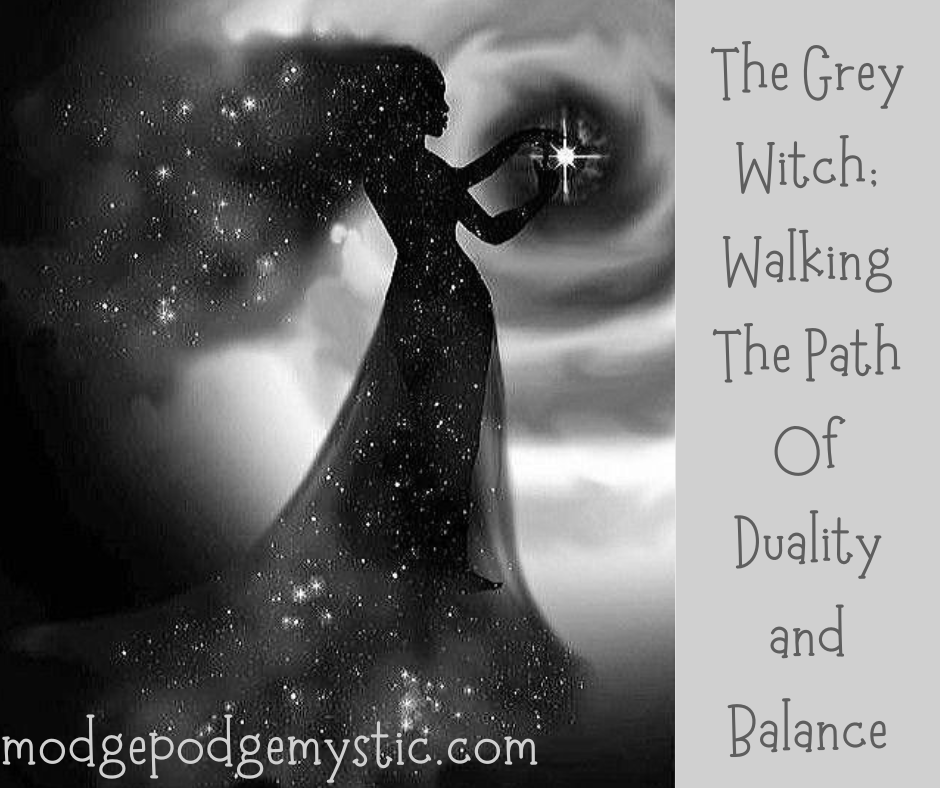
The Grey Witch; Walking The Path Of Duality and Balance

Every thing in nature is usually seen in the eyes of most pagans as being dualistic. Many paths consistently teach of how one must be able to understand and work with these seemingly opposing forces. These are the two forces and divisions of male and female, physical and spiritual, etc. It’s often commonly thought throughout practices that, these two forces only exist in division now but, were once of a previous unified force, or the divine. These two generally represent any of the dualistic polarities, this includes the polarities of positive and negative aka dark and light; or how I choose to view them as wanted and unwanted. To put it simply; the divine is neutral, grey. It is both positive AND negative, light AND dark, unwanted AND wanted. The divine, nature, and magic are all neutral and the grey witch encompasses this truth in all that they do and they are. They take this truth and use it to intimately work with all of the energies around them in a balanced way. I know this because, I myself am one of those witches! Let’s journey into grey Magic, walking the balanced path of Witchcraft together.

Magic itself is a neutral energy or force

Since the divine, the source, the multiverse, is neutral and grey and magic comes from the divine and source magic itself has to be a neutral energy and force as well. Magic itself is neither “dark nor light”, but it’s the way the magic and energy is sent out into the world. It is all about our intention, the energies we connect to when using it and where we choose to direct it.

White, Black, And Grey Magic

Generally speaking, white magic is magic done for the benefit of ourselves or others by raising positive energy for a particular outcome. It helps us connect with spiritual forces, gain wisdom, and more enlightenment. Black magic is done to bring harm to others, and grey magic is exactly what it sounds like: the grey area in between the two.

(Note: I don’t use the terms “white” and “black” in my practices for many reasons but, mainly because they have clearly negative racial connotations. However, I’m including them here because this is typically how grey magic is described by others.)

The Grey Witch

What does it mean to be a grey witch? A grey witch embodies a unique approach to witchcraft, incorporating elements of both left-hand (dark magic) and right-hand (light magic) paths into their practices without showing a preference for either. These types of magics may also sometimes be referred to as destructive and constructive magic, respectively. You may also see it referred to as positive “light and love” vs negative “baneful and evil” magic as well. Like I talked about above; I use the terms and view of wanted vs unwanted. The term “grey” derives from the mixture and balance of black and white magic. Grey witches greatly value magical and spiritual balance not only in their craft but also in their lives. They are neutral. This neutrality characterizes the grey witch as a force that exists between the extremes in the world of witchcraft.

It is not just the forces of “good” and “evil” that the grey witch toggles between. A grey witch also sees the polarity of femininity and masculinity, day and night, life and death. The secret to becoming a grey witch is keeping your power balanced. Grey witches recognize that to be whole, they must embrace both “positive” and “negative” energy.

Let Go of “Do No Harm”

Over and over and over again the Wiccan Rede is touted as some universal law that all witches must obey or face some kind of horrific consequence. Many witches particularly those who follow the religion wicca preach endlessly that witches must follow this rule. While on the surface this might seem like a well meaning rule with good intentions, but the ramifications of this rule are actually quite problematic. This rule creates a massive energetic imbalance in themselves, the collective, and the multiverse.

The biggest flaw in the push for the rede to be accepted by all witches is that it’s specific to one religion! It is called the Wiccan Rede for a reason, it’s a rule for Wiccans! If you’re not Wiccan, why would you follow their tenants? There are tons of other religions that get combined with the practice of witchcraft. These beliefs all tend to have their own moral view of the world and those moral views may or may not mesh with the rede. If you’re Wiccan, obviously the rede is meant for you and you can ignore this point.

If you’re still not convinced that “harm none” is a ridiculous rule then let me point out just how completely impossible it is to actually uphold. If you think about it, you can never be perfectly certain that the consequences of your actions aren’t harming someone. You could cast a successful job spell and while that spell might seem very positive for you, it inevitably will cause another candidate to be passed over for that job. Being passed over that job could be the catalyst for all kinds of unwanted things to follow.

Every single action you take has ramifications that could negatively impact other people without your knowledge. And I mean every single action! If you were to try and never harm anything ever again you would have to stop participating in life in any way. All actions in the world have both wanted and unwanted results and how you perceive these results is entirely based on perspective. Perspective changes everything, nothing is black and white and what is wanted in one persons eyes will undoubtedly be unwanted in someone else’s.

And what about morally grey spaces? Say somebody tries to break into your home and harm your family and the encounter become violent. Is it morally reprehensible for you to hurt this person in self-defense? I mean, you are still harming them so under “harm none” this is not ok. I think most people would agree that defending your life, your home, and your family from an attacker is not a “bad” thing though. And if you wouldn’t defend yourself, what if it was someone else being hurt? If you saw someone being attacked, dragged into an alley towards a vehicle to be kidnaped and did nothing, your inaction would be contributing to the harm they’re experiencing now and after. If you intervene and harm the attacker, however, your action is causing harm. In situations such as these “harm none” falls apart entirely because no matter what you do it’s completely impossible to abide by the rule.

Instead of trying to maintain some totally unreachable standard of moral purity, delve into the complexity of human life. Stop looking for dictated moral solutions and actually take charge of your own actions, beliefs, and consequences. Think about yourself in relation to the world around you, reflect! Find purpose in your actions, decide what matters to you most and make it a center point, do the work to go within yourself and find that guiding inner voice that can help you navigate the trickier moral challenges that you encounter. THIS is real power and true control over your own circumstances. That is how you create a life that is truly in alignment with your joy, your will, and your purpose. This is a key step to walking the path of the grey witch.

A Grey Witch Lives In Duality

Being a grey witch is a person who practices witchcraft and is comfortable with the idea of duality. Duality has been pinned against each other since the dawning of time, a struggle of “good versus evil” a grey witch understands this. Central to the philosophy of a grey witch is the belief that the world operates in shades of grey rather than in simplistic black and white, and this perspective influences their practice of the craft. Grey witches must incorporate duality and balance into their mentality and into their everyday lives.

A Grey Witch Understand Human Nature

A grey witch is a person who has made a decision that humans are both “good and evil”. Philosophy has questioned whether humans are inherently born “good or evil” and if our actions become the true definition of our nature. A grey witch has decided that they don’t have to choose either side. Is it possible to accept that we are only human, which means depending on the moment we can be either wondrous or terrible? Absolutely, and a grey witch has wrestled with this question coming to peace within themselves when choosing this path. This is the path that the grey witch has taken upon their path, recognizing in all things created by nature there is a balance between greatness and evil.

(Note: I don’t use the terms good or evil in my practices or beliefs. These are not terms I agree with nor how I view the world. I don’t believe anything, anyone, or event its wholeheartedly “evil” or “good”. I View the multiverse, it’s energies, and the results of entities actions as wanted or unwanted and that will depend on the entities involved.)

The Grey Witch and Emotions

Grey witches must incorporate duality and balance into their mentality; often these witches have powerful mental power once mastering this. The hermetic law “As within, so without, as above, so below, as the universe, so the soul.” Teaches us this. This philosophical perspective outlines the idea that who we are on the inside will be created in the world around us. The grey witch understands this law and incorporates this into their life and how they handle their emotions.

They allow themselves to be happy but, leave enough room for bad feelings to run their courses, such as jealousy, anger, and sadness. They do not suppress themselves when dark clouds are around them; they harness the energy of the storm to heal without masking. They understand that every emotion serves a function, is meant to be felt, and is there to communicate something to us.

The Liminal Space

Similar to the hedge witch, the grey witch lives and thrives in the liminal spaces; since they are dripping in grey energy and magic. What is a liminal space? Liminal comes from the Latin root word Limen, meaning threshold. Therefore, liminal spaces are places where a threshold is crossed. Spaces of transition or between spaces if you want to call them. It’s a space where you leave where you are but you aren’t fully in another space yet. In general a liminal space; is in the between where we can commune with spirit and otherworldly beings, preform energy work such as reiki and other healing methods, revisit past lives to heal personal trauma, and the list goes on. There are physical, spiritual, and magical liminal spaces.

  • Magical liminal spaces are a type of spiritual liminal space that is unique to each practitioner. These magical liminal spaces are personal times of power when the veil between worlds is thinnest for the practitioner
  • Personal liminal spaces are personal characteristics which we embody that are in-between.
  • Spiritual liminal spaces, which can also be identified as experiential liminal spaces, are events or states of being in which we leave something behind but haven’t arrived at our destination when we part with them

Some examples of liminal practices include things like:

  • spirit work – mediumship, possession
  • divination – pendulum, cards, tea leaf reading, palmistry, etc.
  • casting spells – anything requiring manifestation and intention
  • invocation of deity – asking a deity to fill your space with their presence
  • ancestor work – asking for help from your ancestors
  • energy healing – reiki, meditation, trancework, shamanic journeying

Views Grey Witches Often Have

  • They think it is critical to incorporate the paths of light-work and shadow-work into your practice
  • They do not believe in Karma, the threefold law, or the Rede of “harm none”
  • The phrase “a witch who cannot harm, cannot heal” resonates with them
  • They believe that people are both good and evil
  • They often feel they are forcing positivity or numbing pain
  • They believe there is not only one path but two. To protect themselves and their loved ones, they will weave through light or darkness
  • They may not even believe in the terms “good” and “evil”
  • They might find that misusing energy can be harmful and reserve their energy work for times they feel personally called to justice.
  • They might also only use their magic when trying to gain balance in the universe for themselves or those they hold dear.
  • Being a witch is a political act in itself, however, a grey witch has the great hope that they can help restore justice for humanity.
  • They could also have the belief that they are a neutral force rather than a dual one.
  • It doesn’t matter to a grey witch how you view them; they know that opinion is subjective from person to person

How to Incorporate Grey Witchcraft into Your Practices

Grey witches work with a broad spectrum of spirits, celestials, and ancestors both living and those to come. Grey witches follow their intuition and the ebb and flow of balance and call on the entities needed to either create and/or maintain balance with each spell, working, or ritual, they perform or cast. What matters to them is how they feel when inspired at that moment, how they process their inner healing, at times enacting justice, and most importantly maintaining balance.

  • Find ways to include balance in your mindset and spiritual practice
  • Utilize magical intentions that involve Nature because the natural world is also neutral and balanced
  • Integrate shadow work into your practice. Allow yourself to work through negative thoughts and feelings; don’t try to suppress them
  • Study and incorporate spell work and magical intentions that create balance and combine positive and negative energy
  • Connect with ancestors, gods, goddesses, or deities that embrace balance and duality
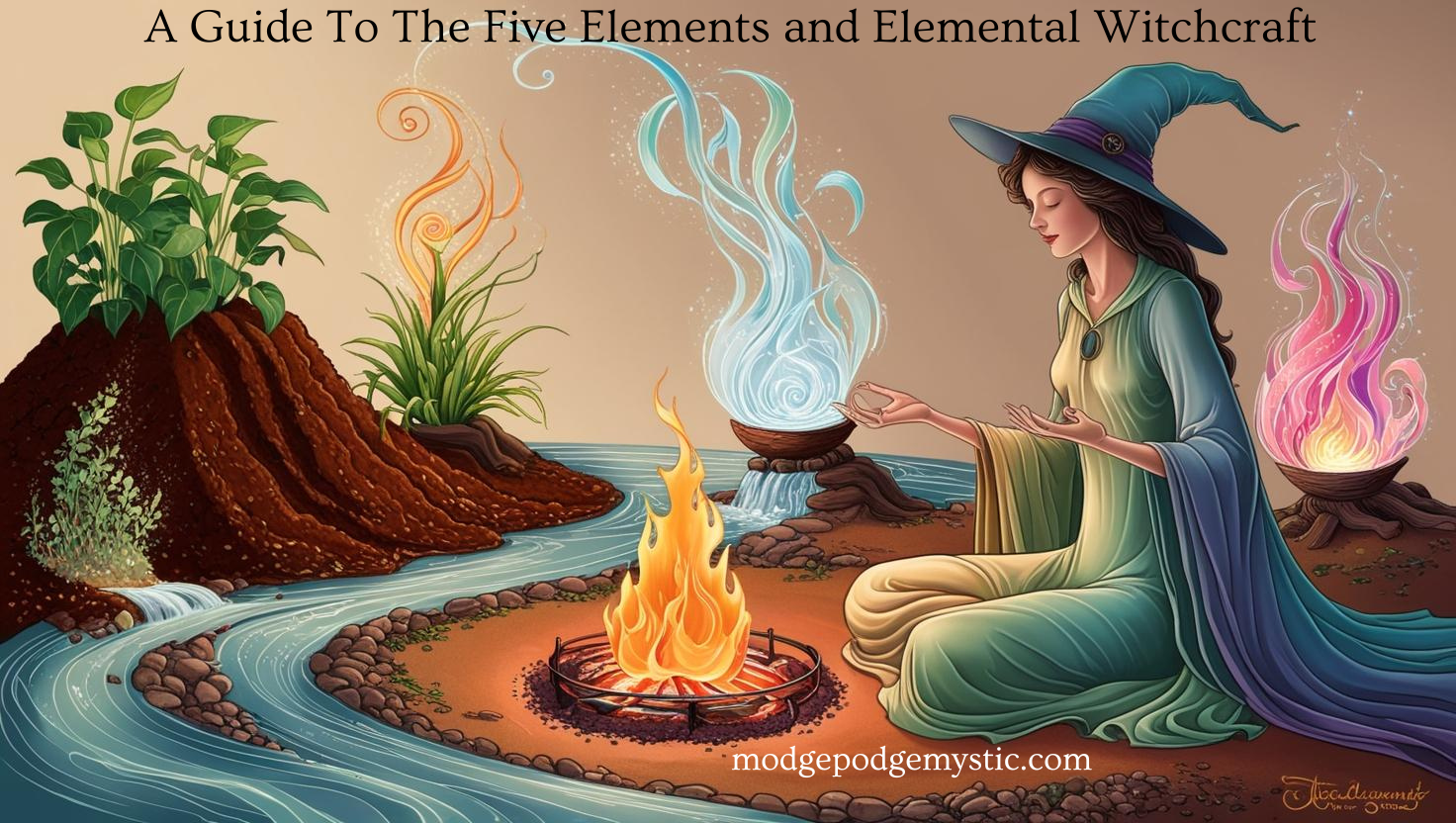
  • Add all five elements in your practice

The Grey Witch and Shadow Work

Meeting your shadow self can be traumatic. Working through it doesn’t mean you cover up stuff with light or light work though, you can only work through it, and accept it. You embrace the darkness as it is, and allow it to grow, mold and reshape itself as it sees fit, if it sees fit. This is the difference between a grey witch and others when it comes to shadow work. You don’t work through your shadow to get to your light, or work with it in the sense to transform it. You simply embrace it, comfort it, understand it, and allow it grow and mold and shape as it sees fit. You allow it to express itself in the way it needs to be like in rage, grief, fear, etc. and you access that expression for some potent magic, energy, and self awareness.

If you would like to learn more about shadow work you can purchase my eBook here; https://www.paypal.com/instantcommerce/checkout/2S3QJZ4UPDRG6 you can book me for a 1:1 session as your guide here; https://www.facebook.com/profile.php?id=61555318986253 and you can watch my free class previously taught on it through Divination below!

Grey Magic; Walking The Balanced Path of Witchcraft

The main intention of a Grey witch is to be a catalyst in healing. The light is a symbol of our higher divine mind and the dark the deeper, unconscious part of self, the primal, the animal, the profound power of physicality. A balance between the two unlocks the magic of our spiritual potential on our path of witchcraft. Being a grey witch is the most beautiful evolved form of a human being. The one without illusions and lies or masks. It’s just you, the whole you, a raw force and undeniable spirit that captures and commands everything around you .Whether embracing the shadow that lives within us all or changing your frequencies to rise above, the grey witch is a powerful being mastering all the energies in the multiverse in one being.

“A grey Witch I am and forever will be,
a balance of both dwells deep inside of me.
For I am not black, nor am I white.
I will walk in the darkness, I will walk in the light. I seek no harm and my intentions are just.But make no mistake, I’ll do what I must. So take heed of my word, I give you insight. For I am grey, I will defend, and I will fight.”

To expand your knowledge about this path and if you’d rather listen than read; you can watch my free class with Divination Academy on YouTube below!


Posted on 4 Comments

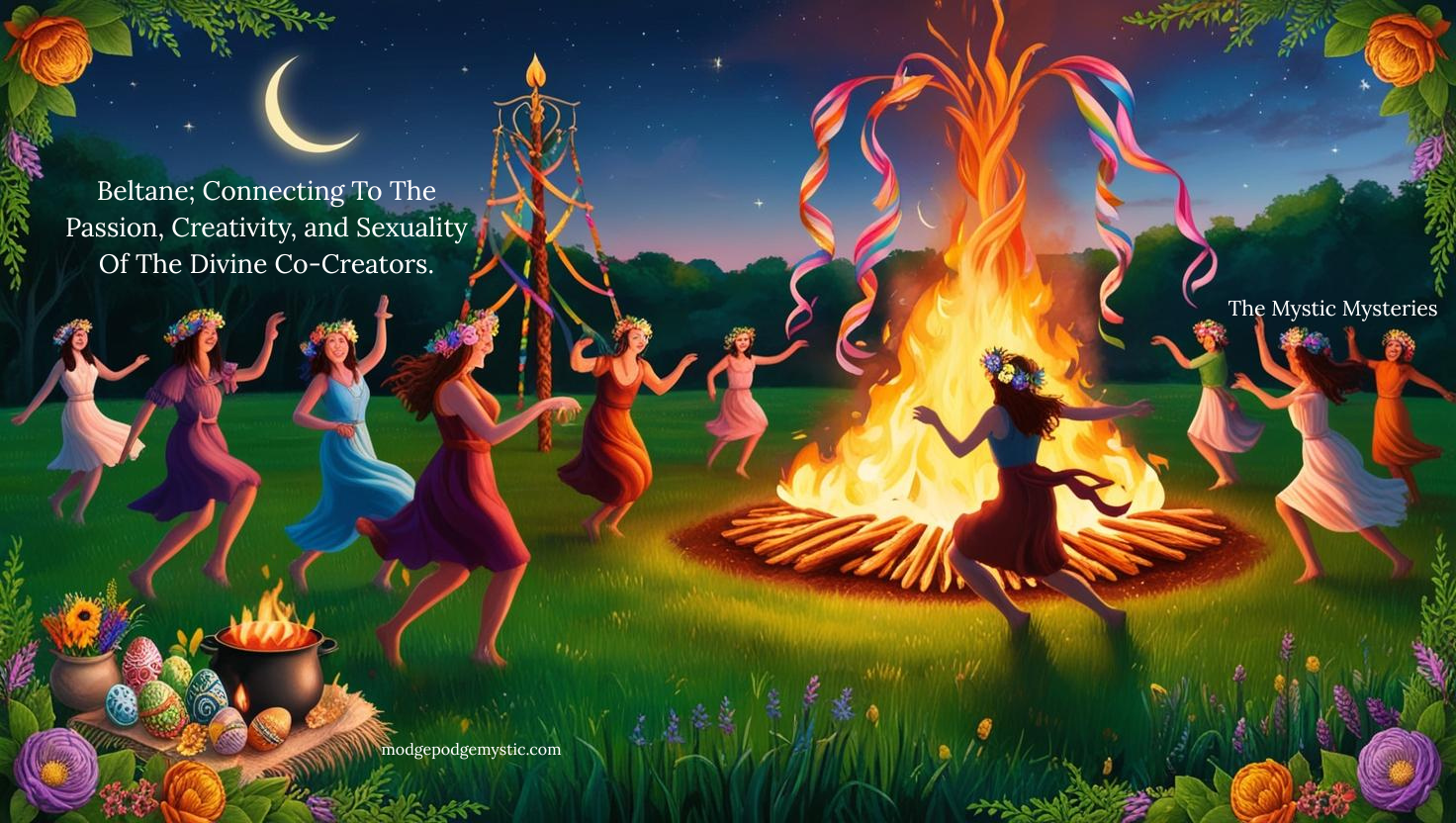
Beltane; Connecting To The Passion, Creativity, and Sexuality Of The Divine Co-Creators

Beltane ignites the Earth with a primal hum of fertility, a sacred symphony of life bursting forth. As spring unfurls its vibrant tapestry, flowers bloom in radiant hues, birds weave nests for their fledglings, animals seek mates under the warming sun, and farmers sow seeds for the abundant summer ahead. This is a time to revel in the Earth’s fertility, a season of growth, transformation, and divine union, much like the abundance Lakshmi brought us this Earth Day. Beltane, a Celtic fire festival, invites us to connect with the passionate dance of the divine co-creators—the masculine and feminine energies that seed all life. As Keeper of Mysteries, I feel this sacred day light a fire in my soul, awakening passion, creativity, and sexuality, urging us to transform into our truest selves. Let’s step into the flickering flames of Beltane together and weave magic with the divine.

The History of Beltane

Beltane traces its roots to ancient Celtic traditions, a fire festival marking the transition from winter’s chill to summer’s warmth. The name “Beltane” comes from the Celtic god Bel, meaning “Shining One,” and tene, meaning “fire,” translating to “Fire of Bel” or “Great Fire.” Its earliest recorded mention appears in the Irish medieval text Sanas Cormaic, penned by Cormac mac Cuilennáin, king-bishop of Munster, before 908 CE. For the Celts, who recognized only two seasons—summer and winter—Beltane heralded the planting season, a time to honor the Earth’s fertility and the sun’s life-giving power.

In the Northern Hemisphere, Beltane begins at moonrise on April 30 and continues through May 1, while in the Southern Hemisphere, it spans October 31 to November 1. Though Celtic in origin, Beltane echoes countless global fire and fertility festivals, from England’s May Day to Germany’s Walpurgisnacht, or “Witches’ Night.” As a cross-quarter holiday on the Wheel of the Year—a sacred calendar observed by many pagans, especially Wiccans—Beltane sits halfway between the Spring Equinox and Summer Solstice, joining Imbolc, Samhain, and Lughnassadh as one of the four fire festivals. These sabbats were historically celebrated with bonfires, symbolizing the sun’s journey and its vital role in the cycles of life.

The Fires of Beltane

At its core, Beltane is a fire festival, a tradition that has burned bright from ancient times into the 19th century. In Ireland, farmers would drive their cattle between two towering bonfires, a ritual believed to purify the herds, ward off disease, and ensure their safety through summer. These fires also served a practical purpose, clearing brush to make way for planting and pasture. Communities would extinguish their hearth fires, only to relight them with embers from the sacred Beltane bonfires, a symbolic renewal of life. Hillsides blazed with fires to honor the sun, invoking fertility for crops and livestock, while young people leapt over the flames for luck and abundance. To create a true Beltane fire, the Celts gathered wood from nine different trees, igniting it through friction—a sacred act of creation mirroring the divine spark, much like the synchronicities Sophia taught us to trust.

Beltane and fertility

Beltane heralds the Earth’s peak fertility, a time when the Great Mother blossoms with bounty, her fields and forests teeming with life. As above, so below—if the Earth is fertile, so are we, her children. The sun, growing brighter and warmer, nourishes the seeds sown in spring, embodying the divine masculine counterpart to the feminine Earth. Together, they are the co-creators, their union reflected in every blooming flower and mating creature. This sacred dance of fertility mirrors the abundance of Mother Earth’s rhythms.

Beltane and Sexuality

Fertility at Beltane naturally intertwines with sexuality, the primal force that seeds life. This sabbat celebrates the cosmic union of the divine co-creators, a passionate dance of sacred sex that ignites the cosmos with life. We feel this fire in our own loins, a burning desire to create, to connect, to manifest. Beltane awakens our sexual energies, urging us to embrace our raw, primal selves and channel this passion into transformation. Just as the Earth blooms, so do our desires, inviting us to seed new beginnings in our lives, whether through physical creation or the manifestation of our deepest dreams.

The Sacred Dance of Duality

As a grey witch, I see duality in every sacred moment, and Beltane blazes with it. This festival honors the divine masculine and feminine, two energies that coexist within us all, regardless of gender. Beltane is a mirror reflecting the union of earthly and celestial forces. In the flames of Beltane, we connect these energies within ourselves, embodying the sacred marriage of opposites. For me, this day feels like a cosmic embrace, allowing all parts of me to dance in unison, weaving passion and creativity into a unified whole.

The Maypole

A quintessential Beltane symbol, the maypole is a tree adorned with ribbons, paints, and a floral crown, brought into the village as a focal point of celebration. Villagers dance around it, weaving the ribbons in a rhythmic dance that symbolizes the union of the divine masculine (the phallus of the pole) and feminine (the Earth’s energy in the ribbons). This act of co-creation mirrors the divine partnership, a physical manifestation of the fertility and love Beltane celebrates

Common Traditions

Beltane traditions are rich with magic and community:

  • Druids would collect the dew prior to Sunrise on May 1st. This water was believed to have magickal powers such as healing ailments or creating beauty.
  • Handfastings and other pagan wedding celebrations often take place during this sabbat as it is a time to celebrate love and fertility.
  • Special oatmeal cakes are a popular food item for this sabbat. Often the cakes had knobs that could be torn off to sacrifice into the bonfires as an offering.
  • Decorating the interiors and exteriors of homes with flowers during this time was a common practice to celebrate the fertility of the land. The most common were yellow flowers such as primrose and marigolds. Cows were also decorated with flowers as well.
  • The May Bush was a small thorny tree or large bush, and was decorated with flowers, ribbons, and so on. People could have a May Bush for their home or for their community as a whole. Dancing around it was thought to bring good luck!
  • Couples would often spend the night in the forest together on the Eve of Beltane, they would return in the morning bearing floral decorations for the homes. This was sometimes termed a Greenwood Marriage.
  • May Baskets would be filled with small candies, baked goods, and flowers. They were placed on the doorknobs of neighbors as tokens of friendship.

Beltane Deities

In many mythologies, and pantheons, gods and goddesses of Beltane play a vital role in the seasonal cycle, symbolizing fertility, abundance, the earth, the sun, fire, and the divine union of the co-creators. Beltane is a time to honor deities of fertility, fire, and creation, weaving their energies into our rituals. Here are some divine beings to connect with, each echoing the co-creative themes of the festival.

Brigid

The most popular goddess associated with Beltane is the Celtic goddess, Brigid. She is a goddess of fertility, creativity, and healing. She is often depicted as a triple goddess, representing the three aspects of Maiden, Mother, and Crone. As such, she is a powerful symbol of transformation and growth. The Celtic goddess of fire, healing, and fertility, Brigid is a powerful deity associated with Beltane. Invoke her for creativity and abundance.  

Bel or Belenos

Bel or Belenos is a Celtic fire god who may have been the catalyst for this sabbat thousands of years ago. When we translate Bel’s name, we get “Shining One”. Not only was Bel associated with fire and fertility, he was also a well-loved healing god whose cult stretched all the way from Italy to the British Isles, at its peak. Bel was also a sun god who rode the sun like a chariot across the sky each day, led by his sacred, most powerful totem – horses. There are those who believe Beltane originates in honor of Bel, and those who disagree.

Pan

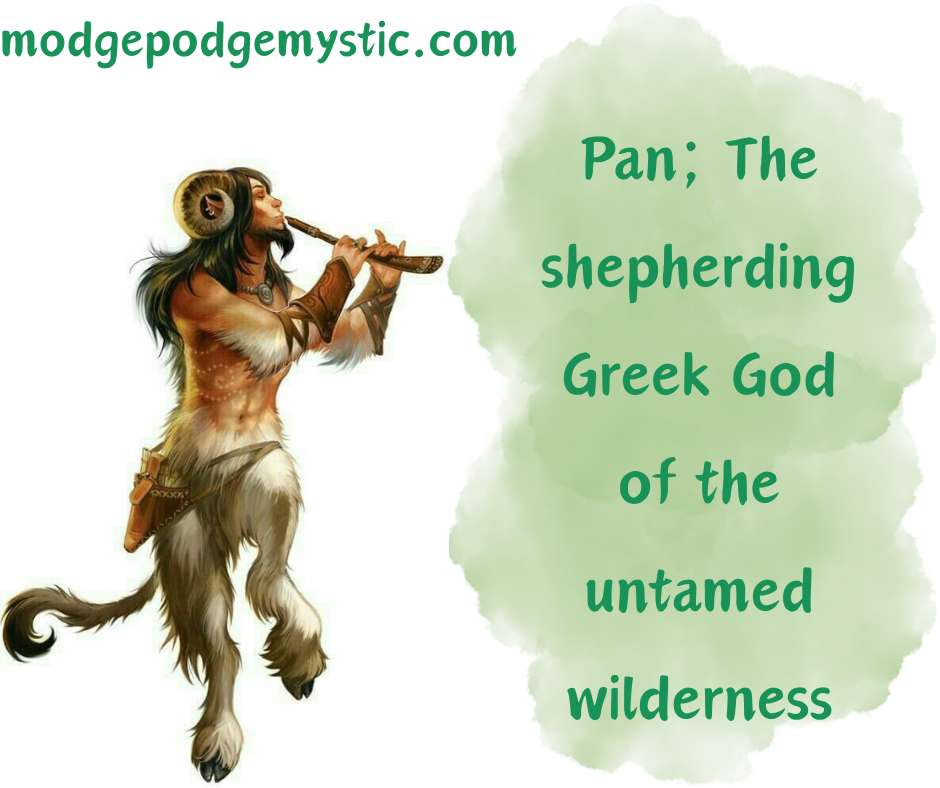
Part man and part goat, Pan was the Greek god who was patron of shepherds and hunters, who watched their flocks. Pan was the Greek god of nature and the untamed wilderness. PAN was the god of the meadows and forests of the mountain wilds. His unseen presence aroused panic in those who traversed his realm. He was even thought to be the cause of the musical sound of the wind through the trees. He was Associated with music, fertility, and spring. In ancient Greek art, he was often depicted as a horned man with the legs of a goat; he was the chief of the satyrs, who were similar in appearance and character to Pan. Pan, ruled over nature and pasturelands. Pan is essentially the father of the wild things. He is frequently depicted in literature and artworks. Although he is not one of the major gods of Ancient Greece, he is one of most often referenced figures in Greek mythology. Pan has come to represent the unstoppable power of nature throughout the ages and still today. His music in the wind stirs passion, making him a perfect Beltane ally. Learn more in my previous post on Pan HERE!

Cernunnos

The horned god of the forest, Cernunnos is a powerful deity associated with Beltane. He is often invoked for protection and blessings of abundance. Cernunnos is an ancient Celtic god who was known for his power over wild nature. He was often depicted in art as a horned figure with antlers, embodying the balance between life and death. Cernunnos can be seen by many as a symbol of power and transition – from death to rebirth. He teaches us the importance of understanding our place in Nature and how to connect with it – learning from nature’s ebbs and flows, respecting its cycles and giving back when possible. Want to dive deeper into the forest with Cernunnos? Check out my FREE sneak peak week of Divine Tales Thursdays to his story of Beltane HERE!

Aine

The Irish goddess of love and fertility, Aine is a powerful deity associated with Beltane. Aine is a powerful Irish goddess associated with Beltane who brings joy and abundance to those who honor her. Her strength is the power of manifestation, bringing healing and liberation with her presence. Those who recognize Aine’s energy can connect deeply with their true path in life. She brings forth inner resources and courage to follow new inspirations. Aine offers a powerful source of guidance and protection when we call upon her. The Irish goddess of love and fertility, Aine brings joy and manifestation, guiding us to our true path.

Cerridwen

The Welsh goddess of wisdom and knowledge, Cerridwen is a powerful deity associated with Beltane. Cerridwen’s energy personifies serpentine fertility, free-thinking, and independence. She encourages us to let go of any self-limiting beliefs and attitudes, allowing for clearer consciousness and introspection. Connecting with Cerridwen during Beltane offers an opportunity to create positive life changes through personal power. The Welsh goddess of wisdom, Cerridwen inspires transformation and independence. Watch my class on her on Divination’s YouTube channel for deeper connection. Plus don’t forget to check out her spell inside the deity a series HERE!

Lugh

The Irish god of the sun, Lugh is a powerful deity associated with Beltane. Lugh is a powerful deity said to have brought learning and knowledge to man. He is an Irish God of the Tuatha De Dannan, associated with Beltane and the summer season. As the Celtic solar deity, Lugh governs over life, light and law. His traditional symbols represent energy and creativity, from a shining sun held aloft in his hands to fiery arrows that stand for passion and lust. Want to dive deeper into radiant energy of Lugh? Check out my FREE sneak peak of the deity a day series with his spell HERE.

The Morrigan

At the heart of the emerald isle is a legendary Goddess that cloaks the battlefield in darkness. The Morrígan is a symbol of feminine strength, wisdom, and power. Though she may be attached to the darkness of death she also is the light in the dreariness of battle. When warriors are in doubt, the Morrígan will appear and lead the way to victory. She is a majestic and ethereal being that resides at the core of Irish mythology. The Phantom Queen on the battlefield. The crow that soars above the wreckage and ruin. The seeress, the warrior, the protector. The Morrigan, while often thought of as purely a warrior goddess of death, becomes the fertile earth on Beltane and unites with the Dagda to birth new life. She is both light and dark. Life and death. War and love. A Divine Paradox. To learn more about her and MEET her you can watch my previous class I taught on her with HERE!

The Correspondences Of Beltane

First, what is a correspondence? A correspondence is an item or symbol that is meant to connect you to a specific energy thru it’s representation. It is seen also as an item to respect, honor, and venerate that energy as well whether it be a deity, an archetype energy, the zodiac energy the moon is currently or for A holiday or sacred time like Beltane. Use these in your rituals to deepen your connection.

  • Planet: Earth
  • Animals: Cows, goats, sheep, horses, bees, rabbits, frogs, swans, cats, doves, lynx
  • Elements: Fire, Earth
  • Colors: Red, white, green, yellow, blue, pink
  • Herbs/Flowers: Rose, lavender, lilac, hawthorn, jasmine, daisy, ivy, dandelion, calendula, marigold, primrose, frankincense
  • Stones/Crystals: Amber, bloodstone, carnelian, malachite, green aventurine, moss agate, fire agate, red jasper, emerald, rose quartz
  • Deities: Bel, Brigid, Pan, Cernunnos, Aine, Cerridwen, Lugh, The Morrigan, Rhiannon, Apollo, The Green Man
  • Symbols: Bonfires, the fae, the sun, sacred sex, floral crowns, maypole, phallus, womb, cauldron, chalice, ribbons, antlers, flowers
  • Gender: Masculine and feminine

Magical Themes Of Beltane

Every season and every pagan holiday has certain concepts and magical themes. Which means, depending on your tradition and needs, you can weave one or more of these themes into your personal celebrations. Beltane’s magic is vibrant and multifaceted, offering themes to weave into your celebrations.

  • Abundance
  • Fertility
  • Sexuality
  • Union
  • connection
  • creation/creativity
  • love/lust
  • Growth
  • marriage
  • Purification/cleansing
  • protection
  • Fires
  • Divine feminine and Masculine
  • The cycles of nature
  • Manifestation
  • Transformation
  • Passion/desire
  • Enchantment
  • Weather divination
  • Fire scrying
  • Working with the fae

Ways to Celebrate Beltane

We have talked about many different themes, and energies you can connect to during this time from fertility, abundance, sexuality, passion, creativity, transformation, and more. Let’s talk about how we can connect to and celebrate those themes and energies now. First, you can participate and honor any of the deities listed above or that are associated with Spring, Summer, The god, the Goddess, and the sun. You can work with any affirmations, mantras, and visualization work for manifestation, passion, union, creation, abundance, fertility, sexuality, and transformation. Beltane’s energies of fertility, passion, and transformation invite us to celebrate in meaningful ways. Here are some rituals to honor this sacred time, inspired by the divine co-creation of this holiday.

Have a bonfire

As we talked about above, first and foremost beltane was celebrated as fire festival and the ancient celts used to pass their cattle through two of them to purify and cleanse them. So, what better way to connect to beltane and celebrate it than to build, lit, and enjoy a bonfire of your own! It’s common to do this with others, have some drinks, and leap over the flames for good luck and prosperity. Just be safe!

Perform a burning release

You already have the fire burning so why not use it for some release magic? One of my favorite ways to release unwanted habits, energies, people, and things from my life is to burn it away with fire. Take a piece of paper, focus on what it is you want to release from your life, write it on that piece of paper than walk up to your bonfire and as you let the paper fall and be burned in the flames visualize what you wrote being burned to ashes in your life as well.

Erect a Maypole
The Maypole has been a traditional May Day activity for centuries. What better way to celebrate Beltane, and honor your ancestors, than to make your own Maypole? Grab a pole, some ribbon, and some flowers, and erect one in your own yard and braid the ribbons together as you dance around in the warmth of the summer sun.

Dance

Beltane is a very fertile time full of energy, passion, and creativity, so what better way to connect to that energy than to move with it. We can do this by moving our hips, our womb spaces and moving our body through dance. Dancing allows us to move energy around, connect to the movements of energy around us in a dynamic way, and opens up our womb space to connect to sexual energy. So, get up move your body through dance and maybe even do so around a bonfire!

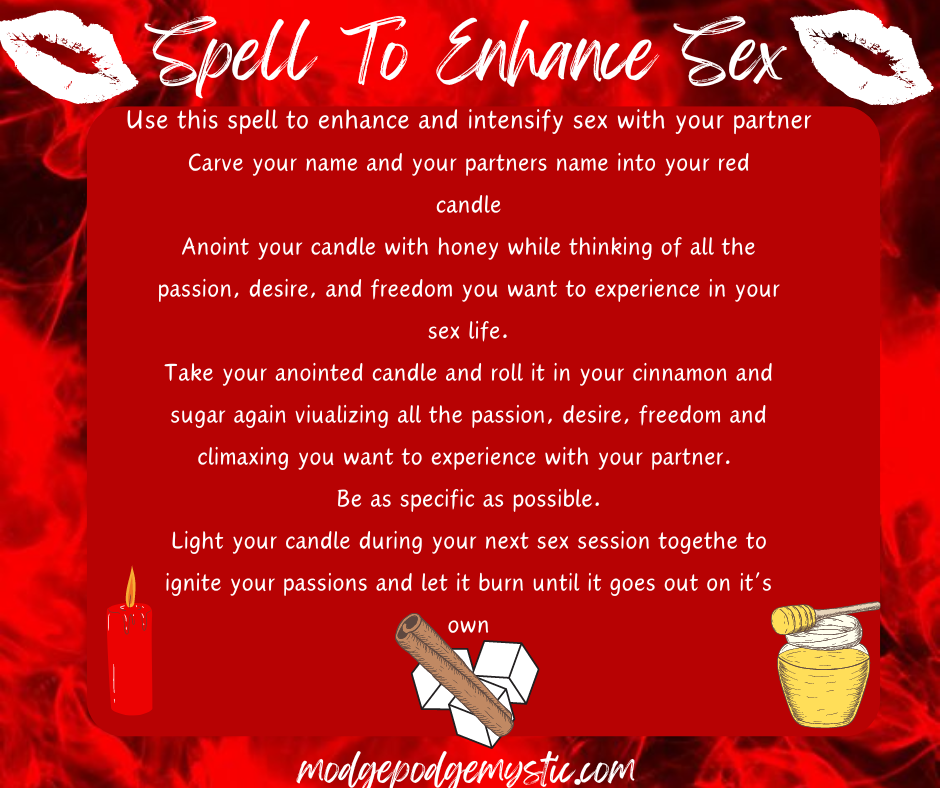
Perform Sex Magic

Beltane is a time burning with passion, sexual desire and is all about connecting to the sacred union of the divine co-creators. Now, is in my opinion the most potent time to connect to not only their sexual energy around you but, to yours as well. Take this time to perform both solo sex magic and sex magic with a partner. to connect to your true sexual form, to perform the most potent manifestation work, and to unleash your raw primal sexual desires like never before. It was a common tradition in ancient times for couples to perform sex rites out in the woods even; on Beltane’s eve. I promise you sex on Beltane is one of the most orgasmic, cosmic, and pleasurable experiences you can have. Give it a try this Beltane!

Wild Flower Crafting
Wild flowers have always been a big part of the Beltane celebrations. In ancient times, specific white and yellow flowers were gathered and hung over the doorways in Ireland to celebrate the day and invoke fertility and abundance. So go and pick wildflowers, Beltane is the perfect day for it! Then return home and make a bouquet. Or if you’re feeling really crafty, make flower wreaths, crowns or garland to decorate yourself and your home or to place on your altar

Refresh Your Altar
Another way to connect to a holiday and/or sacred day I always recommend is to cleanse and refresh your altar and/or sacred space. This is particularly beneficial if you have Celtic gods you honor and connect to already. Use water or fire to cleanse, then decorate with wildflowers, images of the fae, the divine masculine, the divine feminine, and any of the Beltane correspondences we talked about earlier.

Work with the Green Man
The Green Man is a legendary figure in Celtic lore and throughout Europe. He is a guardian of the forest and likely a type of elemental. When he’s seen, he is typically covered from head to foot in leaves, branches, flowers and moss. Some believe he is an ancient god of the wilderness, who protects the wildlife and sacred, unspoiled places in nature. Work with the Green Man’s energy on Beltane by hiking in the woods, or even by creating space for him on your altar.

Simmer pot for beltane

Whether you consider yourself a Kitchen Witch, are vaguely interested in Kitchen Magic or just want to bring some good vibes and good smells into your home, simmer pots are an easy, accessible and fun ritual for any time of year! Simmer pots are easy to create and customize to your liking, so you can make your kitchen a sacred space whenever you want! So, why not make one specifically to call in and honor the energy of Beltane? Do you Need more information about simmer pots? Check out my guide here and my spell post here! Can you tell I love these containers of magic?

Perform Fae Magic
In ancient times, and up to the modern era, the Celtic people believe strongly in the Fae, also called the faery folk, good folk or sidhe. Every Beltane, great care was taken to appease the fae, to prevent them from whisking away all the butter and milk. By leaving out faery offerings on Beltane, you’re carrying on this tradition and starting a working relationship with the fae. Or make a witch’s ladder with intention of appeasing the fae. Make faery houses and a space for the garden.

Perform Purifications and Cleansing Rituals

We talked about above how beltane was seen as time to purify and cleanse for the celts. They would take the time to pass their cattle through two bonfires to cleanse them even. This is a great time for you to do some cleansing and purifying as well. Perform cleansing and purifying rituals on your home and yourself like smoke cleansing, ritual baths, floor washes, or any rituals you prefer to use in your practices.

Candle Spells
Not everyone can have a big fire on Beltane. So for those of us who want to invoke the power of the fire element, simply lighting a few candles is enough. Casting candle spells on Beltane is also a potent way to send your intentions into the ether. Particularly if you’re looking to increase fertility, prosperity and creativity in your life. Want to learn more about candle magic? Get access to my downloadable grimoire pages inside The Mystic Mysteries today!

Perform a Beauty Ritual

Any beauty rituals performed on Beltane are amplified by the fiery, Summer magic on this sacred day. Take a ritual milk bath, drink an herbal beauty concoction, and craft your own magical beauty products.

Five Senses Nature Walk

Beltane is the midway point between the spring equinox and the summer solstice which is all about the cycle and movement of nature and marking the most fertile time for new life to grow, blossom, and be seeded. So why not take the time to connect to nature itself? Soak in all the fertility and abundance in nature right now. You can do this by going on a five sense nature walk. After you have engaged all your senses, walk back to your home. Reflect on your experience by writing it down in a journal

Perform Egg magic for fertility

Beltane is deeply associated with fertility, symbolized by the divine union in various traditions, such as the Great Rite in Wicca or the coupling of The Morrigan and the Dagda in Irish Celtic lore. This makes it an ideal time for fertility spells, particularly those using eggs, a universal symbol of life and creation. Egg magic can involve rituals like decorating eggs with symbols of fertility, burying them in the earth to “plant” your intentions, or using eggshells in spell work to enhance growth and abundance. For detailed guidance, check out my blog on egg magic here. This practice is especially potent for those seeking to conceive or foster new beginnings in their lives.

    Make a Beltane Spell Jar

    Spell jars are a versatile and powerful tool for harnessing Beltane’s energy. To create one, select a jar and cleanse it thoroughly (e.g., with smoke or moonlight). Choose ingredients that align with Beltane’s themes of fertility, abundance, and transformation—such as rose petals for love, cinnamon for passion, or seeds for growth. As you add each item, focus on your specific intention, visualizing abundance and prosperity. Seal the jar with a lid, and for extra potency, add sigils or seal it with wax. Place the jar on your altar or in a prominent location, shaking it occasionally to reactivate the magic. Do you need to learn more about spell jars? Dive into my free blogpost here OR purchase my eBook Here!

    Beltane Ritual/Spell: Fire of Abundance Candle Spell  

    This simple yet powerful candle spell harnesses Beltane’s fiery energy to call in abundance, creativity, and passion into your life. It’s perfect for those who can’t have a large bonfire but still want to honor the fire element during this sacred time

    What You’ll Need:

    • A small green or gold candle (for abundance and prosperity)
    • A pinch of dried herbs like basil or chamomile (for growth and success)
    • A small piece of paper and a pen
    • A fire-safe dish or holder
    • Optional: A few drops of rose or cinnamon essential oil (for passion and attraction)

    Steps:

    1. Prepare Your work area: Find a quiet space where you won’t be disturbed. Cleanse the area with smoke (like sage or palo santo) or by visualizing a purifying light surrounding you, tying into the purification rituals mentioned earlier.  

    2. Set Your Intention: On the piece of paper, write down what you wish to call into your life—abundance, creativity, a new project, or even fertility. Be specific and focus on the feelings of already having this in your life.  

    3. Dress the Candle: If using essential oil, anoint the candle by rubbing a few drops onto it, moving from the bottom to the top to draw energy in. Sprinkle the dried herbs onto the candle or around its base, visualizing them infusing the candle with growth and prosperity.  

    4. Light the Candle: Place the candle in its holder. As you light it, say:  

       “By the fire of Beltane, I call in abundance and light. May creativity, prosperity, and passion ignite in my life. So it is.”

       Feel the warmth of the flame as a symbol of Beltane’s transformative power.  

    5. Burn Your Intention: Carefully light the paper with your intention using the candle flame, then place it in the fire-safe dish to burn completely. As it burns, visualize your intention rising with the smoke, carried into the universe to manifest.  

    6. Close the Ritual: Let the candle burn down safely (never leave it unattended). If you need to extinguish it, snuff it out rather than blowing it out to keep the energy contained. Once the candle is done, bury any remnants (wax, herbs, or ash) in your garden or a potted plant to ground the spell and symbolize growth.

    Wrap Up

    The post concludes by emphasizing Beltane’s essence as a celebration of fertility, prosperity, and transformation during a season of warmth and growth. It highlights the sacred duality of co-creation, symbolized by the union of divine forces that seed all life. Whether through rituals, spellwork, or connecting with nature, Beltane invites you to ignite your soul with passion, creativity, and sensuality, empowering you to embrace your true self in the coming season. The post encourages personalizing your celebration to honor this vibrant, transformative energy.

    Join Us for a Free Virtual Beltane Meditation!

    Celebrate Beltane Eve with us on April 30th at 8:00 PM for a magical virtual meditation around a lit fire. Connect with the fiery, transformative energy of Beltane as we gather in spirit to honor the season of growth, passion, and abundance. This guided meditation will help you set intentions, release what no longer serves you, and welcome the vibrant energy of summer. No registration required—just bring your open heart and a candle to join the circle from wherever you are. Find the live link on our website or social media pages on the day of the event. Let’s ignite our souls together this Beltane!

    I am Kayreign, the Divine Oracle of the Gods and Keeper of Mysteries, a solitary grey magic practitioner with over 15 years of experience walking the sacred paths of the unseen. As a mystic and relentless seeker of all knowledge, I weave together the threads of every magical tradition—light and dark, ancient and modern—to uncover the universal truths that bind us to the cosmos. My mission is to restore and re-enchant magic in this realm, igniting its spark in every soul I encounter, and guiding you to embrace the full spectrum of your being.

    My work is rooted in the power of duality, honoring the dance between shadow and light as equal partners in your spiritual journey. I hold space for you to explore all magic paths and practices, drawing from the vast tapestry of mystical wisdom to help you uncover your unique magic and sacred contracts. As the Divine Oracle of the Gods, I channel divine insights to illuminate your path; as the Keeper of Mysteries, I guide you into the depths of the unknown, where true transformation awaits.

    When you work with me, you’ll learn to live in energetic balance, embracing your darkness as a source of power, not just a stepping stone to the light. I’ll hold up a mirror to reflect your authentic self—unmasked, raw, and whole—inviting you to face your past wounds, traumas, and hurts with courage. Together, we’ll alchemize every chapter of your story, dark and light, into a blazing internal flame that lights your way on even the coldest nights. Through this process, you’ll find alignment with your purpose, release what holds you back, and step fully into your power.

    Come join us inside the sacred circle! The temple gates are open to unlock the mysteries of the unseen and ancient wisdom for our modern souls!

    Explore my offerings—personalized shadow work sessions, womb healing, eBooks for self-guided growth, Tarot readings for divine guidance, and more—in my shop. Let’s journey together into the mysteries, where duality becomes your greatest ally, and magic becomes your birthright.

    Posted on

    Loki, The Norse God Of Chaos, Destruction And Paradoxical Magic

    Loki is a very complicated, controversial, and charismatic Germanic and Norse deity. Just saying his name turns heads and invokes lengthy conversations full of debate. This may be because in modern times, Loki has often been compared to the figure of Satan. Though this is incorrect since he is still interested in preserving the cosmic order, while Satan is a fierce rival of that order. Even at times you may be told things meant to terrify you away from even looking into who he is, like he is destructive, deceitful, chaotic, and the bringer of the end of the world. Are some of these things true? In a way yes but, you also have to look at your perspective of those words and I also feel he is this way for many justifiable reasons as well.

    First, is he deceitful? Well isn’t everyone at times? I find him too much more mischievous than deceitful. That he likes to play pranks, and manipulate things at times to get what he wants. At times being mischievous, doing things you shouldn’t, and breaking rules is how you get the attention of the truly powerful. Sometimes it’s what’s needed to shake things up and get the attention of those who really need to hear what you have to say.

    Secondly, with him being a God of Mischief, destruction, and chaos he inherently is feared. But, like I have talked about in almost every single class I have ever taught or blogpost I have written, destruction is necessary for anything new to be rebuilt. Death is necessary for rebirth. There has to be an energy exchange in order for anything new to be created, or birthed into this multiverse. And as much as you may fear Ragnorak it has happened before and will happen again as it is meant to for the multiverse to stay in balance.

    Third, Loki in my eyes has very justifiable reasons for the actions that he does take and for his feelings against the Aesir and Odin in particular. Depending on which version of his parentage and story you look at Odin is his brother and by blood. So, wouldn’t you treat a brother the way loki does when you look at their relationship like that? Banishing Loki’s children and punishing them for the same reason. Is that justifiable? Was Loki’s punishment for killing Balder really okay if you think about it?

    My experience with Loki

    I briefly touched on it above. I have worked with Loki and do still when I feel the call from him or when I want to work with chaos and transformation magic. He is not a patron deity of mine nor am I Gothi or goði in the norse path either. I have spent quite a bit of time studying him due to the region I live in and my family’s heritage. I have worked in my own solitary practice. Since, I am a Grey witch and thrive in the liminal space; I honestly hit it off right away with him. He is honestly one of thef ew of them I have even extensively studied and worked with in the Norse and Germanic Pantheons. He has always been easy for me to understand, communicate with and he really helped me deepen my understanding of the liminal space through his access to chaos.

    Who is Loki?

    Loki; trickster, shapeshifter, and the cause of—and solution to—Asgard’s greatest troubles. Famously known for his cunning and tricky nature. Although his father was the giant Fárbauti, he was included among the Aesir (a tribe of gods) according to some and others do not consider this to be true of him and consider him to be simply a giant.

     One way in which Loki is different from the Aesir gods is that he did not have an area of responsibility that he symbolized, such as war or fertility. While he was considered a trickster, his mischief was mostly a foil for the Aesir gods, and not for men.

    Loki is a Deity of Germanic and Norse Origins. According to the Eddas written by Snorri Sturluson, Loki is a god that will cause a war known as Ragnarok between the Norse gods. Basically, he is the cause of the end of the world.

    In Old Norse the word ‘loki’ means knot or tangle, and he may have been considered responsible for some of the misfortunes that befell men, and therefore be a kind of trickster god, but there is little evidence for this.

    Loki was represented as the companion of the great gods Odin and Thor, helping them with his clever plans but sometimes causing embarrassment and difficulty for them and himself. He also appeared as the enemy of the gods. He frequently causes problems with the gods, stirs shit up, and then comes back to save the day. But why?

     Loki is the epitome of the Divine Paradox. He is…and he isn’t. He’s male, then he’s female. Then he’s an animal. He’s foe, then friend. Interestingly, he’s also credited as the reason the Aesir gods are gifted with powerful weapons and magical tools. Odin’s magical spear Gungnir and Thor’s hammer Mjolnir, for example. He is both a devoted and loving father and yet he killed Baldur.  Loki is meant to represent the spectrum of humanity and the struggle of trying to balance it all. 

    Loki is much more than a trickster. He’s much more than the god of mischief. Writing him off as this ONE thing is a big mistake on our part. Keep in mind, Odin calls Loki his brother, calling him blood of his own blood. And Thor needs Loki as a traveling companion for reasons we can only try to comprehend. He may also be a creator god….one who was there during the creation of man. In another guise – Lodur. Doesn’t it make sense that a destructive god would also be a creator god? There’s that divine paradox.

    Loki is also remembered as the father of witches. In fact, it is said that he had found a half-cooked woman’s heart among the glowing embers of a bonfire, and eating it he was impregnated, giving life to witches.

    Family and his children

    Loki was the son of Fárbauti, an unspecified jötunn whose name meant “cruel striker.” His mother was usually called Laufey, though she was also referred to as Nál. Loki’s brothers were Helblindi and Býleistr, also jötnar.

    With the giantess Angrboda, Loki had three children. The Aesir gods so feared the potential chaos that could be caused by these children that they placed each of them in a place where they could do the least harm.

    The first, the giantess Hel, was given dominion over the underworld of Helheim, where all souls that did not fall bravely in battle found themselves after death. If you want to learn more about her I already taught a class on her you can watch the class here.

    The second Jormungand, was a mighty serpent and the Aesir threw him into the sea surrounding Midgard, the world of men. There he grew to such a great size that he could surround the entire world.

    Their third son was a might wolf named Fenrir. He was chained up in Asgard using a magical ribbon made by the dwarves.

    Each of these children of Loki and Angrboda are prophesized to have a role to play in Ragnarok, the Armageddon of Norse mythology, with Fenrir killing Odin himself, and Thor and Jormungand slaying one another in the final battle. As such, they are some of the ultimate symbols of chaos and destruction in Norse mythology.

    Loki also had a wife Sigyn, who was probably one of the Aesir gods. We actually don’t know much about her but I am working on a post about her coming soon. They had a son Nari. Narfi, Loki’s son with Sigyn, meets a tragic and grisly fate in the annals of Norse mythology. In a twist of events following the orchestration of Baldr’s death by Loki, the gods sought to punish Loki for his role. To do so, they turned Vali, one of Odin’s sons, into a wolf. In his feral state, Vali attacked and tore apart Loki’s son Narfi. The gods then used Narfi’s entrails to bind Loki, ensuring his punishment was both symbolic and severe. This act not only served as retribution for Loki’s deeds but also highlighted the intricate and often brutal nature of Norse myths.

    Loki was also the mother of Sleipnir, Odin’s eight-legged steed. This was the result of Loki’s shapeshifting ability. According to the old Norse story, near the beginning of time an unnamed builder offered to build the fortifications around Asgard in exchange for the goddess Freya (who was very beautiful and seductive), the sun and the moon.

    The gods agreed to this, but only if he completed the work within one season and with the help of no man. The man agreed on the condition that he could have the help of the stallion Svadilfari, and Loki convinced the gods to accept the deal.

    The stallion helped the builder complete the work extremely quickly, and with only three days to go before the deadline it looked as though he was going to finish the work on time. The gods blamed Loki for putting them in this terrible situation of having to pay the agreed price, and they demanded that he ensure that the builder did not complete his work.

    In order to do this, Loki turned himself into a stunning mare, successfully distracting the stallion and delaying the work of the builder. This distraction also resulted in Loki’s pregnancy and Some time later, Loki birthed Sleipnir, the eight-legged horse, who was to become Odin’s favorite mount. It is hard to see Loki as the bad guy in this particular story, especially since the god’s not only went back on the deal, but Thor also killed the builder.

    Loki in Myths and stories

    Let’s talk about the myths and legends he shows up in. We don’t exactly know what his true origins are prior to him showing up in the Eddas. There are thoughts and theories though amongst researchers, historians, and archeologists that he was a much older deity than we realize and he was originally considered an elemental deity of the hearth. We don’t have any written documentation of this but, we do have some archeological evidence of this throughout Northern Europe. 

    Loki’s entrance into Norse mythology came later than most, his origins remained difficult to discern. In the oldest poetic works, such as the Grímnismál (which had fragments going back to the eighth century), Loki was conspicuously absent. In non-Norse sources of pre-Christian Germanic religion, Loki was once again either absent or presented in a very different manner.

    So, if he was originally a very primordial ancient deity of fire, home, and hearth how did he end as this demonized, and malicious intent deity many see him as today. Well, like I’ve said before with other deities I really think we have the Christian and Roman Catholic church to blame for this. You have to remember the author of the Eddas was christian himself. As with other deities I have taught about before, they really like to do this with deities they deem too powerful or that have too widespread of influence to be able to completely write out. They take them and turn them into that region or culture’s version of satan. I really feel this is a possibility for what happened here. 

    The Betrayal of Baldur and the Binding of Loki

    The critical turning point in Loki’s relationship with the gods came with his role in the story of Baldur, one of Odin’s sons and the half-brother of Thor. While the full story was spread out amongst a number of old sources, the narrative generally remained consistent between them.


    It all began when Baldur was troubled by dreams of his own death, dreams that his mother had as well. Seeking answers, Odin summoned a völva from the dead. The völva confirmed Odin’s fears and told him that Baldur would indeed die, but did not reveal how his death would occur.

    Desperate to protect her son from all harm, Frigg went around and secured an oath from every living thing in the universe that they would never hurt Balder, or assist in hurting him.

    This basically made Balder invincible, something which amused the other gods, who would often throw weapons at Balder for the pleasure of watching them bounce off him causing no harm.

    Loki, jealous of Balder (some claim) and generally always looking for a way to make trouble, used his shapeshifting abilities to trick Frigg into telling him that she may have forgotten to secure the oath from the humble mistletoe plant.

    Learning this information Loki immediately made a dart of mistletoe and tricked Balder’s blind brother Hod into throwing it at Balder as part of the gods’ regular game. It struck him dead immediately, much to the surprise of all the gods. After Balder’s death, Odin beseeched Hel, Loki’s daughter and the keeper of the Underworld, to allow Balder to return to Asgard, explaining to her that the world should not be robbed of this most beloved being.

    Hel actually agreed to return Balder, but only on the condition that every living thing in the universe weep for him. And this they did, except for one giantess, who many believe was Loki in disguise. As such, Balder was not able to return.

    For his part in his tragedy, Loki was finally expelled from Asgard by the Aesir gods. They chained him to two rocks, hanging a poisonous snake above his head to drip painful poison onto his face.

    Loki’s loyal wife Sigyn tries to protect Loki from this pain by catching the poison in a bowl, but when she must leave to empty the bowl, Loki is inflicted with the pain of the poison, and it is his shudders that cause earthquakes.

    When the time for Ragnarok itself comes, it is prophesied that Loki will slip his chains, and will join the giant movement against the Aesir gods. During the battle it is foretold that he will engage Heimdall in hand to hand battle and that the two will slay one another.

    Ragnarök

    During Ragnarök (the “fate of the gods”), the sequence of events leading to the death and rebirth of the world, Loki was said to play a decisive role. Ragnarök’s beginning would be marked by Loki’s release from bondage, and the trickster would eventually join the side of the jötnar in their conflict against the gods. Loki’s children, Jörmungandr and Fenrir, would also contribute to the demise of the gods. In the end, Loki himself would turn into a seal and battle Heimdall; both were fated to die in the melee.

    Where Loki is mentioned in myths and stories

    Poetic Edda
    In the Poetic Edda, Loki appears (or is referenced) in the poems Völuspá, Lokasenna, Þrymskviða, Reginsmál, Baldrs draumar, and Hyndluljóð.
    Prose Edda Gylfaginning
    The Prose Edda book Gylfaginning tells various myths featuring Loki, including Loki’s role in the birth of the horse Sleipnir and Loki’s contest with Logi, fire personified.
    Norwegian rune poem
    Fjölsvinnsmál Poem
    Hyndluljóð Poem

    Key Stories Loki is in

    Fortification Of Asgard And Birth Of Sleipnir
    I talked about this one earlier but, Loki’s cunning shines again when the gods are at risk of losing a bet with a giant builder. To prevent the giant from claiming the sun, moon, and Freyja, Loki transforms into a mare, distracting the giant’s stallion. This act not only prevents the completion of Asgard’s wall but also leads to the birth of the eight-legged horse, Sleipnir.

    Abduction Of Idunn
    Loki’s cunning is on full display in the tale of Idunn’s abduction. Initially, he tricks Idunn into leaving Asgard, leading to her capture by the giant Thjazi. Without her rejuvenating apples, the gods begin to age rapidly. Realizing the gravity of his actions, Loki transforms into a falcon, rescues Idunn, and returns her to Asgard, restoring youth and vitality to the gods.

    The Otter’s Ransom
    In a thoughtless act, Loki kills an otter, only to discover it was a transformed dwarf. To atone for his mistake, he embarks on a quest to retrieve cursed gold as compensation. This tale showcases Loki’s ability to rectify his misdeeds, even if they were born out of mischief.

    Sif’s Golden Hair
    After mischievously cutting off Sif’s beautiful locks, Loki finds himself in a predicament. To make amends, he commissions the dwarves to craft golden hair even more beautiful than Sif’s original locks. This act indirectly leads to the creation of iconic artifacts like Thor’s hammer Mjölnir and Odin’s spear Gungnir.

    Þrymskviða: The Deceptive Wedding
    In the Þrymskviða, Thor’s hammer, Mjöllnir, is stolen by the giant Thrym, who demands Freyja as his bride in exchange. Loki devises a plan: Thor will disguise himself as Freyja, with Loki as his bridesmaid. The duo travels to Thrym’s hall, and despite some close calls due to Thor’s behavior, Loki’s quick explanations keep their cover. When Thrym brings out Mjöllnir to bless the “bride”, Thor seizes it, dispatching Thrym and his court. The tale underscores Loki’s cunning and the gods’ resourcefulness in dire situations.

    Lokasenna: Loki’s Taunts
    In the Lokasenna, Loki crashes a feast of the gods and hurls insults, revealing uncomfortable truths and secrets. His sharp tongue and audacity lead to heated exchanges, showcasing his fearless nature and his delight in causing discord.

    Correspondences to connect to Loki

    First, what is a correspondence? A correspondence is an item or symbol that is meant to connect you to a specific energy thru it’s representation. It is seen also as an item to respect, honor, and venerate that energy as well whether it be he zodiac energy the moon, an archetype energy , or a deity like I will list below for you to use.

    • Colors: black, yellow, green, gold, red, orange, violet
    • Days: Friday the 13th, the 13th of each month, Autumn Equinox, Samhain, Yule
    • Animals: snake, falcon, spider, horse, fly, flea, salmon, vulture, wolf, fox
    • crystals/ Stones: obsidian, black tourmaline, black onyx, garnet, citrine, serpentine, carnelian
    • Other pantheon’s deities similar to Loki: Pan, Cernunnos, Dionysus, Bacchus, Anansi, Lugh, Hermes, Mercury, Elegua, Eshu, Prometheus, Veles, Coyote and Crow
    • Herbs: mistletoe, mint, patchouli, tobacco, cinnamon, clove, holly, cedar, juniper, elder
    • Magical Domains: chaos, destruction, creation and creativity, fire, shapeshifting, blacksmithing, cooking, discovery, trickery, protection, paradox, taboo, shadow work, catalyst, cunning, seduction, passion, primal instinct, healing, self empowerment
    • Star: Sirius “Loki’s Torch”
    • Symbols: infinity snake and ouroboros, number 8, chaos star, runes that spell out his name: Laguz, Othala, Kenaz, Isa as well as the rune Hagalaz

    Lokean Practice; Modern day Loki Worship

    A Lokean is someone who works with, worships, and/or venerates the Norse god Loki, typically as a main deity. The term “Lokean” has two uses. The first describes patronage to Loki similar to saying “Lokisman” or “Odinswoman”, while the second implies a subcultural identity distinct from Heathenry. For this reason, not everyone who works with Loki may identify with the term Lokean or Lokean Heathen, and may opt to use “Heathen” or “Norse Pagan” instead.

    The word “Lokean” originates in North America, growing out of controversy, superstition, and queerphobia sometime in the 1990’s.* Lokispeople were excluded from Heathen spaces and a division in the community occurred as a result. Whether “Lokean” was created by this division, or was simply propagated by it, is hard to say. Either way, it became something of its own identity as the years went by.

    Because its identity was separated from Heathenry in such a way, not all Lokeans think of themselves as Heathens; some may be Wiccan Lokeans, agnostic Lokeans, Left-hand Path Lokeans, or may otherwise work with Loki in a non-Heathen context. Lokean practice is unique in that it intersects with Heathenry at varying degrees.

    What does Lokean Practice Look Like?

    The only needed component of Lokean practice is Loki, so it can be whatever a Lokean would like it to be. Generally it’s marked by very typical staples of neo-Paganism, such as deity-work, offerings, holiday observances, and even creating an altar or sacred space for him. But again, this is all up to the practitioner and there’s no right or wrong way to venerate Loki. The purpose of this spiritual practice is to foster a relationship with Loki that feels fulfilling, so everything about it can and should be tailored to your needs.

    Other ways to work with Loki

    Read, Research, and study
    Just like I teach and write with every single deity the number one and most important way to connect to a deity is by learning all that you can about them. Earlier I gave a list of the key myths and stories you find him in that are a great place to start. Find other books on him like; One book I recommend is Dagulf Loptson’s “Loki: Trickster and Transformer”. You can find many podcasts, youtube videos and more to learn more as well.

    Create an altar for him
    If you are new to deity work one of the main ways to connect to a deity is through an altar. Add any of the correspondences listed above or any of these offerings; Loki enjoys alcohol, candy, hot peppers, spicy foods, meat, and some folks even give him toys. One tip I have for him is I seem to have better results if he is in my kitchen, or near my sacred space where I do my magical workings. I also do not recommend putting him together with other deities or pantheons outside of having Odin, Thor, Sigyn, or Hel with him. Things just tend to get chaotic and messy in my life and my workings if I have him mixed in with other deities and pantheons.

    FIRE
    Loki was born when a lightning bolt struck a birch tree. He is known as a “hot” deity and indeed manifests as fire. So, what better way to honor him and get to know him than with fire? This could take many forms: cooking on open fire, lighting candles as offerings, fire poi (if you’re so brave),or my favorite fire scrying. Just remember to be on the safe side when working with this particular element.

    Shadow work
    Being a grey witch and mystic I thrive in the liminal space which makes the practice of shadow work one of my favorite things to do and I am a very unique guide through it. Every class I teach I always talk about the benefits we get from shadow work and how we can use a deity to assist and guide us on some of those journeys into the darkness.

    Loki is my favorite male deity to call on for shadow work. He is my favorite guide into not only my divine masculine but, to really truly understand the balance of both and how to move in between the energies fluidly like the shapeshifter in him has the ability to do.

    Loki also has this ability to pull on our inner child and yank them out of the shadows where they either like to hide or we have pushed them to disappear into. He will pull them out and let them feel all it is they have to feel. Which for some can be really chaotic, overwhelming and hard to handle at first but, working with them and letting them feel what they need to will lead you through a death and into your next rebirth.

    When working with Loki, you’ll notice he likes to dredge up those pesky shadows we tend to ignore. In fact, I see this as an inherent ability he uses time and time again with the gods themselves. His trickster spirit takes things away, only to return them in a new form OR to allow for something new entirely to take their place. When Loki steals things from the gods, he forces them to face their shadows. To re-examine the value of the things they hold dear. He tends to do the same to his devotees and friends.
    To learn more about how to do shadow work you can watch my previous class on it here.

    Number 13

    One of loki’s symbols is the number 13. Consider implementing the number thirteen into your rituals, offerings, magick, and daily life in honor of the Trickster God. Examples: draw thirteen runes (if you’re adept to the runes), light thirteen candles (keep an eye on those bad boys!), hail his name thirteen times, etc.

    Play pranks on others

    I don’t know if this is something you are comfortable with doing honestly, this one is hard for me to do. But, playing some harmless pranks on others can help you connect to that playful mischievous side of Loki.

    Enhance  your magic

    Loki is a very gifted and powerful magic practitioner. His skills in shape shifting are evidence of that alone. So, call on him in your magical workings to help transform and amplify your magic and your understanding of it.

    Exploring Paradox

    What is paradox? Paradox is defined as “a seemingly absurd or self-contradictory statement or proposition that when investigated or explained may prove to be well founded or true.” Loki embodies the Divine Paradox – he is a walking, godly contradiction in many facets. He often appears as a man, yet he is also gender fluid and can appear as a woman or any other gender he likes. He’s a god, then animal. Then back again. He’s good. And yet he’s bad. And yet neither. By exploring your personal paradox, you connect further with Loki’s true essence.

    Use Loki to unbox yourself

    As a shapeshifter who changes aspects about himself often. He 

    Changes gender, species, agendas, and so much more. He never restricts himself to be one thing or one way. No matter what outward appearance he chooses to project. So, use him and his energy to do the same for you wherever you may need it in your life. He was pivotal for me as well when it came to my sexual identity and not feeling the need to be boxed in by the assumptions the image my marriage portrays. 

    Prayer to Loki

    “My beloved god of chaos, My beloved god of hoaxes and lies, My Beloved god that guides me to journeys inside. You pull out what must be seen, and remove all barriers to access my true identity. My beloved god loki I ask that, Your powerful destructive energy might be mine. To destroy what must be to have space for new creation. I am open to receive your blessings, guidance, power. I am ready to keep creating and destroying in your name. Amen. Aho. So mote it is.”

    Loki’s Roles And Responsibilities: The Dual Nature Of The Trickster God

    I always talk about duality if you are new to learning from me it is in every class I teach. I also teach that I do not view it as good vs evil at all but, there are times I title it this way or teach it this way because that’s how most view these opposing energies.  With, that being said Loki really does embody all of this in my opinion the best way of any male deity I have found and worked with so far. 

    Have you ever wondered if Odin is the all the father and Thor is so powerful why haven’t they just gotten rid of Loki at this point and stopped him from annoying them and wreaking havoc on them constantly? For many reasons, but this is one of them he needs to be him and doing what he does to keep the universe in balance. Also, they like the friction he causes and they know it. It makes things interesting for them.

    His role with humans

    I want to touch on something I feel is important when it comes to Loki and why I really like to work with him. If you look through all of his stories and myths and where he comes up the only time he is in conflict with humans and even then indirectly is in Ragnorak. Other than that, his myths and legends have to do with the gods not humans. 

    This aspect about him even makes him all the more intriguing to work with and why he is so inviting when it comes to that deep shadow work. I think it is also both why his histories were erased and changed in my opinion and why he is making such a huge comeback in modern times.

    If you choose to work with him now, be prepared to look deep within yourself to understand the true divine paradox we are simply for being humans. He will allow you to unbox your identity and remove any barrier that may be in your way to fully understand all parts of who you are. He welcomes you into the liminal space and will be a great guide for you. 

    To continue learning more about him, and even get a chance to meet him, you can also watch my free class on Youtube with Divination Academy below!

    Books to Read

    To Further look into Loki and who is these book would be the ones I recommend to start with!

    Pagan Portals – Loki: Trickster and Transformer by Dagulf Loptson

    Loki by Mike Vasich

    Loki of Midgard: The Making of a Magician by Jennifer Meinking

    Posted on 5 Comments

    A Guide To The Five Elements and Elemental Witchcraft

    The basis of life is in the five elements. We only live and survive because of earth, air, fire, water, and spirit. The earth is beneath us, provides us shelter, stability, and nourishment. A place to call home. We breathe the air around us, it fills our lungs and our blood with life-giving oxygen. Fire gives us heat, protection, and helps us cook our food. And water? Well, we are made up of over 60% of this element and need it to survive, as well. Spirit is the magical fountain within each of us; our individual source. Within Spirit, all the basic four elements come together to work in harmony with one another. These elements are also the foundation of modern natural witchcraft.

    As practitioners of magic, we understand the power and significance of the elements in our craft. Understanding the elements and their energies can help us deepen our connection with the natural world and enhance our magical abilities.

    Let’s learn how to use this knowledge to enhance our magical practice and deepen our connection with the natural world. I’ll do a sequence of articles on each element. This one will serve as the introduction to the topic.

    Before we begin

    Before we begin, it is important to note that elemental magic is a complex form of magic that requires a deep understanding of the elements and their properties. It is essential to approach elemental magic with respect and caution. It is also important to note that this guide is intended to serve as a starting point for your elemental magic journey. It is not an exhaustive guide, and you should continue to research and learn about elemental magic as you practice it. It is also important to note that not all witches, and practitioners use the same correspondences for the elements. It can differ from person to person, practice to practice and from culture to culture.

    What is Elemental Magic?

    Elemental magic refers to the magic of the elements of nature: earth, air, fire, water, and spirit.. Spells and rituals will typically consist of using a single element most related to the goal of the caster. They may also contain more than one, even all of the elements like when using them to cast a magic circle, working with the watchtowers, or creating an altar. Most elemental magic requires only basic ingredients that can be found anywhere: bowls of water, stones, candles, and so on. This makes it perfect for learning the foundations of magic.

    Energy

    Before we dive into the elements themselves we have to touch on energy. Energy is the foundation of all elemental magic. The words and actions accompanying a spell are the least important part. The words and actions of the spell serve only to guide your focus on the energy involved. 

    There are huge stores of energy in your body. You will learn to tap into this energy when doing elemental magic and to transfer it. When a spell calls for you to inscribe a rune into the dirt, the physical motion’s purpose is to help you transfer your personal energy. There is also the energy already present in each element which we will discuss later. 

     To learn more about the basics of working with energy and recognizing energy you can read all about it here; https://modgepodgemystic.com/working-with-the-basics-of-life-and-magic-energy/ 

    The Five Elements

    Depending on your practice and your magical journey this may not be news to you but, for others it might be. There are more than 4 elements to work with, there are at least 5! If you started your path and journey in wicca or alchemy or have studied Chinese, Japanese, Buddhist, Greek, some Indigenous north american tribes,some African tribes , and Babylonian cultures this won’t be news to you. If it is new for you we will go over the most commonly used five elements in rituals and spells; earth, air, fire, water, and spirit aka ether. 

    Each of these five elements is a fundamental building block of the universe and symbolically represents the various stages or forms of matter. Each of these elements also has its own qualities and correspondences. In most if not all traditions, each element is associated with very specific correspondences and used in specific ways based on their nature.

    The five elements are most often invoked during the consecration of a magic circle,  or at the very beginning of a ritual. Each element is linked to a cardinal direction. As each element is called and welcomed into the circle it is termed ‘calling the quarters’. Calling the quarters can be simple or it can be dramatic, poetic, and complex. It can work in a theme such as the human body if it is a ritual for healing or it can be written to target a specific pantheon of gods and goddesses.  The possibilities are endless! If you need to learn more about how to cast a magic circle or calling the quarters you can read all about here.

    Let’s explore the characteristics, correspondences, and how to work with  each element below.

    Up First, EARTH

    The earth element is powerful in so many ways. The earth is our planetary home. It is where all life abounds and is the source of our sustenance. The natural cycles of the earth are growth, harvest, decay, and regeneration. A myriad of topographical landscapes are found all over the earth complete with diverse flora and fauna. But the earth is not simply the living things that inhabit it. The earth consists of deep caves, reaching mountains, and dense forests.

     Depending on the tradition and even the individual, earth’s magical properties will vary. When the earth element means growth and grounding to one person, it may mean death and psychic abilities to another. In Wicca and other western magical traditions, it is one of the 5 major elements from which all life is sustained. The earth is inherently our mother. 

    Earth embodies the embodiment of stability, grounding, and material abundance. It is the fertile soil that nurtures life, the mountains that rise with unwavering strength, and the foundation on which we build our spiritual journeys. Just as the Earth provides sustenance for all living beings, this element enables witches to manifest their desires, anchor their intentions, and connect with the physical world. It aligns us with the rhythms of nature and helps us find balance, resilience, and prosperity.

    Earth is often connected with the practical aspects of life, including abundance, prosperity, physical health, and fertility. It influences our connection to the physical body and the material realm. Earth magic is especially potent for grounding and centering oneself, establishing boundaries, and bringing stability during times of chaos or emotional upheaval. By harnessing the Earth element’s energy, witches can create foundations for their intentions and manifest their desires in a tangible and grounded manner.

    From a blade of grass to a mighty mountain, witches use the earth element in their magic and spiritual practice for many different purposes. In spell work, Earth is often used for grounding and centering, to make a spell stick, or to bring abundance and prosperity. So, sit with the element and follow your intuition to use the element in the way the best serves you.

    Earth Folklore

    When it comes to the Earth, much of the focus of our folklore focuses on how our planet was actually formed. These myths shed a great deal of light on our magical associations with the element Earth, especially in regards to rebirth, fertility, and death. The name Earth comes from the Norse goddess Jord, pronounces “yurdth,” who was a personification of Earth. While she is not an official goddess of the Norse pantheon as she was a jotnar, it is believed she coupled with Odin to bear a son known as Thor. Jord was believed to be the life force of the planet, causing trees to fruit and seeds to sprout at her touch, thus strongly associating her with fertility, birth, and new beginnings. 

    Her personification was adopted by a number of cultures across Europe and eventually became known as Mother Earth or Mother Nature. Greek Mythology has a similar goddess known as Gaia. According to Greek creation myths, Gaia (the Earth) emerged from Chaos. Without assistance, she bore Uranus the Sky who then fertilized her. From this union, the Titans were born of which the Gods and Goddesses were born. As such, Gaia is the personification of Earth, the mother of all life. In Roman mythology she is referred to as Terra, meaning Earth.  In the babylonian myth earth is literally the great goddess Tiamat’s body split in  half.

     Similar myths can be found in every culture around the world, but they all have two things in common, the Earth is usually a feminine figure associated with birth and life.

    Apart from creation myths, Earth also appears as the golem. According to Jewish folklore, a golem is an animated human-like creature made of mud and clay. Through ritual work, a creature could be brought to life using clay and mud to do the life-givers bidding. Some reports say to bring the golem to life, the Hebrew equivalent of the word “shem” was written on a piece of paper and placed in the golem’s mouth while other reports say “emet” which means truth was written on the forehead of the golem. To “kill” the golem the paper was removed or the last letter of the word truth was removed to turn the word into dead.

    The rest of our Earth folklore focuses on ley lines, a grid of Earth energies that circle the globe that connect important sacred sites. In the British Isles, these lines were sometimes referred to as “fairy paths” and it was believed to be dangerous to walk along them for fear of being snatched by the fairies. In general, these lines not only connected sacred sites, but also certain hilltops in the countryside, and were liminal places between realms. We still view them as such today, recognizing the energy found among them is potent as well as liminal.

    Earth Correspondences

    First, what is a correspondence? A correspondence is an item or symbol that is meant to connect you to a specific energy thru it’s representation. It is seen also as an item to respect, honor, and venerate that energy as well whether it be a deity, an archetype energy , or to connect to an element like I will list below for you to use.

    • Gender: Feminine
    • Planet: Venus, Saturn
    • Time: Midnight
    • Season: Winter
    • Direction: North (although if the closest body of earth to you is a different direction, use that instead)
    • Tarot Cards: Pentacles, Coins
    • Zodiac: Taurus, Virgo, Capricorn
    • Symbolism: Grounding, strength, healing, success, stability, sturdiness, steadfastness, foundations, empathy, fertility, death, rebirth, wisdom, nature, animals, plants, money, prosperity,
    • Symbols: Rocks, plains, soil, caves, fields, stones, trees, gardens, canyons, forests
    • Deities: Cerridwyn, Demeter, Gaia, Terra, Jord, Ceres, Rhiannon, Persephone, Epona, Ptithivi, Pan, Herne, Cernunnos, Thoth, Adonis, Tammuz, Dionysus, Athos, Mah, Nephtys, Marduk, Athos, Arawn, Cybele, Leimarel Sidabi, Opes, Proserpina, Mat Zemlya, Pachamama, Houtu, Umay, Sif, Mother Earth, Mother Nature, Geb, Asintmah, Zemes mate, Mlande, Mlande-Ava, Nerthus, Veles, Mokosh
    • Nature Spirits: Gnomes, fairies, trolls, dwarves, dryads, faun
    • Colors: Green, brown, black, gold
    • Food and Drink: Beer, vodka, whiskey, bread, salt, garlic, onions, potatoes, sweet potatoes, nuts, rice, oats, butter
    • Herbs: Oak, cedar, cypress, honeysuckle, ivy, primrose, sage, grains, patchouli, nuts, magnolia, comfrey, vetivert, moss, lilac, lichen, roots, barley, alfalfa, corn, rice
    • Crystals and Gemstones: Emerald, peridot, amethyst, jet, tourmaline, granite, quartz, salt, jasper, azurite, onyx, bedrock, tiger’s eye, rutilated quartz, fluorite, slate, lead, iron, moss agate, tree agate, coal
    • Animals: gopher, bear, wolf, ant, horse, stag, deer, dog, cow, bull, bison, snake, worms, moles, voles, grubs

    The Unique Magic of the Earth Element

    The earth element works in conjunction with all other elements to sustain life on this planet. In fact, it IS the planet. Think about how earth works with the others: earth feeds fire, requires water for growth, produces air (trees/plants) in conjunction with water. But can also suffocate fire and air and impede water. We live on the earth, our feet and homes planted in the soil, and grow our food in the earth. Without earth, we would not survive. Earth is nurturing, grounding, loving, growing, replenishing, moving, sowing, and reaping.

    Ways to connect to Earth

    If you are an earth zodiac sign, your most powerful magic will facilitate the earth element to make change. Earth magic doesn’t have to be complicated, unless you want it to be. Here are some easy ways to cast earth magic and harness the energy of the earth element:

    • growing and maintaining a magical garden
    • making herbal infusions and brews
    • burying spells i.e. witch’s bottles and jars
    • using different kinds of dirt and sand in your spells
    • kitchen witchcraft: cooking, baking, herbalism, crafting
    • mountain witchcraft: working with the energies of the mountain
    • herbal offerings to the gods and ancestors
    • making spell bags with herbs and crystals
    • growing a plant intended to manifest magical intentions
    • using salt to cleanse your sacred space
    • divination with ogham staves, rune stones and crystals
    • healing with crystals and stones and herbs
    • working with gnomes, garden fairies, etc.
    • aligning and balancing your root and heart chakras
    • working with the magick of trees
    • hiking and camping
    • Use herbs and plants in spell jars
    • carving and woodworking
    • crafting magical wreaths
    • wearing and using earth element colors in your magic
    • shadow work
    • Mindfully being in nature
    • Grounding and/or Earthing
    • Make a simmer pot

    Next up, the element of Air

    Air, the element of wisdom, communication, reasoning, logic, and breath. It is the perfect element to work with during the fall months because this shifting of the seasons often requires us to look inward and assess our situation; to take a deep breath and let go of what no longer serves us; to communicate our truths.

    The air element is powerful in so many ways. The air is felt through the breath, the skin, and the view of the swaying trees. It is movement in the purest form as the wind travels around the globe spreading seeds for life, changing the landscape of the earth, and allowing the creatures of the sky to move amongst us. The air holds clouds, birds, and the stars above us.

    Air is a force that is both seen and unseen, carrying the energies of communication, intellect, inspiration, and transformation. Just as the wind whispers secrets through the trees, Air symbolizes the realm of thoughts, ideas, and the power of the mind. It holds the potential for clarity, mental agility, and the swift currents of change. By tapping into the essence of Air, witches can amplify their intellectual capacities, enhance their intuition, and facilitate the free flow of energy within their craft.

    Air magic encompasses themes of intellect, communication, inspiration, and travel. It aids in enhancing mental clarity, fostering effective communication, and seeking truth and wisdom. By working with the Air element, witches can harness its energy to stimulate creativity, promote clear thinking, and invite swift transformation in their lives. It serves as a conduit for ideas to take flight and for intentions to be carried far and wide.

    Depending on the tradition and even the individual, air magical properties will vary. When the air element means communication or activation to one person, it may mean emotions and abundance to another. From a gust of wind to a gentle exhale, witches use the air element in their magic and spiritual practice for many different purposes. 

    Air Folklore

    Much of the folklore associated with Air encompasses weather magic and the wind itself. In Greek mythology, the Anemoi were the four winds, each of them corresponding to the four cardinal directions. They were the children of Eos, goddess of dawn, and Aeolus, Keeper of the Winds.

     The first of the sons was Boreas, the god of the north wind and bringer of cold winter air. He is often depicted with a beard in a short, pleated tunic and said to have a violent temper. When Orithyia, a princess of Athens, refused to marry Boreas, he stole her away to marry her in the clouds where they later had two sons and two daughters together. From then on, Boreas was seen as a relative by marriage and they called upon him for protection when attacked by neighboring kingdoms. In 480 B.C. Boreas supposedly sank 400 Persian ships that threatened the Athenians.

    The second son, Zephyrus or Zephyr, is the god of the west wind. He is the gentlest of the winds, blowing in Spring and warmer weather. Zephyrus appears in a number of stories, each one often depicting a different lover both male and female. His amorous relationships make him a fertility god, which makes sense since he is said to bring in Spring, the ultimate icon of fertility. 

    The god of the south wind, Notus, is associated with the hot, desiccating winds of Summer that blew in after the Summer Solstice. It was him that brought late summer storms, destroying crops in his wake. 

    And finally, there was Eurus, god of the east winds, who was believed to be responsible for the turbulent winds during storms at sea. Seafarers would often try to appease Eurus to ensure a safe trip and would place protection charms on their ships to ward off ill will.

    In other traditions, Air is deeply associated with breath, the life-giver. In ancient Greece, this breath of life was referred to as pneuma, which later became translated into soul or spirit. I’ll address pneuma in more detail in later posts, but I wanted to mention it here because, without breath, life ceases to exist, and as such a number of superstitions arose around breath. For example, when passing by a cemetery one should hold their breath to avoid breathing in the spirit of someone who recently passed. In multiple cultures around the world, we see tales of the night hag, a demon who sits on your chest and steals your breath away, a phenomenon now referred to as sleep paralysis. For centuries in England, it was believed cats should suck an infant’s breath away, causing the baby to die. In 1791, a jury in Plymouth, England convicted a cat of infanticide while in 1929 in Nebraska, a supposed doctor claimed to have witnessed a cat “lying on the baby’s breast, pay on either side of the babe’s mouth, the cat’s lips pressing those of the child and the infant’s face as pale as that of a corpse, its lips with the blueness of death.” This idea persists even in modern times, despite their not being any evidence that cats suffocate babies in this way. However, the idea that breath is linked to life is an important one, giving Air its association with life and death.

    Air Correspondences

    Remember, a correspondence is an item or symbol that is meant to connect you to a specific energy thru it’s representation. It is seen also as an item to respect, honor, and venerate that energy as well whether it be a deity, an archetype energy , or to connect to an element like I will list below for you to use.

    • Gender: Masculine
    • Planet: Mercury, Jupiter
    • Time: Dawn
    • Season: Spring
    • Direction: East
    • Tarot Cards: Wands (or Swords depending on the tradition)
    • Zodiac: Gemini, Libra, Aquarius
    • Symbolism: Intelligence, wisdom, knowledge, logic, thought, communication, truth, inspiration, intuition, memory, creativity
    • Symbols: Feather, wand, staff, incense, censer, pen, broom, bell, sword, sky, wind, clouds, breeze, breath, wind chimes
    • Deities: Zeus, Aradia, Nuit, Thoth, Urania, Cardea, Enlil, Kheoheva, Merawrim, Shu, Arianrhod, Hermes, Morrigan, Mercury, Aeolus, Boreas, Zephyrus, Notus, Eurus, 
    • Nature Spirits: Winged fairies, sprites, spirits, sylphs, zephyrs
    • Colors: Yellow, gold, white, light blue, pastels
    • Food and Drink: Beans, lentils, leafy greens, toast, cabbage, grains, carbonated beverages, popcorn, tofu, vinegar, rice cakes, puffed rice, dates, lingonberries, chickweed
    • Herbs: Bergamot, lavender, marjoram, peppermint, sage, dandelion, bluebell, clover, frankincense, primrose, lemongrass, pine, aspen, yarrow, violets, vervain, myrrh, dill, anise, aspen
    • Crystals and Gemstones: Amber, topaz, citrine, jasper, agate, pumice, alexandrite, amethyst, fluorite, mica, clear quartz
    • Animals: Birds, flying insects, spiders, bats

    Ways to connect to Air

    If you are an air zodiac sign, your most powerful magic will facilitate the air element to make change. Air spells don’t have to be complicated, unless you want them to be. Here are some easy ways to cast air spells and harness the energy of the air element:

    • make a wish while blowing bubbles OR divine a message using bubbles
    • burn incense as offering to the gods and to manifest your intentions
    • write your air spell on a piece of paper, take it to the top of a cliff, let it blow away in the wind
    • keep a magical grimoire or book of shadows
    • make a wish and blow out the birthday candles
    • smoke-cleanse your home with burning herbs to rid it of negativity
    • blow a dandelion seed-head and make a wish
    • balloon magick (although not recommended for the environment nowadays)
    • storm magick: harnessing the energy of a storm to manifest your air spell
    • cloud scrying: divination using the patterns in clouds to tell the future
    • cloud bursting: moving air with the power of your mind
    • whispering air spells into the wind
    • working with air element fairies and spirits
    • volunteering your time or resources to a local bird rescue (the energy you offer to these creatures may help manifest your intentions)
    • automatic writing
    • writing and reciting poetry
    • learning and playing an instrument (particularly woodwind, flutes or stringed)
    • singing your intentions
    • chanting your intentions
    • daily words of affirmation
    • feather magick: divination or spells

    The Unique Magic of the Air Element

    The air element works in conjunction with all other elements to sustain life on this planet. Think about how air works with the others: air fuels fire, moves earth, makes clouds with water. You may notice how some of the air element’s magical properties and associations cross over with the elements. That’s because they all work together flawlessly in the circle of life. As for air, we inhale and exhale air, it cools us off, but it can also be destructive and blow down houses. Without air, we would not survive. Air is whirling, twirling, twisting, freeing. Whipping, swirling, caressing, calling, kissing, misting, clouding, flying. Speak it into existence, whisper it into the wind.

    Let’s Dive into the Element of Water

    The water element is powerful in so many ways. Humans are predominantly comprised of water. Water flows into and through our bodies and is necessary for our continued existence. We are suspended in a life giving liquid while growing inside of the womb. Water falls gently from the sky to nourish the earth and help the flora to grow and thrive. The water embraces sea creatures, an unexplored underwater landscape, and falls from the sky above to feed the earth.

    Water, the element of fluidity and intuition, mirrors the ebb and flow of life itself. It represents the vast seas, serene lakes, and soothing rivers that nourish the Earth and all living beings. In the realm of emotions, Water governs the depth of our feelings, encouraging us to embrace vulnerability, intuition, and empathy. By connecting with the Water element, witches can navigate the currents of their emotions, tap into their psychic abilities, and embark on a journey of healing and spiritual transformation.

    Water magic encompasses themes of emotions, intuition, healing, purification, and spiritual transformation. It allows witches to dive deep into their emotions, heal past wounds, and connect with their inner wisdom. By working with the Water element, practitioners can harness its energy to enhance their psychic abilities, facilitate emotional healing, and invoke a sense of divine flow and receptivity within their craft.

    Water, the element of emotions, healing, purification, and renewal. It is the perfect element to work with during the winter months because it is during winter that we spend time reflecting and setting goals for the future. This reflection process often includes shadow work where we confront past traumas to heal and break bad habits. Shadow work is by no means easy and takes more than a little self-reflection to work, but Water can help with the process greatly, especially in the beginning stages.

    From an ocean wave to a dew drop, witches use the water element in their magick and spiritual practice for many different purposes.Depending on the tradition and even the individual, water’s magical properties will vary. When the water element means dreams and emotions to one person, it may mean destruction and purification to another.

    Water Folklore

    Humans have always been deeply connected with water, which makes sense considering we are mostly comprised of water and need it to survive. Just a couple days without water and we die. Our ancestors knew this as well and discovered quite quickly that water had the ability to sustain and restore life, as well as take it away. Throughout history and across all cultures, water was revered, being associated with deities, spirits, souls, and the Otherworld. One of the most famous tales is of the River Styx, the river in Hades or the Underworld that separates the living world from that of the dead. To cross said river, you had to secure passage from Charon, the ferrymen, by paying him a coin. However, water folklore goes back even further.

    Before the Roman invasion, much of Europe was inhabited by a series of tribes, united by a common language and similar spiritual beliefs, called the Celts. The Celts believed water to be sacred and viewed it as a liminal place, a place between our world and the Otherworld. As such, a series of myths arose around major water sources across Europe. When the Romans, who had their own set of water beliefs and rituals, invaded, they meshed many of the Celtic ideas of water with their own. These traditions were so prevalent and such a cornerstone of society, that when the Christians invaded sometime later, they found it impossible to squash the pagan beliefs. Instead of trying to stamp it out, they wrote over the pagan names with Christian names (much like they did with our holidays), thus preserving much of the folklore related to water, even to this day. From wells and springs to rivers and lakes to the wide-open ocean, folklore abounds.

    Across Europe, especially in the UK, there are several sacred wells and natural founts or springs riddled with folklore. While different in location and water type, it was generally believed that these sources of water were imbued with healing properties that could cure just about any ailment. Archeological sites, folklore, and existing wells inform us that there were a number of sacred wells designated across Europe as healing wells.

    But not all folklore surrounds freshwater sources. Being as vast and dangerous as it is, the ocean has played a dominant role in human history and thus has its own magical properties and folklore. You could write an entire book on sea folklore and witchcraft, and people have, so I am just going to give a brief overview here. The ocean played a major role in the development of civilizations around the world. For a long time, the ocean was impassible and untameable, which led our ancestors to tie the sea to destruction, instability, and chaos.

    And these are all just bodies of water! There is numerous folklore about dew, mists, and rain! Again, there is absolutely too much folklore on these subjects to include in this post, so I’m going to very briefly summarize. Dew has long been a prized magical ingredient, especially in protection and glamour magic. Especially lazy and dirty women and children were believed to be taken away by faeries where they were carefully cleansed by morning dew becoming more beautiful upon their arrival home. Most famously, however, dew was often collected and applied before sunrise on May Day (Beltane) to heal and as a glamour. On the Summer Solstice, it was believed that dew would increase one’s strength. Across Europe, especially in Britain, dew was believed to have curative properties. It was often applied to the eyes to help eye pain or rubbed on warts and freckles to remove them. Dew collected from stones with depression or cups called Bullaun Holes were used by wise women and men in medicines to enhance their restorative qualities. Sometimes the dew was collected with a white rag and tied around the ailing part to help it heal faster.

    While dew was often seen as a healer, mists were viewed as a magical veil that was used by spirits of the Otherworld to shroud themselves. Furthermore, Celtic folklore suggests that not only did the fae and other spirits arrive with the mist, but the mist could carry you away as well, bringing you to the water if you weren’t careful. With mist and fog, it is believed all manner of devilish creatures can walk the Earth. People often report seeing black dogs, an omen of death, in the mists or hearing the luring voices of women calling them out to sea. However, in the Haudenosaunee myth The Maid of the Mist, the maiden is a savor who warns her village of impending doom. In almost all legends, the mists act as a portal or gateway between realms, thus becoming an excellent hedge riding tool for astral travel.

    Rain, on the other hand, as a complete set of unique myths, but in most cases, rain is associated with life, fertility, and healing. Originally, the rain was associated with spontaneous generation and was believed that frogs and worms came directly from rain, thus associating it with life, abundance, and fertility. Oden, a Norse god of fertility among other things, was also associated with the rain. I’m sure you can figure out what the rain was meant to be in this case. In Greek mythology, rain is believed to be the tears of Calandra, daughter of Hades, mourning the death of her beloved, Orestes, son of Zeus. Zeus and Hades, upon hearing of their love, struck down Orestes and locked Calandra in the clouds to mourn for all eternity. Rainwater has been used in all manner of magical ways, including spells for rejuvenation, healing, protection, cursing, and nourishment. Rainwater alone deserves a post of its own, which I’ll likely do this year sometime in April because “April showers bring May flowers…”

    I’ve only scratched the surface of water folklore. There is plenty more from Asia, Africa, and the Americas that wasn’t touched on here. There simply isn’t enough time for me to cover everything in great detail, but this folklore provides a deeper understanding of how important water has been throughout human history. It is the bringer of life and death, a healer and a curse. Without water and all its amazing, properties humans would not be where we are today. It nourishes our bodies, helps our cells and organs function and while aiding plants in creating food. It helps us and our planet maintain a relatively constant temperature and allows cell membranes to form a double layer.

    Water Correspondences

    Remember, a correspondence is an item or symbol that is meant to connect you to a specific energy thru it’s representation. It is seen also as an item to respect, honor, and venerate that energy as well whether it be a deity, an archetype energy , or to connect to an element like I will list below for you to use.

    • Gender: Feminine
    • Planet: Moon, Neptune, Pluto
    • Time: Twilight
    • Season: Fall
    • Direction: West (although if the closest body of water to you is a different direction, use that instead)
    • Tarot Cards: Cups
    • Zodiac: Cancer, Scorpio, Pisces
    • Symbolism: emotion, intuition, psychic abilities, love, unconscious mind, fertility, self-healing, reflection, lunar energy, deep feelings, curses, death
    • Symbols: Ocean, lake, river, fog, mist, creek, well, spring, pond, rain, shell, sea glass, driftwood, cup, chalice, bowl, trident, seaweed, hag stones, cauldron
    • Deities: Oshun, Davy Jones, Danu, Grannus, Lir, Llyr, Sinann, Selkie, Sulis, Nix, Nerthus, Nehalennia, Aegir, Achelous, Alpheus, Brizo, Ceto, Doris, Eurybia, Graeae, Nerus, Nerites, Poseidon, Tethys, Thetis, Coventina, Fontus, Juturna, Neptune, Salacia, Tiberinus, Ap, Yami, Ganga, Mokosh, Veles, Anuket, Hapi, Nephthys, Satet, Sobek, Tefnut, Enki, Marduk, Nammu, Sirsir, Tiamat, Hebo, Mazu, Gonggong, Suijin, Susanoo, Cerridwen
    • Nature Spirits: Undine, nymph, mermaid, finfolk, lake ladies, water maidens, Cailleach, water horse, kelpie, bean-nighe, banshee, white woman, washerwoman, water cows, faeries associated with wells, streams, ponds, or lakes
    • Colors: Blue, silver, white, gray, seafoam, indigo, aquamarine, bluish-silver, black
    • Food and Drink: water, tea, apple, pear, coconut, strawberry, watermelon
    • Herbs: seaweed, aloe, fern, water lily, lotus, moss, willow, gardenia, apple, catnip, chamomile, cattail, lettuce, kelp, birch, cabbage, coconut, cucumber, comfrey, eucalyptus, gourd, geranium, grape, licorice, lilac, pear, strawberry, tomato
    • Crystals and Gemstones: Moonstone, pearl, silver, aquamarine, amethyst, blue tourmaline, lapis lazuli, fluorite, coral, blue topaz, beryl, opal, coral
    • Animals: fish, snake, frog, crab, lobster, eel, shark, dragonfly, seahorse, dolphin, sea otter, seal, whale, alligator, crocodile, beaver, octopus, penguin, salamander, turtle, starfish, koi, coral, barnacle, manta ray, manatee, jellyfish, nautilus, heron, duck, geese, crane, swan, water birds, ammonite, dragons, serpents

    Ways to connect to Water

    If you are a water zodiac sign, your most powerful magick will facilitate the water element to make change. Water magic spells don’t have to be complicated, unless you want them to be. 

    • ritual baths and bath spells
    • making magical waters: rose water, moon water, sun water, war water, etc.
    • send off spell remnants in a flowing river/creek
    • water and mirror scrying
    • asperging (cleansing) by sprinkling blessed water on a person/place/thing
    • messages/spells in a bottle sent off into the ocean
    • storm magick: harnessing the storm’s water to use in magickal endeavors
    • working with sea gods and goddesses
    • brewing teas and other concoctions
    • making herb-infused oils and salves
    • floating candle spells
    • cleansing/purification ritual by swimming in the ocean/river/lake
    • collect rain water, ocean water, river water, creek water to use in spells
    • collect dew to use in spells
    • using various magical waters as an offering on altars
    • snow and ice spells
    • making and using moon water https://modgepodgemystic.com/moon-water-a-magical-staple/
    • making herbal sprays for purification etc.

    The Unique Magic of the Water Element

    The water element works in conjunction with all other elements to sustain life on this planet. Think about how water works with the others: water extinguishes fire or is evaporated by fire, water feeds the earth, water is made with and moved by air. We require water to live and our bodies are made up of at least sixty percent water. The planet is mostly made up of water. Water is our great mother, the creator, and yet in an instant becomes the great destroyer. But remember, where there’s destruction then after comes creation.

    Next, The element of Fire

    Fire isn’t just without. It comes from within. It’s as much a part of this world as it is a part of ourselves. Fire drives away the darkness. It warms our cold bones and stirs the passions inside of us. Fire does not have its own physical existence like the other elements. It comes into being as light and heat in a powerful and dramatic fashion and then once it has consumed an object, it disappears back into another realm. Fire is often linked to the masculine energies as it is protective. Fire is depicted in volcanoes, the phoenix, and transformations.

    Fire is quite the element, associated with new beginnings, energy, courage, anger, passion, lust, war, and purification. It’s the perfect element to work with during the summer months when the Sun is at its strongest, the ultimate source of Fire. Fire is also the perfect element to work with when trying to enact change, especially social change.

    Fire dances with an intense and captivating energy, embodying the qualities of passion, creativity, willpower, and transformation. It is the spark of inspiration that ignites our desires, fuels our ambitions, and drives us forward. Just as fire can both nurture and consume, the Fire element in witchcraft represents the potent force of change, the catalyst for spiritual growth, and the embodiment of personal power. By harnessing the essence of Fire, witches can kindle the flames of their intentions, manifest their desires, and embody the transformative nature of this element.

    Fire magic encompasses themes of passion, willpower, courage, purification, and transformation. It empowers witches to ignite their creativity, fuel their ambitions, and embrace their personal power. By working with the Fire element, practitioners can tap into their inner strength, channel their intentions with fiery determination, and embark on a path of self-discovery and transformation.

    From a candle’s flame to a bonfire, witches use the fire element in their magical craft for many different reasons. Depending on the tradition and even the individual, fire magical properties will vary. When the fire element means passion and success to one person, it may mean emotions and cleansing to another.

    Fire Folklore

    Fire has long been coveted by humankind as not only a life-bringer but as a source of transformation as well. How we first acquired Fire is debatable and we will likely never know, but the fact that we did allowed humans to prosper and ultimately dominate our surroundings. There are myths found in every single culture around the world explaining how humans first acquired Fire, from the Greeks to the Cherokee to the Hindus to the Aztecs. Almost all of these stories tell a story of theft, the Fire is stolen from some greedy source and given as a gift to humans. In Greek mythology, the titan Prometheus stole Fire from the gods, giving it to man along with the skill of metalwork because he loved humans more than the Olympians who had banished his family to Tartarus. This gift resulted in the progress of civilization and ultimately resulted in Fire temples across Greece.

     In various Native American tribes in the Pacific Northwest and First Nations, Fire was stolen by Coyote, Beaver, or Dog and given to humans, while in Algonquin myth it is Rabbit that steals Fire from a man and his two daughters to share with other humans. The Cherokee myth, however, is my favorite of the Native American Fire myths. After both Possum and Buzzard failed to acquire Fire, Grandmother Spider weaves a web to sneak into the land of the light, where she steals Fire from the Sun and hides it in a clay pot. She brings the clay pot back, giving it to humans so they may see in the dark. In Rig Veda, a Hindu text, it is Matarisvan who steals Fire that had been hidden away from humans. All of these myths reveal the nature of Fire; that is it deeply associated with trickery and chaos, most likely because we may think we have control over Fire, but ultimately it is in control. Furthermore, Fire is extremely destructive but transformative, thus leading to the progress of civilization in all of these stories.

    Fire was so revered by our ancestors that shrines, temples, and festivals were dedicated to Fire. In Ancient Greece, every private and public hearth or prytaneium was regarded as a sanctuary for the hearth goddess Hestia. In Greek mythology, Hestia was assigned the duty by Zeus to feed and maintain the fires in the Olympian hearth with the fat from animal sacrifices to the gods. As such, she was usually given the first offering during a sacrifice so that she may share a portion with the gods to maintain their Fire.

    Hestia’s Roman equivalent, Vesta, played a much more prominent role in Roman culture. She was very rarely depicted in human form, but instead as a flame. Vesta’s temple in the Forum Romanum only allowed entry to Vesta’s priestesses known as Vestals. The Vestals tended the sacred hearth fires of Vesta which were believed to be indispensable for the preservation and continuity of the Roman State.

    Across the ocean, two important Celtic deities were honored for their sacred flames. The first was Brigid, who later was Christianized St. Brigid. Brigid, who is deeply associated with holy wells, was also associated with sacred flames. In Kildare, Brigid’s sacred fire was tended to by priestesses since pre-Christian times. However, it wasn’t just Brigid who was associated with Fire in Celtic lore. Belenus (Belus or Baal), whose name means “Shining One,” was one of the most widely worshipped of the Celtic deities. He was the Celtic god of the Sun and was celebrated year-around, but honored specifically at Beltane, an ancient Fire festival on May 1st.

    Other Sun gods from around the world, including Ra, Aten, Nanahuatzin, Helios, and Sol, were worshipped year around with the Sun’s heavenly movement. Early humans recognized that as the Sun traveled through the sky that it drove the changing of the seasons. From this knowledge, myths arose to explain what happened to the Sun god during each transformation. In modern Wicca, the equivalent of this story traces the birth and death of the God, who represents the Sun. These myths were so prevalent around the world that early Christianity adopted them and associated them with Jesus.

    Apart from Fire’s association with deities, it has long been viewed as a protective force. This likely arose from the fact our early ancestors found that keeping fires lit through the night safeguarded against beasts of the night. Fire quickly became associated with warding off evil spirits, especially in the case of childbirth. Multiple cultures around the world light candles and lamps and keep them burning to ward against demons waiting to pounce on the newborn child and mother. This custom still persists in parts of Britain, Scandinavia, and Germany, where candles and fires are lit around the new baby to keep evil spirits away.

    Fire has also been used as a form of divination and as an omen. As mentioned earlier, the extinguishing of Hestia’s and Vesta’s fires were believed to be ruin and bad luck. The Banyoro in Central Africa and the people of British New Guinea will not hunt the following morning if their fire goes out overnight, an omen of bad luck and death. In modern Greece, the behavior of logs in a fire is said to foretell the future. Crackling means that good news or a friend is coming, while sparks and ash flying are believed to foretell trouble and anxiety brewing. On the other hand, in parts of Britain cinders were read to predict major future events, such as births, marriages, and deaths. 

    The vast amount of folklore around Fire suggests a few things. First, Fire is an important source of life. It warms, cooks food, and inspires. Second, Fire is an important protector and purifier, yet has the ability to consume all that it touches. In modern times, witches use fire for these same reasons, often as in protection rituals, and to send messages to the spirit world.

    Fire Correspondences

    Remember, a correspondence is an item or symbol that is meant to connect you to a specific energy thru it’s representation. It is seen also as an item to respect, honor, and venerate that energy as well whether it be a deity, an archetype energy , or to connect to an element like I will list below for you to use.

    • Gender: Masculine
    • Planet: Sun, Mars
    • Time: Noon
    • Season: Summer
    • Direction: South (although in the Southern hemisphere, North may work better for you)
    • Tarot Cards: Wands or Swords (depends on belief system)
    • Zodiac: Aries, Leo, Sagittarius 
    • Symbolism: Energy, will, destruction, strength, courage, power, passion, lust, sexuality, anger, war, new beginnings, protection, loyalty, transformation, action, movement, achievement, creativity, desire, willpower
    • Symbols: Athame, candles, swords, wands, dagger, lamp, flame, volcano, Sun, stars, lava, heat
    • Deities: Vesta, Hestia, Morrigan, Brigid, Belenus, Freya, Ra, Horus, Prometheus, Vulcan, Hephaestus, Agni, Pele, Ogun, Oya, Sekhmet, Zhurong, Huilu, Jowangsin, Kojin, Fuji, Amaterasu, Arshi Tengri, Odqan, Yal-un Eke, Alaz, Vut-Ami, En, Eate, Alpan, Kamar, Aed, Grannus, Nantosuelta, Sethlans, Logi, Mariel, Cacus, Dazhbog, Kresnik, Peklenc, Svarog, Shapash, Gerra, Gibil, Ishum, Nuska, Chantico, Mixcoati, Xiuhtecuhtli, Iansa
    • Nature Spirits: Salamander, dragon, phoenix, chimera, djinn
    • Colors: Red, yellow, orange, gold, crimson, white
    • Food and Drink: Chili, tea, coffee, beans, curry, onion, garlic, cider, cloves, cinnamon, wassail, garlic bread, beef, ham, oranges, lime, lemon, lemonade, limeade, orange juice, marmalade, spicy foods
    • Herbs: Cinnamon, cloves, ginger, allspice, basil, cacti, marigold, chilis, garlic, mustard, nettle, onion, heliotrope, hibiscus, juniper, lime, orange, red pepper, poppies, thistle, coffee, jalapenos, lemon, cumin, saffron, coriander
    • Crystals and Gemstones: Carnelian, red jasper, bloodstone, garnet, ruby, agate, rhodochrosite, gold, pyrite, brass, fire opal, lavastone, tiger’s eye
    • Animals: Lion, snake, coyote, fox, ladybug, bee, shark, scorpion, horse, mantis, tiger

    Ways to connect to Fire

    The fire magical properties are fueled by air. So, essentially, air can be used to fan or increase fire. Water may be heated by fire OR in larger quantities can put out the fire. Fire cooks or burns up earth or can be extinguished by earth.

    People who are fire signs tend to be very passionate, driven people. They are sometimes easy to enrage, and love working with the fire element in their magick. If you are a fire sign, fire magic spells and charms will be your most potent form of witchcraft. 

    • Candle spells
    • Sun-bathing / re-charging by sunlight
    • Burning papers with wishes/intentions in bonfires
    • Burning old belongings to release old habits and negativity
    • Hearth magick: cooking, brewing, baking, etc.
    • Fire scrying: divination in candle flames and bonfires
    • Smoke scrying: divination with smoke
    • Burning Incense and Smoke-cleansing
    • Storm magick, particularly harnessing the energy of lightning
    • Solar magick: sun teas and elixirs, sabbat celebrations, etc.
    • Alchemy with metals
    • Crafting sun catchers with magical intentions
    • Sex magick
    • Burning candles as offerings to gods, ancestors, spirit guides
    • Blacksmithing and forging
    • Working with crystals linked to the fire element
    • Following your passion in life

    The Unique Magic of the Fire Element

    Fire is creative and destructive. It warded off wild animals, intruders, and illness for our ancestors. It also kept them warm and provided a means of cooking. But it could also destroy entire villages and forests, destroying life as we know it. Fire dries/evaporates water, is fueled/extinguished by air, and is fueled/extinguished by earth. The interaction with fire all depends on the amount of each element used. Without heat and fire, our ancestors wouldn’t have survived and neither would we. In Greek mythology, fire was gifted to humans by a god. Let the fire element cleanse you of your past and prepare a path for the future.

    Lastly, the element of spirit

    This fifth element is not recognized by all paths. It has been known as Akasha or Aether.  No matter what you call it Spirit or Ether (or Soul!) is the element of self-awareness, wholeness, and transcendence. It is a bridge that connects the spiritual and physical soul. It is often represented as white or purple. It is the crown chakra in eastern religious practices and the halo in Abrahamic traditions. Spirit is the element called forth in ritual as it is the force that connects us to the magickal realm.

    Spirit is the ethereal essence that exists beyond the physical realm, encompassing the divine, the collective consciousness, and the interwoven tapestry of all existence. It is the universal life force that breathes energy into every being and every element. Spirit, in witchcraft, represents the connection to the divine, intuition, spiritual growth, and the transcendent nature of our existence. By embracing the essence of Spirit, witches can tap into the boundless wisdom of the universe, commune with higher beings, and embark on a transformative journey of spiritual awakening.

    Spiritual magic encompasses themes of intuition, divination, spiritual growth, and connection to higher beings. It allows witches to tap into their innate wisdom, connect with spirit guides and ancestors, and seek guidance from the divine. By working with Spirit, practitioners can deepen their understanding of the unseen, explore their spiritual gifts, and experience profound transformations within their spiritual journeys.

    Spirit Folklore

    Spirit has always existed within folk beliefs, with some of the earliest forms appearing in animistic religions and spiritual practices around the world. Animism, which is derived from the Latin anima which means breath, Spirit, or life, is the idea that all things, living and non-living, have a Spirit within them. It is this Spirit or energy that modern-day witches use when working with magical correspondences, and it’s the foundation of nature-based spiritualities around the world. 

    Later, humankind began differentiating living Souls or Spirit from that of non-living objects through the use of blood. Prior to the reign of Psammetichus (664-610 BC), Egyptians equated wine with blood, saying it was the life force of those that had warred against the gods. For this reason, they didn’t leave wine as an offering and believed that drunkenness would drive a man mad for the drunkard supposedly had consumed the life-blood of their ancestors. We see modern manifestations of this idea in Christianity with wine being part of the sacrament as the blood of Christ. The idea that the Soul was derived from blood is also found in a number of myths around the world, including a Chaladae myth which says that humans and animals were born from the blood of a decapitated deity when it mixed with clay.

    Later, the Soul became something intangible as the breath of life. In Genesis ii. 7 we see an allusion to this: “And the Lord God formed man of the dust of the ground and breathed into his nostrils the breath of life, and man became a living soul.” In Greece, this breath of life was referred to as stoic pneuma, which originally meant “air in motion” or “breath” and later became religiously known as the Soul or Spirit. It was believed to be a mixture of Air and Fire that when combined created life. Pneuma was adopted by Judaism and Christianity, sometimes being used to describe the Spirit and other times to describe the wind. No matter the religion, however, Spirit is often a central focus, and protecting the Spirit or Soul is believed to be fundamental in ascending into the afterlife.

    Other topics that can be considered tied to the folklore of the spirit or soul would involve soul eaters, demons, ghosts, mental illness and much more but that is for another time. If you want to learn more about demons though you can check out my previous class on them below.

    Spirit Correspondences

    Remember, a correspondence is an item or symbol that is meant to connect you to a specific energy thru it’s representation. It is seen also as an item to respect, honor, and venerate that energy as well whether it be a deity, an archetype energy , or to connect to an element like I will list below for you to use. 

    • Gender: Nonbinary
    • Planet: The Universe
    • Time: Infinite
    • Season: The Wheel in Motion
    • Direction: Central
    • Tarot Cards: Major Arcana
    • Zodiac: All
    • Symbolism: Transcendence, joy, hope, wholeness, self-awareness, unity, selflessness, transformation, ascension, harmony, mystery
    • Symbols: Infinity, spiral, the universe, light, helix
    • Deities: All
    • Nature Spirits: Sphinx, World Tree
    • Colors: White, silver, purple, black
    • Food and Drink: wine, liquor, beer, honey, sweets, chocolate, cacao, tea, pound cake, eggs
    • Herbs: Mistletoe, poplar, oak, chestnut, ash, apple, lotus, resurrection fern, cannabis, tobacco
    • Crystals and Gemstones: Quartz, pearl, opal, amethyst 
    • Animals: Dove, deer, cat

    Ways to connect to Spirit

    The spirit magical properties are fueled by everything. Every thread of energy, and everything in between weaving to hold the multiverse, universe, and collective together. The way we think of the spirit element today is rooted in the Greek thinking of Aether as the fifth element,  it was literally the air the gods breathed. How to connect to those propeties will all revolve around your spiritual beliefs, and practices, and how you choose to connect to the divine both within and without yourself. 

    • Chakra balancing
    • Therapy of any kind
    • Connecting to a god or goddess
    • Working with ascended masters
    • Adding an altar for a deity to your practice
    • Energy work
    • Journaling
    • Shadow work 
    • Reflection of your beliefs
    • Visualizations
    • Adding deities to spells and rituals
    • Honoring a deity at a festival or holiday

    Unique Magic of Spirit

    Spirit works with all the elements in the same manner: Spirit supports each of the elements and each of the elements supports Spirit. Spirit cannot be separated from the other elements as it is infused in all that we do.

    We have talked a lot about the elements but, have you ever heard of the elementals? Or elemental spirits? Let’s take some time to talk about them now. 

    What are Elementals?

    Elementals are considered interdimensional beings, which means that they can move through different planes. Likewise, they maintain a strong bond with Nature, which is why many cultures consider them protectors or guardians of the earth. Physician and alchemist Paracelsus (1493 – 1541) mentioned elementals in his works, highlighting the hybrid quality of these entities, as they are neither humans nor spirits

    Each of these beings has the function of guarding and protecting everything that is within its realm of influence. They are considered lower spirits, incapable of incarnating in the material world, so they are generally invisible to us. However it has been claimed that they are capable of assuming human form and other appearances.

    These guardians watch over our planet and can aid us in our spiritual journeys if treated with respect. Let’s explore all four types of elementals and see how you can invoke them in your practice.

    Gnomes, the Elementals of Earth

    Gnomes and gnomids are the elementals of the Earth. They look like old men with their long white beards and ceremonial charm, and reside in the underbrush found in trees, roots, and soil. They can live in the mines of the earth or take care of the hidden treasures that lie there. Gnomes are the guardians of all treasures and precious metals hidden under mountains and deserts.

    As Earth elementals, they also like gardens, hence the custom of placing figures of gnomes around the green areas of the home, to call for their protection and wisdom. Though generally a bit grumpy, gnomes are happy to help humans in their earthly quests. They stand ready to impart deep wisdom upon us. As keepers of material safety, you can ask Gnomes for protection in physical matters, and for aid in doing what’s right for the planet.

    Their planet is Mars and their zodiac signs are Taurus, Virgo and Capricorn.

    To invoke an Earth elemental, salt can be used as an offering on a plate. You can also bury a coin in the soil to ask them to intercede with the spirits of the earth, so that prosperity and riches come to our lives. Spend time outside and let your intuition guide you to a spot that is special.

    Undines, Water Elementals

    Undines derive their name from the Latin word unda, meaning “wave”. They come in different shapes such as mermaids or nymphs, but are also thought of as the collective body of water itself. Undines are present in each drop of water.

    Their presence represents beauty and dreams. They like to live in and protect the waterways and are relatively benign elementals, historically aiding sailors in safe passage. They are the most closely linked to humans and their appearance can be that of beautiful angels.

    To keep Undines present in your daily life, think of water as a close friend. Treat it with reverence; never waste it. With increased honor for this sacred element, the Undine is sure to support your emotional life. Their planets are Saturn and Mercury, and their zodiac signs Cancer, Scorpio and Pisces.

    Invoking water  Elementals

    To invoke the elementals of Water in your practice, work with the cycles of the moon. Perform rituals on full and new moons (also known as Esbats).Set up an altar with water at the center. Allow it to soak up the energy of the moon (Moon Water), and then mindfully drink or bathe in the water the next day.

    Salamanders, Elementals of Fire

    The Salamander does not necessarily appear as the slithery amphibian one might think, though it does often appear in a reptilian form, closely related to dragons. Fire elementals can appear as little balls of light that glide across water. They are thin and dry, very similar to the grasshopper or cricket, although much larger in size.

    The Fire element is associated with two opposites: Creation and destruction. Salamanders can cause, control and extinguish fire. They can root out negative forces, hexes and curses that fall on a person. Fire elementals also have the ability to clean and purify all low passions and all vices, helping to make a change that allows improving everything that hinders one’s development. Their planets are the Sun and Jupiter, and its zodiacal signs Aries, Leo and Sagittarius.

    Invoking Fire Elementals

    Invoke the Salamander with a flame. Safely light a fire, burn a candle or incense, and practice gazing at the flame’s licks or at the smoke. Feel the warmth of the fire lighting your own internal flame. Call upon the Salamander to reignite lost passion, or give you the strength to carry through difficult tasks. The Salamander is ready to aid in your evolution.

    Sylphs; the Elementals of Air

    A Sylph, like air, is ethereal. It does not take on a physical form but is seen in wispy fancies, much like clouds. Though some folks actually see fantastical flurries of light and color, the Sylph can appear mentally, even in the thinnest of air.

    These creatures of Air are said to look like very beautiful children with rosy faces. They can be the most mischievous in character and they represent thought. They are directly related to inspiration, knowledge, communication and travel.

    The spirits of Air are the ones that cause the winds and shape the clouds, they have a preponderant role in the growth of plants, flowers in particular. Sylphs are carriers of the life-sustaining energy that nurtures all living things, the breath. On subtle levels, sylphs transmit the currents of Spirit from heaven to earth. Their planets are the Moon and Venus, and their zodiac signs Gemini, Libra and Aquarius.

    Invoking Air Elementals

    Working with Sylphs is all about intention. Because they lack form, the Sylph is greatly comforted by your faith alone. Pay respect to the Eastern sky, or pay extra attention to the breezes that caress your cheek. To invoke the Sylph in your ritual or spell, practice different forms of breathwork, or gaze at clouds and stars. Look to Sylphs for inspiration and clearing mental blocks.

    Conclusion

    While the five elements are linked with the beauty of the self and the natural world, each element also contains a darker component. It is through these components that change comes in drastic forms. The earth shakes with tremors, the water rises in tsunamis, the air rises as tornadoes, and fires rage out of control. Each element should be respected for its ability to exist in all forms and treated accordingly.

    Take time to work with the powers of each element in your practice. As you journey down the pagan path, usually an element will feel natural to your own magickal working. Embrace it and relish in working with your element, but don’t forget that they all work in tandem with one another!

    To expand your knowledge about this path and if you’d rather listen than read; you can watch my free class with Divination Academy on YouTube below!

    About Me : I have been a solitary grey magic practitioner for 15 + years. First and foremost, I consider myself a mystic and seeker of all knowledge. I am dedicated to the restoration, and re-enchantment of Magic in society, across this realm, and in each and every soul I come across in life! I am here to create a container that promotes healing, duality, and raw authenticity. I do this by guiding you on your personal journey to understanding your unique magic and sacred contracts. I facilitate this for you through embracing your shadow, duality and learning to live in energetic balance while not wearing a mask. When you work and learn from me you do so from your “darkness” as much as your “light” and in a way to truly harness and accept it not to just go thru it on the way to your light. But, I teach you how to truly embrace it, work with it, and use it alongside your light as a partner. I hold up a mirror for you to be able to see your authentic reflection looking back. Then have the courage to take the next step and do the uncomfortable but vital inner work to completely remove your mask. By facing all of your past wounds, traumas, and hurts. Allowing you to see both the dark and light within your story and take each chapter and alchemize it into something that is so powerful. your unique internal flame will shine so bright you will always be able to go within and find it on a dark cold night. You will learn how to truly live in duality and energetic balance to allow growth, and alignment with your sacred contracts and purposes. to finally move on and truly let the things that hold you back in this life from healing and manifesting go. To see everything I offer; like personalized shadow work sessions, womb healing, eBooks for you to work through on your own, Tarot sessions for guidance and more! Go to my shop!

    Posted on 2 Comments

    Working with the Sexual, Emotional, Transformative and Unrelenting Scorpio Full Moon

    We have entered a new lunar phase today, the full moon and this full moon in April is bringing us into the Sign of Scorpio. The Scorpio Full Moon is the most serious of the lunations. Full Moons are highly emotional and serious, and Scorpio is an emotional water sign and ruler of the serious. Scorpio is intense, passionate, deeply transformative and unrelenting, and we can have a hard time letting things go with a Scorpio Full Moon. We’re really invested, and we’re a bit stubborn about it, but we likely need to recognize that it’s not doing us any good, and it’s time to move on.

    The Scorpio Full Moon is a moment of profound transformation and self-discovery. We likely need to work on a major transformation, and this can be intense, but ultimately leads to solutions and frees us. You may feel things a little more passionately, or you may be willing to go to extremes that you might not otherwise go to.

    This is also a time of when you’ll look within to truly understand the depths of your feelings. This period of introspection could lead to greater self-awareness as well as an awareness of those around you. The ability to get in touch with the intricacy of your own emotions gives you the insight needed to understand others’ motivations. We do need to be mindful of frustrations boiling over with this Full Moon though, and especially coming after that Aries Solar Eclipse, you’ll react a little more sharply and with that stinger Scorpio is known for.. We need to bite our tongues and try to be rational and think things through before blowing up.

    Let me show you in this post the depths of the full moon in the water sign scorpio. And how to connect to this unrelenting, transformative, serious and emotional enegy this full moon. To harness the most potent energy to connect to for us to manifest our desires and dream life today!

    First, What is the Full Moon

    Over the centuries, the Moon has played a significant role in different cultures and traditions. The full moon simply put is when the moon is completely illuminated in the sky and it has reached it’s peak in this lunar cycle in the sky. When the moon is completely illuminated it’s time for all to reach full expression. The full moon is the most powerful and potent time of the entire lunar cycle.

    A full moon occurs when the transit (moving) Sun and Moon are in the exact opposite positions in the Zodiac (called an opposition). The full moon greatly affects humans and it’s no wonder it does because, there’s a scientific reason for this – we are made up of 60% or more of water. Full Moons are the peak point of the lunar cycle: at this time of the month, the light of the Sun is fully illuminating the Moon, and the luminaries are exactly opposing one another from our perspective on Earth. This potent alignment offers us opportunities to gain more awareness about what is moving in our inner and emotional world, and information previously uncertain or hidden could be revealed at this time.

    With the moon being fully illuminated it creates this portal to some of the most potent energy to connect to for us to manifest our desires and dream life. This portal creates a connection to our peak creative energy and the deep seated creative passions we all have within us. This creative energy and power is the energy we need to actually do and create the things and lifestyle we need to manifest what we desire. With the new moon phase being about planting the seeds of what you want to manifest, the full moon is about actually doing the work and moving the energy to make your manifesting happen. The full moon allows you to bridge the connection between these energies and themes and bring them into your life while reminding you how important it is to have them in your life not only when the moon is illuminated in the sky for you to see.

    There are so many ways to work with the full moon, to learn more about the basics of working with the full moon energy check out my blog post here; https://modgepodgemystic.com/working-with-the-practical-productive-and-nurturing-virgo-full-moon/ But, remember each full moon will be slightly different and have different practices to add and different ways to do it based on which zodiac sign the full moon is currently in at the time.

    So, who is Scorpio?

    Scorpio is one of the most misunderstood signs of the zodiac. Because of its incredible passion and power, Scorpio is often mistaken for a fire sign. In fact, Scorpio is a water sign that derives its strength from the psychic, emotional realm.

    Scorpio is all about TRANSFORMATION, who you are becoming in relationship to life and the journey of embodying your true authentic power. Themes related to intimacy, control, power, money, and sharing will be a strong focus. This is an opportunity to WELCOME and honor how you are changing shape. It is Scorpio who companions us on the journey to the underworld as we look at the areas of our life that need our tender love and compassion.

    This is a potent time for manifesting anything around mystical abilities, sex, love, intimacy, death, transformation, and rebirth. This sign rules over transformation, death, the occult, and sexuality. Scorpio can be a very intense energy, and this is partly because it’s a water sign, so it’s ruled by emotions. It is known as a time of deep introspection caused by the depth of our emotions. This period of introspection could lead to greater self-awareness as well as an awareness of those around you. The ability to get in touch with the intricacy of your own emotions gives you the insight needed to understand others’ motivations. Don’t be surprised if you have a few light bulb moments during this time.

    It’s also ruled by Pluto, the planet of transformation, the underworld, and death. This means death in the sense that something comes to an end and transforms into something else (very similar to the Death card in tarot). I talk about this all the time in my classes. Death is crucial and central to every area of our lives especially when it comes to profound transformation, healing, and enlightment. A death of some kind must happen for something to be born Scorpio isn’t afraid to explore dark or deep things, making it a very psychic and sexual sign that isn’t afraid of topics considered taboo or to help you on journeys like shadow work into some of the darkest depths of who are.

    The Full Moon in emotionally intense Scorpio is always a dynamic event. During any Full Moon we feel the tug of war between opposing signs, and in this case, the passionate waters of Scorpio counter the practical Taurus Sun. This illuminating event could put a spotlight on what it is you really need in your life and what it is that needs to go since full moons are also a potent time to release and shed all that no longer serves us.

    We have talk about some aspects of who scorpio is; now let’s dive deep into the details of how scorpio can affect you and benefit you especially during a full moon!

    Unlease your sexual desires with Scorpio

    Scorpio is the sign most closely associated with sex: this is due to their enigmatic nature which is what makes them so seductive and beguiling. This sign even rules our reproductive and sexual organs! Sex isn’t solely about pleasure for these sensual scorpions though. They also crave the physical closeness, spiritual illumination, and emotional intimacy sex can provide.

    When the moon is in the sign of scorpio it is oozing sexual passion, and desire. With it also being a time about going into your dark depths you may have some desires being illuminated you normally shy away from or simplely have not acknowledged. This is the perfect time to not run and hide from them but, to aproach them without fear and experience the waves of pleasure those dark sexual desires can bring you and your partner. Use this energy to expand and unleash your sexual pleasure with your deepest sexual desires coming to the surface.

    Liberation thru transformation with Scorpio

    This Full Moon in Scorpio brings to light all the problems you insist on hiding. But sooner or later, you will have to face them head-on to have them resolved and to overcome it. It will be responsible for putting you face to face with your greatest fear or trauma. Take advantage of this transformational moment and try not to run away from the darkness and the breaking apart. The intention is to break to rebuild. Scorpio has this ability to regenerate and transform like no one else and always comes out stronger from a battle.

    I talk about this all the time. Things have to break to rebuild, die to be reborn, and burn down to sprout from fertile soil. This sign is all about transformation, transforming to align with our soul’s purpose and to do that we must face those dark depths and allow them crash over us with the forces of transformation. With transformation, comes healing, alignment, and complete liberation from your past, traumas, unwanted energies and all things that do not truly serve you. Being alive means engaging in a continual process of transformation. Nothing in the natural world stays the same so allow the energy of scorpio to guide you in this process.

    As the sign of extremes, Scorpio energy can draw out both our darkest shadows and our most enlightened selves. This Scorpio full moon could bring some eye-opening awakenings for anyone who’s been refusing to deal with a lingering conflict. This transformational full moon can support deep processing and healing, if that’s what is needed and guide you into a complete sense and expierence of liberation.

    The unrelenting, intense waves of emotion with Scorpio

    Have you already heard that Scorpio is the most intense sign of the zodiac? This sign is all about deep and strong emotions. This is for a few reasons, one scorpio is tied to the element of water which is deeply associated to our emotions. And with the sign of scorpio we tend to dive deeper into the depths of our emotions where the water is darker, and seemingly endless. And like the depths of the ocean even if we come up for a breath Scorpio will pull you relentlessly back down. Down, into the depths of your emotions until you no longer fight the waves of your emotions but, succomb to the ebb and flow of the endless waves.

    The second reason scorpio is so intenses is because, Scorpio is always looking inside like a detective. Its gaze is investigative and never fears the truth. So, Full Moon in Scorpio comes to invite everyone to closely examine what goes through your heart and mind.

    Things to look out for with Scorpio

    Since Scorpio has a tendency to bring anything hidden to the surface, your truth radar may be sending you additional communications. Listening to your gut instinct is important now, and especially due to the volatility of this energy. But, be very mindful to exercise emotional maturity if something needs to be addressed. It could be easy, during this window, to end up in emotional drama, conflict, or to simply blow up on others with our words. So stay conscious of your emotional awareness and use this powerhouse energy to fuel your desires instead of getting steeped in drama, conflict, and damaged relationships.

    Themes of Scorpio

    We have talked a lot about who scorpio is and how scorpio can affect you and benefit you. Now let’s list all the topics to consider that correspond to the full Moon in Scorpio. Keep in mind that the full Moon relates to the contiuation of your journey to manifest your desires and dreams. To release all the things that no longer serve us and create blockaged to our manifesting. It is the time to really truly nuture the seeds of intention you had planted during the new moon so, they can bloom and thrive. So, try and have any of your workings based on these topics be grounded in those seeds of intention you had planted on the new moon.

    • Sex / Intimacy / passion
    • Emotions
    • Depth and darkness
    • Love
    • Transformation/ Change 
    • Psychic Abilities 
    • The Occult—anything supernatural, mystical or magical 
    • Intuition 
    • Taboo Topics and desires
    • Death
    • Regeneration / Rebirth
    • Life 
    • Relationships 
    • Desire
    • Secrets/ Mysteries
    • Seriousness
    • Honesty/ Truth/ Investigative
    • Reflection / Insight

    The Scorpio Myth

    In Greek mythology, the constellation Scorpius was identified with the scorpion that stung Orion, the mythical hunter. The two constellations lie opposite each other in the sky, and Orion is said to be fleeing from the scorpion as it sets just as Scorpius rises.

    In one version of the myth, Orion tried to ravish the goddess Artemis and she sent the scorpion to do away with him. In another version, it was the Earth that sent the scorpion after Orion had boasted that he could defeat any wild beast.

    The Pink Moon Meaning

    The Pink Moon is a name given to the April full moon, originating from the pink flowers, known as wild creeping phlox, that typically bloom during this time of year in North America. However, despite the name, the Moon itself doesn’t actually appear pink but instead takes on its usual golden or white hue.

    Combining the Pink Moon’s energy with Scorpio’s intensity can create a powerful time for personal growth, transformation, and letting go of what no longer serves us. It’s a time to delve into our subconscious, release emotional baggage, and embrace change and renewal. This period invites us to embrace our vulnerabilities, confront our shadows, and emerge more robust and more self-aware on the other side.

    Hebe Asteroid

    We have another cosmic energy affecting us at this time as well on 4/22 Hebe asteroid 6 appeared vertical to virgo in the skies which will have an affect on us. Combined with the scorpio energy this aestroid could bring about some very deep traumas, emotions, and triggers for us especially around childhood traumas and rejection. So, let’s touch briefly on this asteroid and who it represents.

    Hebe is the goddess of eternal youth. She served as the cup-bearer to the gods before Ganymede took her place. Her name comes from the Greek word meaning “youth” or “prime of life”. Hebe is associated with being of service; she can be a servant or even a slave. There are negative associations with abuse, probably from her elders or elites. She could also be about healing from childhood trauma, especially in the context of this Scorpio/Pluto moon energy.

    There is an account that Hebe’s demotion as cup-bearer was because she fell, ripping her dress, shamefully exposing her naked body publicly. Hebe is also associated with the Fall in terms of the change of seasons. Similar to Demeter and Persephone, Hebe is the maiden version of Hera, her mother. So Hebe is the springtime Virgin goddess. Other positive associations with Hebe are elixirs that rejuvenate, eternal life, mercy and forgiveness.

    Correspondences for the Scorpio full moon

    First, what is a correspondence? A correspondence is an item or symbol that is meant to connect you to a specific energy thru it’s representation. It is seen also as an item to respect, honor, and venerate that energy as well whether it be a deity, an archetype energy , or the zodiac energy the moon is currently in like I will list below for you to use.

    • planet-Pluto and Mars
    • Element- Water
    • Symbol- The scorpion
    • Modality- Fixed
    • Day- Tuesday
    • Body part- Genitals, and reproductive organs
    • colors- Red, black, grey
    • Phrase/motto- “I desire”
    • Chakra- Sacral Chakra
    • Herbs/flowers- ginger, myrh, Cumin, geranium, chrysanthemum, basil, rosemary, nettles, devil’s club, hisbiscus, guarana, damiana, peony, yarrow, mud root, coriander, honeysuckle, blood root, dragons blood
    • Stones/crystals- Topaz, serpatine, black obsidian, bloodstone, garnet, ruby, smokey quartz, jasper, oynx, malachite, citrine, turquoise, aquamarine, opalite
    • tarot- Death card

    How to Connect to the Scorpio Full Moon

    Now, that we have talked about the themes of this intense, serious, emotional, sexual, transformative, Scorpio full moon and how it is going to affect you let’s talk about how you can specifically connect to and work with this moon.

    First, make sure to do all of your staples that your learned in the previous blog post linked here https://modgepodgemystic.com/working-with-the-full-moon/ for you like, charging your crystals, making moon water, https://modgepodgemystic.com/moon-water-a-magical-staple/ and resetting your altar.

    With this moon there are certain spells and rituals that will help connect you this moon in the most effective way. Remember these are just some of the many ideas follow your intuition and the energy of this moon.

    • Shadow work focused on deep emotions and trauma
    • Water magic
    • Therapy of any kind
    • Sex magic and spells
    • Lunar magic
    • Ritual moon bath
    • Connect to your Sacral chakra
    • Explore your sexuality and sexual desires
    • Meditation and visualization work
    • Divination- especially water scrying
    • Water emotion release ritual
    • Inner child work
    • Start a mindful journaling practice
    • Sit with your emotions
    • Get lost in a mystery
    • Confront someone you need the truth from
    • Fertility spells and magic
    • expand your intuition by listening to your gut
    • Focus on abundance
    • Create sacred space for your emotions
    • review your goals and intentions set during the new moon
    • Commit to healing, growing, and transforming however that looks to you
    • Connect to the dead, spirits, and your ancestors
    • Connect to sex deities like pan or lilith
    • connect to deities of the underworld, rebirth and transformation like persephone and hades
    • Transformation and rebirth magic and spells
    • Write down and release all things that no longer serve into a body of water
    • moonlight bathe in the nude

    Ritual Full Moon Bath

    Taking a full moon bath is an extremely soothing way to harness the power of this moon phase. A Moon bath can be an especially powerful practice when the Moon is transiting the water signs of Cancer, Scorpio, and Pisces. This is because the element of water is activated, i.e charged up – like a crystal, it has more potential to HOLD intention and frequency. So, this Full moon take a ritual bath to help you connect to your depth of your emotions in scorpio right now. I would recommend to have your items added to your bath right now be focused

    Top tip: Using Moon water in your ritual bath will take it to the next level!

    Self-love mirror gazing ritual

    This is a very transformative ritual to be doing every single full moon but, I really like using this one during a scorpio moon. The feeling of self love and passion for myself I feel seems to be so much more amplified after acknowledging my deepest, darkest emotions needed to be addressed. This ritual helps remind me during a scorpio moon to remember that even while working through those deep, dark emotions and traumas I still am worthy to be loved and to have all my needs met. You can find the ritual below and to learn more about one of my favorite types of magic; mirror magic in general you can read about in my previous blogpost here; https://modgepodgemystic.com/mirror-mirror-on-the-wall-whose-the-most-magical-of-them-all-a-guide-to-mirror-magic/

    Self -love mirror gazing ritual
    You will need: A mirror
    Under the light of the full Moon, do some stretching, shaking, dancing, or deep breathing, to bring your awareness into the fullness of your body.

    Place the mirror beneath the Full Moon in the night sky, so that you can sit looking at your own reflection AND have moonlight falling on your face.

    Look into the mirror at your own reflection. See, sense and feel the light of the Full Moon fall onto your face, and feel yourself soaking up her rays.

    Now gaze into your eyes, holding the intention to both give receive more love. Say the words: “I am loved, I am held, I am whole” aloud.

    Searching the depths with scorpio meditation

    This meditation is all about helping being a guide for you while you dive deep into the depths of your soul and emotions with the scorpio full moon. The ideal time to perform this ritual day or night of the full moon. If possible do it under direct moonlight. or the day after the full moon.

    You’ll need:
    15-30 minutes of quiet and uninterrupted time
    Vessel of water
    Pen/pencil and paper
    Optional: amethyst

    Meditation/Ritual:
    Create sacred space by grounding yourself and connecting with your breath and body. If casting a circle or calling in the quarters is in your practice, you could do this too. To learn how to do that you can do that by reading my previous blogpost here and watching my previous class on the topic with Divination Academy. https://youtu.be/MwDSVeNPjfs?si=mEMMrUwKy37bI-K0
    Sit, close your eyes, and begin to connect with your breath and body. If you’re using amethyst you can hold it or place it near you to inspire your intuition.
    In this meditative state, ask aloud or in your mind, “Show me my soul’s deepest desire. show me where I have not been acting in alignment with my intention” Breathe and allow your mind to take you where it wants to go. Be open to visualizations, messages, or feelings that may arise.
    After spending some time with the first question, and when you feel ready, ask aloud or in your mind, “Show me my next steps to be in better alignment with my soul’s deepest desires?” Again, breathe and allow your mind to take you where it wants to go. Be open to visualizations, messages, or feelings that may arise.
    The subconscious mind often works through symbols. Be open and curious about anything that comes through to you, understanding that even though it may not make sense at the moment, it may later.
    When you feel ready to come out of your meditation, thank any guides who came through to offer guidance, then write down any insights that came to you.
    Place your paper in your vessel of water to remain there until the moon is new.
    Check in with your bowl of water with the paper in it each day to refill with water if needed, touch into the feelings you experienced, and as a reminder to take continued action towards your soul’s desires, even when it feels challenging. At the time of the next new moon, bury your paper outside and pour the water on top of it, trusting that you will be guided in your soul’s journey.

    Sex Magic To enhance your sex life

    With the full moon of scorpio being so deeply connected to our sexual desires, passions, and energy this moon is an extremely potent time for any type of sex magic and sex work. This includes doing spells to enhance your sex life. We can all use a little enhancement from time to time for many reasons and even if you don’t why not add some enhancement to increase your pleasure, your partners pleasure and have some really body alterating orgasims at that! I am passionate about sex magic and use it in my life, magical practices and my marriage ALL the time! To learn more about sex magic you can check out part two of class on the topic here and the study guide with divination academy here!

    The spell below is a great spell enhance and intensify any of sexual pleasure sessions!

    Carve your name and your partners name into your red candle

    Anoint your candle with honey while thinking of all the passion, desire, and freedom you want to experience in your sex life.

    Take your anointed candle and roll it in your cinnamon and sugar again viualizing all the passion, desire, freedom and climaxing you want to experience with your partner.

    Be as specific as possible.

    Light your candle during your next sex session together to ignite your passions and let it burn until it goes out on it’s own

    Reflection topics and questions for Scorpio Full Moon

    Every full moon is a great time to for reflecting on those seeds you had planted during the new moon and how they are doing now at the end of the lunar cycle and how you can celebrate your success and adjust the future for even greater success. Whether you do it thru meditation, shadow work, or divination like tarot; below is a list of prompts and topics to connect with the energy of the Scorpio full moon.

    • What is my soul’s deepest desire?
    • What emotions are sitting in the deep that I avoid?
    • What do I need to release from my past to fully transform?
    • Are there any mysterious about myself or others in my life i need to explore?
    • Where is my intuition trying to guide me?
    • Is there something in my life I need to listen to my gut about?
    • What parts of myself am I avoiding?
    • What are my deepest sexual desires, needs and passions? are they being met? Am I afraid to have them met? If so why?
    • What could I achieve if I stepped outside my comfort zone?
    • What areas of my life do I need to address to transform?
    • What fears and hidden emotions do I need to face?
    • What areas of my life do I need to transform to be in alignment with my soul purpose?
    • What emotions, wounds, or traumas coming up for me and how will I face them?

    However you choose to work with, connect to, or celebrate, follow your intuition, and passion to guide you the rest of this lunar cycle to finish growing your seeds of manifestation. Use this full moon in scorpio and its unrelenting crashing waves of emotions, sexual passion, and desire to transform yourself!

      Posted on 2 Comments

      Pan; The shepherding Greek God of the untamed wilderness

      Pan, the horned – and horny – furry little half man half goat god of Greek mythology speaks to such basic instincts and has so many names and attributes that he is probably one of the most ancient Greek gods – perhaps even predating Greek religion as we think of it. This is due the fact that even though Pan isn’t one of the great Greek gods, references to him are more common than references to any other character in Greek mythology.

      Part man and part goat, Pan was the Greek god who was patron of shepherds and hunters, who watched their flocks. Pan was the Greek god of nature and the untamed wilderness. PAN was the god of the meadows and forests of the mountain wilds. His unseen presence aroused panic in those who traversed his realm. He was even thought to be the cause of the musical sound of the wind through the trees. He was Associated with music, fertility, and spring. In ancient Greek art, he was often depicted as a horned man with the legs of a goat; he was the chief of the satyrs, who were similar in appearance and character to Pan.

      Pan, ruled over nature and pasturelands. Pan is essentially the father of the wild things. He is frequently depicted in literature and artworks. Although he is not one of the major gods of Ancient Greece, he is one of most often referenced figures in Greek mythology. Pan has come to represent the unstoppable power of nature throughout the ages and still today. Let’s journey into the dark, unseen parts of the forest and meet the musical, lustful, primal hunting spirit,  the patron deity of shepherds and greek  god of the wilderness; Pan!

      Who is Pan?

      Pan is considered to be one of the oldest of GREEK GODS. He is associated with nature, wooded areas and pasturelands, from which his name is derived. The worship of Pan began in rustic and rural areas, far from the populated city centers. Communities were modest and he didn’t have any large temples built to worship him. Rather, worship centered in nature, often in caves or grottos. He ruled over shepherds, hunters and rustic music and was the patron god of Arcadia. Pan was often in the company of the wood nymphs and other deities of the forest.

      In literature and art, Pan was commonly represented as a carefree and easygoing god (as long as his midday siestas were not disturbed). He spent his days hunting, dancing, or playing his beloved pipes. Pan was known above all for his insatiable lust and for pursuing beautiful nymphs throughout the woodlands and mountains—though these chases tended to end in frustration, with the objects of his desires fleeing him or changing their shape.

      It is possible that Pan was once a far more powerful and all-encompassing figure in Greek mythology. In some of the less common myths, he had the powers of a sea god and had the epithet Haliplanktos. He was also a god of oracles and a healer of epidemics through the cures that are revealed in dreams

      A representation of nature in all its wild strength, the god Pan has always been seen as the generating force in male form and is still recognized today by the Wiccan religion as the beneficial father, as opposed to the Goddess, the Earth, Gaea, who is the primary force.

      As a fertilizer, he had a great sexual connotation from the beginning, which together with his repellent aspect have made him the symbol of male supremacy.

      History and worship

      Though there is no evidence of Pan’s mythology prior to 500 BCE, it is likely that he was known in some form—at least in his native Arcadia—from a very early period, perhaps even as early as the Bronze Age. Pan may have emerged as a deity of the Mycenaean period (ca. 1600–1050 BCE) named “Aegipan” (Αἰγίπαν/Aigípan), a kind of goat god of shepherds. Pan’s origins may also be connected with the early Indian god Pushan, whose name is cognate with his.

      But, Pan was most commonly worshiped in Arcadia, although a number of cults were dedicated to him in Athens and other major Greek centers by the fifth century B.C.E. The Roman counterpart to Pan is Faunus, another nature spirit.

      Ancient Arcadia, a mountainous area in central Peloponnessus. The majority of Greeks disdained Arcadia and its inhabitants, as the society was far removed from Classical Greece, with a pastoral economy and rudimentary political system. Furthermore, the mountain dwelling Arcadians themselves were considered somewhat backwards and primitive. Thus, the fact that they held a figure of the wilderness in such high regard is not surprising.

      Worship of Pan began in Arcadia and remained the principal area of his worship. Pan was considered Lord of Arcadia and guardian of its sanctuaries. One enclosure dedicated to Pan stood on Mount Lycaeus and functioned as a sanctuary for animals that were stalked by the wolf, consistent with the idea that Pan protected all creatures. His ability to bestow sterility or fertility upon domesticated animals gave him particular significance in the worship of Arcadian hunters and shepherds. In fact, Theocritus notes that if Arcadian hunters or shepherds had been disappointed in the chase or with the sterility of their animals, respectively, they would undertake a rite in which the statue of Pan was whipped and scourged in hopes of calling back the god from inactivity.Arcadians believed that Pan was the keeper of the mountainous lands in which he lead his own flocks, and also considered such places to be his sanctuaries.

      It was not until the fifth century B.C.E. that a cult of Pan began to develop in Athens, shaping the image of the god into that which is most recognizable today. According to Herodotus’s account, Pan was declared an official deity in the city after appearing to the messenger Phillippides on an assignment that took him to Arcadia before the battle of Marathon. Pan questioned Phillippides as to why the Athenians had not yet dedicated a cult to him, despite all his benevolence. After the battle, Athenians remembered this epiphany, and consecrated a grotto on the northwest slope of the Acropolis to Pan. In contrast to his consistently exalted position in Arcadia, Pan went on to lose his status as a major god in the major centers of Greece, assuming a marginal position in the pantheon when compared to more prominent deities such as the Olympians. However, Pan’s symbolic value was greatly enriched during this period. Rituals involving the god were no longer confined to the pastoral sphere, and his myth and iconography began to spread throughout other major Greek centers such as Attica, Boeotia, and Delphi.

      Festivals and Holidays

      Some festivals of Pan were documented in antiquity. In Athens, for example, Pan was honored annually with sacrifices and a torch race. But he was most often worshipped in an individual, private capacity. Shepherds would sacrifice kids (i.e., young goats) in his honor, as well as other animals. They would also dedicate statuettes and other votive offerings (vases, lamps, and so on) at the shrines of Pan.

      Some rituals connected with Pan were more surprising or strange. On the island of Psyttalea near Attica, Pan was regarded as the patron god of Athenian fishermen.  In Arcadia, young men would ceremonially beat a statue of Pan after unsuccessful hunts.

      Pan’s Appearance

      Perhaps because of his association with nature and animals, Pan did not have the appearance of a normal man. The bottom half of his body was like a goat, with the top half of his body being like other men. He is also depicted as having the hindquarters, legs, and horns of a goat, with the upper body and hands of a human male, resembling a faun. 

      However, he is also often depicted with horns on his head, and his face is usually unattractive. He often holds either a shepherd’s crook, used for hunting small game, or else a syrinx, a flute-like instrument also known as the panpipe. With the advent of Christianity, his hooves, thick beard, tail, and horns were often associated with Satan.

      Pan’s Lineage

      The parentage of Pan is unclear, I mean I found 14 different versions of it. He is most commonly considered to be the son of Hermes and a nymph, either Dryopeor Penelope. He has been variously considered a son of Zeus, Apollo, Cronus, Uranus, Odysseseus, Antinoos, or Amphinomos. 

      The story of his birth in the homeric hymn says that his mother was so distressed by his unusual appearance that she ran away, but he was taken to Mount Olympus where he became the favorite of the gods, especially Dionysus. 

      In other versions, Pan was raised by nymphs, spirits of nature, whose life force are attached to things such as trees, rivers, and plants. Pan was welcomed into the divine pantheon by all the gods.

      Despite suggestions that Pan was the son of an Olympian god, he often appears in some myths to be older than the Olympians. For instance, this is implied in the story which explains that it was Pan who gave Artemis her hunting dogs.

      Pan’s name

      In the classical age the Greeks associated his name with the word pan meaning “all”. However its true origin lay in an old Arcadian word for rustic.

      Pan Powers And Symbols

      Like the other GODS OF OLYMPUS, Pan possessed enormous strength. He could also run for long periods of time and was impervious to injury. It was believed he could transform objects into different forms and was able to teleport himself from Earth to Mount Olympus and back. He is depicted as very shrewd with a wonderful sense of humor.

      In Ancient Roman mythology, a SIMILAR GOD is called Faunus.

      As the god of nature, shepherds, and flocks, Pan had dominion over the pastoral realms. He could instill fear, navigate through forests without a trace, and had a mesmerizing musical talent, especially with his flute, which could soothe, enchant, or terrify listeners.

      The symbols associated with Pan provide insights into his roles and attributes. The Pan flute, made from reeds, is a testament to his love for Syrinx and his musical prowess. His goat features, especially his horns and legs, connect him to the wild and untamed aspects of nature. Additionally, the pinecone is often linked to him, symbolizing fertility and the natural cycle of life.

      Pan Roles And Responsibilities

      In the vast pantheon of Greek gods, Pan held a unique position. As the god of shepherds and flocks, he was the protector of pastoral lands and livestock. Shepherds often prayed to him for the well-being of their animals. His role wasn’t limited to the pastures; as the god of nature, he was the guardian of forests, mountains, and meadows.

      Pan’s music had the power to inspire, soothe, or terrify. His melodies on the Pan flute could bring about harmony or chaos, reflecting the dual nature of the wild. Additionally, his ability to instill “panic” made him a formidable force during times of war, where his mere presence could scatter enemies in terror.

      Lastly, Pan’s association with fertility made him a deity invoked during various agricultural festivals. His blessings were sought to ensure bountiful harvests and the prosperity of the land.

      Pan and Music

      The MYTHOLOGICAL STORIES involving Pan usually involve his romantic interest in a lovely goddess of the woods who spurns his advances and gets turned into an inanimate object to escape him or who otherwise flees from his ugly appearance. 

      One of the famous myths of Pan describes the origin of his trademark pan flute. It begins with Pan experiencing immense feelings of love for Syrinx, a beautiful nymph who, as a follower of Artemis, maintained a strict vow of chastity. Though she scorned them all, Syrinx was nonetheless beloved by the satyrs and other wood dwellers. As she was returning from the hunt one day, Pan ambushed her. She ran away without pausing to hear his flattery, and he pursued her from Mount Lycaeum until she came upon the bank of the River Ladon. Here he overtook her. Desperate, Syrinx called upon the river nymphs for help, and just as Pan laid hands on her, she was transformed into the river reeds. When the air blew through the reeds, it produced a plaintive melody. Pan took these reeds to fashion an instrument that he dubbed the syrinx in honor of his lost love.

      On another occasion, Pan had the audacity to compare his music with that of Apollo, the sun god who was a formidable player of the lyre. He then proceeded to challenge Apollo to a trial of skill. Tmolus, the mountain god, was chosen to umpire the competition. Pan blew on his pipes, and with his rustic melody gave great satisfaction to both himself and his faithful follower, Midas, who happened to be present at the time. Then Apollo struck the strings of his lyre. Tmolus at once awarded the victory to Apollo and everyone in attendance save Midas agreed with the judgment. Midas dissented and questioned the merit of the award. Apollo would not tolerate such an insipid listener any longer, and turned Midas’ ears into those of a donkey.

      Another musically-inclined myth involving Pan tells the story of Echo, a nymph who was a great singer and dancer. She also scorned the love of any man. This angered Pan, and he promptly instructed his followers to kill her, which they did, tearing the nymph to pieces which scattered all over the earth. The goddess of the earth, Gaia, received these pieces of Echo, whose voice remained, repeating the last words of others. In some versions, Echo and Pan conceive a daughter before Echo is destroyed: this child has been identified as either Iambe, the goddess of verse, or Inyx, a girl in the form of a bird.

      Pan and Duality

      Pan and the natural habitat in which he was said to live became a metaphor for the pastoral as it exists in contrast to the urban. Pan’s dual nature as both divine and animal plays upon the tenuous balanced between disorder and harmony, the primal and the cultivated. He represents in his literal form the blending of our animal side, our connection to nature, and our primal wild instincts and the divine, spiritual connection, and our humanity.

      Pan and sexuality

      Pan is famous for his unfettered sexuality, and is often depicted with an erect phallus. This rampant desire prompted him to do much philandering, plying his charms primarily on maidens and shepherds, such as Daphnis, a Sicilian nymph with whom he consorted, and later taught to play the panpipe. However, Pan was rarely successful in his courting. Just as he was avoided by Syrinx, so too was he abhorred by a nymph named Pitys, whom he stalked untiringly. She escaped his pursuit only when the gods turned her into a pine tree.

      Though Pan failed with Syrinx and Pitys, he was not so unfortunate with the Maenads, making love to each of them. It is also said that Pan enticed the moon goddess Selene. Pan accomplished this feat by wrapping himself in a sheepskin to hide his hairy black goat form, and drew Selene down from the sky into the forest where he seduced her.

      Pan’s Lovers And Relationships

      Pan, the god of the wild, was not only known for his rustic nature and musical prowess but also for his numerous romantic escapades. His relationships with various nymphs and deities are woven into the fabric of Greek mythology, each tale more intriguing than the last.

      Syrinx

      One of the most famous myths associated with Pan involves the beautiful wood-nymph Syrinx of Arcadia, daughter of the river-god Ladon. As Syrinx returned from a hunt, Pan, smitten by her beauty, pursued her. To escape his advances, she ran until she reached her sisters, who transformed her into a reed. When the wind blew through these reeds, it produced a haunting melody. Unable to find the specific reed that was Syrinx, Pan fashioned an instrument from several reeds, creating the pan flute, which he named in honor of his beloved.

      Echo

      Echo, another nymph, also caught the attention of Pan. However, when she scorned his love, he, in a fit of rage, ordered his followers to tear her apart. Yet, even in death, her voice lived on, forever echoing in the mountains, giving birth to the phenomenon we now know as an echo.

      Pitys

      Pitys too was an object of Pan’s affection. The tales say that to escape his advances, she was transformed into a pine tree.

      Selene

      There’s also a legend that suggests Pan seduced the moon goddess Selene. He did so by covering himself with a sheep’s fleece, deceiving her with its softness.

      These tales not only highlight Pan’s romantic pursuits but also shed light on his persistent nature and the lengths he would go to for love. Whether it was crafting an instrument in memory of a lost love or disguising himself to woo a goddess, Pan’s escapades are a testament to the complexities of love and desire in Greek mythology.

      Pan’s Offspring

      Pan’s escapades not only involved various lovers but also resulted in the birth of several offspring, each with their own unique tales and significance in Greek mythology.

      Silenus

      Silenus, often depicted as a jovial and rotund individual, was one of Pan’s most notable children. He was a companion and tutor to the wine god Dionysus. Known for his wisdom, Silenus possessed knowledge of the past, present, and future. However, extracting this knowledge was a challenge, as he was often found intoxicated and had to be coaxed or even forced to share his insights.

      Iynx

      Iynx was a daughter of Pan and Echo. She was transformed into a bird, often identified as a wryneck, and became associated with magical spells that stirred up desire. The “iynx wheel,” a charm used to invoke passionate love, was named after her.

      Krotos

      Krotos was a unique creature, part man and part horse, known for his exceptional skill in archery and his love for music. He lived among the Muses and is credited with the invention of rhythmic applause – the act of clapping hands to appreciate music. His musical talents and contributions were so significant that the Muses requested Zeus to place him among the stars, leading to the creation of the constellation Sagittarius.

      Xanthus

      Xanthus was one of the twelve offspring of Pan, though specific tales about him are less prevalent. His name, which means “golden” or “fair,” suggests a radiant or beautiful being, but details about his role or significance in myths remain elusive.

      Pan’s offspring, like their father, played diverse roles in Greek myths, from imparting wisdom to influencing love and music. Their tales further emphasize the vast and varied influence of Pan in the tapestry of Greek mythology.

      Pan and the nymphs

      Nymphs have always been associated with Pan and his satyrs, primordial creatures, spirits of nature themselves, which were generated by it. Beautiful girls, also custodians of a strong sexual charge, to the point that the word nymphomaniac derives from their name.

      The nymphs and satyrs have always mated in the thick of the forests, under the branches of thousand-year-old oaks, in an ancient sexual game. That was the primary occupation of such creatures, beings created by nature itself and dominated by it.

      Generate. Generate life, crops, every plant species, herds, and wild animals. Protectors of the woods and fields, they led a simple and bucolic life, played their flutes, slept in the shade of old trees, tasted all the pleasures of sex.

      Christianity changed everything, assimilated the old religions by adapting them, and since there was no place for them in Heaven, they were thrown into Hell. Pan became Satan, and his satyrs the devils. The lascivious nymphs became wicked witches, and the pleasant amusements of satyrs and nymphs in the heart of the forest became infernal sabbaths where witches mated with goats and deformed devils. Once again, poor Pan had been betrayed by his bestial aspect.

      Obviously, a religion that repressed sex and considered it the cause of all misfortune could not accept mythology that had made sex its very reason for being. It could not simply forget them and consign them to oblivion, but it was necessary to demonize them, so that they were always a warning to men. In their eyes, the very union of apparently human girls with beings of animal descent was an abomination, which they tried to erase through centuries of oppression and inquisition.

      Pan and Myths of Wanderers

      The Greek countryside was more than a place to tend to sheep and goats. With rugged mountains, deep caves, and hidden grottoes it was a favorite place for those looking to hide. Spending his time in that landscape, it’s not surprising that Pan features prominently in myths involving a flight into the wilderness.

      In one such story, Pan encounters the goddess Demeter.

      Demeter’s beloved daughter, Persephone, had been “abducted”by Hades  and made queen of the underworld. Grieving the loss of her child, Demeter had abandoned Olympus.

      Wearing a black cloak of mourning, she wandered the wilderness. Eventually, she shut herself in a cave to be completely alone in her suffering. Without Demeter, though, the world began to die. Plants withered, causing a famine for humans and animals.

      Knowing the mountains well, Pan set out to find the missing goddess. He eventually discovered her hiding place and reported it to Zeus. Zeus sent the Fates, who persuaded Demeter to return to her duties. To learn more about both hades and persephone you can my classes on both of them here; Dark Goddess Devotionals: Persephone and below!

      In another story, Pan came across the beautiful princess Psyche.

      Against the wishes of Aphrodite, Eros had fallen in love with the girl. He took her away, but made her promise never to look upon his face. When Psyche broke that promise, Eros abandoned her. She wandered the world, searching for her lost love. In her despair, Psyche considered ending her own life by throwing herself into a river. As she had this thought, Pan happened to come by.Knowing what had happened to cause her misery, Pan tried to comfort the girl. Psyche did not reply, but she did continue on her way. Eventually, she would win Aphrodite’s favor and be reunited with her husband as a goddess.

      These legends did more than just tie Pan into the stories of the major gods. They reinforced his position as a companion to anyone who wandered the wilderness.

      Whether someone lived a rustic life or simply found themselves lost in Arcadia’s miles of hilly wilderness, they could count on Pan to be nearby.

      Pan and Dionysus

      Of all the gods, Pan is most closely linked to Dionysus.The god of wine and feasting, Dionysus represented a release from the constraints of society’s rules and order. A wild god who loved music and sex, Pan was a natural companion for the god of parties.

      Pan is often seen with, or conflated with, the Satyrs. These wild spirits with the tails of horses were similarly associated with wild merriment and unchecked sexuality.

      The Satyrs and Pan were often the companions of the Maenads, the wild followers of Dionysus. Their worship was a wild, drunken revelry that often descended into a chaotic frenzy of sex and violence.

      Pan’s son, Silenus, had served as tutor and foster-father to Dionysus. The two became virtually inseparable. Association with Dionysus was not always about parties and revels, however. Even the god of wine went to war.

      The story of the Indian War of Dionysus was a later one, from after the time of Alexander the Great. In his campaigns he had introduced the Greek world to India, and the Dionysiaca was an attempt to incorporate this new land into Greek tradition.

      In this epic poem, Zeus tells Dionysus that he must convince the Indians to worship the gods of Olympus if he wishes to be counted as one himself.

      Dionysus sets off in a war on India. His army is composed largely of his usual followers – the wild Satyrs, Maenads, and Panes – as well as more organized troops provided by Rhea.

      Dionysus and his men easily overpower the Indians and the battle is a bloodbath. He takes pity on his enemies, turning the water of a nearby lake to wine.This was the first time Indians tasted wine. When they had drunk themselves to sleep, Dionysus had them bound.

      As one of his chief followers, Pan was a part of the army of Dionysus.

      When the god attempted to talk to the Indian leaders, Pan was with the heralds sent. They were rudely chased away, inciting the anger that led to the great battle. When the battle was over, Pan played his flute while the Greek and Indians enjoyed the ample wine Dionysus had provided.

      Pan Gave Humans the Word “Panic”

      Pan also was thought to inspire panic, the paranoid fear that has the potential to reduce human beings to their most animalistic instincts, particularly when they are in lonely places. It is from the name Pan that this word derived.  

      The story of Pan’s birth in which his appearance causes his mother to flee in terror serves as something of an origin myth for this variation of fear.

      Another story that may be the origin of this myth involves Pan in the tale of war, in which Pan helps his friend survive a vicious struggle by letting out an immense cry that frightened the enemy and caused him to run away. 

      Pan and the Pans

      Pan was sometimes multiplied into a mob of “pans,” goat-featured woodland creatures much like him; some sources even spoke of female pans. Sometimes these creatures were the offspring of Pan,while other times they were the offspring of Hermes, who in certain traditions was also the father of Pan. These pans, like Pan himself, were often represented as members of Dionysus’ entourage.

      One of the pans, Aegipan, was more notable than the others; in fact, he may have been identical with Pan himself. Some of the myths involving Aegipan were also told of Pan, and both creatures were connected with the constellation Capricorn

      Constellation

      Pan was sometimes connected with the constellation Capricorn, which the Greeks knew as Aegocerus (meaning “goat-horned”). He was given this honor, at least in one tradition, because his advice had saved the gods when they were attacked by the monster Typhoeus. Pan suggested the gods disguise themselves as animals and hide from their terrible enemy (he followed his own advice by turning into a goat). After Zeus defeated Typhoeus, he rewarded Pan for his sage counsel by putting him in the stars as Capricorn, the celestial goat.

      Pan The dead god

      If you choose to  believe the Greek historian Plutarch in The Obsolescence of Oracles, Pan is the only Greek god who is dead. During the reign of Tiberius (14 C.E.–37 C.E.), the news of Pan’s death came to Thamus, a sailor on his way to Italy by way of the island of Paxi. A divine voice hailed him across the salt water, saying “Thamus, are you there? When you reach Palodes, take care to proclaim that the great god Pan is dead.” Thamus did just this, and the news was greeted from shore with much lamentation. The death of Pan upset Tiberius to such an extent that he called together a committee of philologists to find out who exactly the god was.

      Other Interpretations

      There were other important interpretations of the god Pan in antiquity. In philosophy, especially Stoic philosophy, Pan was seen as the embodiment of the universe—a notion that arose from the pseudo-etymological link between Pan’s name and the Greek tò pân, meaning “everything, universe.”

      A similar view of Pan was adopted in Orphism, an ancient Greek religion with its own distinctive beliefs, rituals, and pantheon. In Orphism, Pan was regarded as the god of “everything.”

      Why work with Pan?

      Given his status as a nature deity, Pan exhibited a degree of capriciousness befitting his status. He had both benevolent and destructive sides to his personality. A person whose main credo in life was liberty, Pan was well-known for his boundless zeal and his relentless pursuit of his ambitions. The life Pan led was one of carefree abandon. Most of his time was spent frolicking through the highlands, where he herded sheep, played the pipes, sang, and danced. 

      When you experience sexual desire, childlike wonder, or genuine happiness, Pan is there to help you celebrate. In the sights of any romantic or in the beating heart of anyone who accepts life as it is, flaws and all. The magical energies of Pan are those of ecstasy, oneness with nature, joy, sexuality, and stability.

      Therefore, Pan teaches us to enjoy life and love to the fullest, to access that wildest part of the self. On a literal level, the Greek god Pan can teach you how to connect with nature, but on a metaphorical level (and the two often go together), Pan shows you how to find the wildness within, even if the journey may be frightening.

      Pan has the ability to teach you all of this! To teach you to be more carefree to let go of control, to follow your passion and desires, and to welcome your deepest sexual desires. As one of the “old gods,” working with Pan is no walk in the park. He will show you the darkest parts of yourself, analogous to the inner forest where no light shines, but he will also show you the intrinsic beauty and power in those parts. Lastly he can help you to tap into your own personal power of who you are beyond your looks and the acceptance of others. He reminds you that neither of those things are needed to live a carefree, and wildly fun life. 

      Correspondences

      First, what is a correspondence? A correspondence is an item or symbol that is meant to connect you to a specific energy thru it’s representation. It is seen also as an item to respect, honor, and venerate that energy as well whether it be the zodiac energy the moon, an archetype energy , or for a deity like I will list below for you to use.

      • planet-Earth
      • Animal- Goat, satyr, centaur, sheep
      • Element- Earth
      • Sex- Masculine
      • Symbol- panflute, nature, nymphs, phallus, beasts, satyr, panpipe, livestock, acorns, leaves, shepherds crook, 
      • colors- greens, browns, reds, earthly tones and colors
      • Tarot- the devil
      • Themes- wilderness, fertility, the unseen, nature, sexual desire and passion, carefreeness, joy, wanderlust, rejection, music, shepherding, animals, panic, rural areas, ecstasy, grounding, 
      • Chakra-Root 
      • Herbs- musk, pine, frankincense, myrrh, patchouli, water reeds, 
      • Stones/ crystals- bloodstone, jasper, smoky quartz, amber, carnelian, black tourmaline

      How to work with Pan

      Everyone’s relationship with deities is different and we all work with and believe in them differently. You might believe in multiple gods and goddesses and work with them each as though they are close, personal friends. Or maybe you believe the old gods are reflections of Universal energy and simply archetype energies that you can learn a lesson from.. However you incorporate deities in your practice is up to you. But,below you find many different ways to get you started with working the god Pan.

      When working with Pan remember, He can  form bonds easily, so if you’ve been looking for a loving, laid back God who certainly doesn’t mind any of your more earthy habits, He may be the God for you. Pan is also a God who seems to not go where He isn’t wanted. He can be persistent but if heartbroken you’ll never see Him again. So be gentle, He’s had it hard enough between people declaring Him dead or calling Him ugly. Pan is a very sweet-natured God and all He asks in return is love and affection.

      Study Pan

      As with every deity I have ever written about or taught about, The first way to get to know a deity, specifically a godlike Pan, is to dive into their history and qualities. Begin by studying the myths, verses, and incantations featuring this wild god. Read about his origin story, his connection to Hermes, Dionysius, and his connection to the nymphs. Then read about the culture from which he arose and the region his worshiped was centered around Arcadia.  Then study some more. Keep a section in your journal and/or book of shadows dedicated to Pan.

      Shadow work

      Just like with every other deity I have ever written or taught about shadow work is a phenomenal way to connect to and work with the god Pan.  With him being a deity of the wilderness, the unseen, sexual passion, and the duality of our animalistic side he can bring us into some of the darkest places of ourselves that we truly fear to venture into. He can open our eyes to some of our deepest wants and desires that we may not even want to admit to ourselves. He reminds us that we are primal beings connected to nature and there is no shame in honoring and connecting to that. With his story being full of rejection especially from his own mother; he can truly help us to accept ourselves and who we are even when the world and even our loved ones do not. To learn more about shadow work and how to use it in your life and magical practices you can watch my previously taught class on the topic below.

      Dedicate Altar Space

      Set aside some space in honor of Pan.. This can be an elaborate large altar or as simple as a small shelf or corner of a counter. Place a representation of Pan there, be sure to cleanse the space before you invite him in. Include his earthy colors,  his symbols, and representations of satyrs, and a wooded wild place and any of his other correspondences you can use to connect to him. This will be a space that reminds you to connect with his primal, raw, and wild energy. To learn more about how to set up an altar for a deity you can read about it in my study guide here;

       All About Altars study guide.docx

      Offerings

      Everyone likes receiving presents. Pan is no different. You don’t have to give him offerings every day, but when you feel it is appropriate. The Greek god Pan prefers offerings that are wild and based on nature. You can place these offerings at your altar space dedicated to him or when performing any work to connect to him like meditation, prayer, and visualization.

      • Wine and honey cakes.
      • Grapes, wine, and meat
      • Sunstone, carnelian, and obsidian
      • Musk, saw palmetto, patchouli, and myrrh 
      • Honey and milk
      • offerings of music or song
      • It is well-known that he had a particular fondness for gold-coated grasshoppers.
      • Vases and works of pottery
      • If possible you can sacrifice a portion of your livestock
      • If you are a hunter or fisher  you can offer one of your catches or kills

      Connect to Pan through music

      As we talked about many times, Pan was deeply tied to music so much so he is commonly depicted with his pan flute and he even believed he was more musical than Apollo. This makes using music to connect to him great! You can do this by simply listening to music, especially flute music or even learning to play a new instrument. 

      Use him to help ease Anxiety and panic attacks

      He can help, naturally, with panic attacks. As Pan is the God who can induce two kinds of panic (mental as in battle terror and erotic) He can also reverse it. Through the sound of His pipes, voice or mere presence He can cut through the mindless terror. You can use him to help alleviate anxiety by calling on him in prayer, saying his name, listening to his music and going to him in meditation.

      Wander carefree

      One of the main characteristics we see often about Pan is that he was a very carefree deity who could be found wandering the rugged mountainside often and there are even many myths were he is stumbled upon. So, why not connect to him by doing the same thing. Head out of your home and simply wander with no goal, no destination and no purpose other than to enjoy where you go and see where you end up. Use this method to help you release some control and understand you are going to experience so much joy when you simply just exist in the world.

      Cast a sex spell or use sex magick

      If you need to boost your sex drive and your sex life, you can ask Pan for help. Invoke him and ask him to support your spell casting with his energy and his power. You can create a custom prayer for him and use a statue or picture of him as a special addition to your sacred space. To learn more about how to use sex magick in your life you can watch part 2 of my class on sex magick here;

      Meditation, visualization and Dream work

      One of the best ways to channel divine energy and tap into god like Pan is through meditation, visualization and dreaming.  These practices allow you to open up and receive/ connect to divine energy in a very intuitive, clear, and transformative way.  You will find a plethora of guided meditations on YouTube that will lead you to your spirit guide or god/goddess.. Try those if you have a hard time meditating on your own. I have many classes on youtube as well on previous deities you can watch where I even summon and guide you to them in sacred space. You can focus on hearing him and visioning him playing his flute to help you begin.  In addition, ask Pan to visit you in your dreams and teach you lessons that you currently need to learn. Then record every encounter with him in your journal, book of shadows, or grimoire.

      Connect deeply to nature

      Pan is the deity of nature and the wilderness. Spend some time outside—especially at midday, as that’s Pan’s hour—and drink a few glasses of wine in his honor, have some fun while in nature. Truly soak up all that nature has to offer you. Both the seen and the unseen part of nature.

      Gather objects from the outdoors

      Pan is the deity of nature and the wilderness so when you are connecting to nature take the time to gather some things like feathers, rocks, mosses, etc. to infuse your home with natural energy. Having this natural energy in your home will help you connect to Pan daily and allow your home to be filled with the wild vital energy of nature. 

      Cast a fertility spell

      Pan is god of nature and the wild which makes him a deity associated with fertility. So, cast a fertility spell to connect to him, especially, If you’re a man and struggling with infertility, ask him to help you. Cast a fertility spell and dedicate your craft to him. He will definitely help you boost both your fertility and your sex life.

      Call on him to amplify Protection magic and spells 

      Pan is protective. He won’t think twice about protecting those He loves and His music, mere presence or fearsome shout can inspire mindless terror. I’m not saying you cause trouble and expect Pan to save you, but He can and will protect those who are truly kind to Him. To learn how to use him in protection magic and about protection magic in general you can watch both part 1 and part 2 of my protection magic class here; Magick And Witchcraft Basics: Protection and Warding Part 2 and below.

      Use color magic and earthy tones

      What is color magic? Color magic is using the color spectrum and the intention of each color to invoke its magical response and connect to that energy and vibration of the color.

      Each color has it’s own magical properties you can connect to. You can use those colors in spells, on your altar, to connect to elements and/or deities, and to set intentions and manifestations. You can even use color magic in your every day life like in the clothes you wear, the décor of your home, the color you paint your nails and more! The sky is the limit it really is up to you! To connect to pan using color magic you need to make sure to use earthy tones that connect you to the outside and nature. 

      Ritual for abundance with Pan

       This ritual helps you attract the finest things in life together with abundance, wealth, and luck. This ritual should be performed during the night of a full moon.

      Ingredients

      A green candle, A statue or any other representation of Pan,A magnet

      How to perform it

      Light the green candle.

      Hold the magnet in your hands and recite 8 ( 8 is the number of good fortune and wealth )times:

      “God Pan, God Pan, God Pan. Luck is flourishing, luck is real, luck is mine. God Pan, God Pan, God Pan. Your vibrant energy feeds me with joys, luck is flourishing, luck is true, luck is mine. Your vibrant energy feeds me with immense and luxuriant joys. My eyes explode with joy. My mind is free and welcomes all the good in the world. God Pan, God Pan, God Pan. Your vibrant energy feeds me with joy and I feed the highest with my joy. An immense and luxuriant joy forever. Flowering joy, true and mine. In the heart, in the soul, and along the way. “

      Let the candle burn out and bury the remains near your home.

      Prayer for Pan

      “Pan, my beloved god of the woods,

      Let your joy and your powerful energy take over,

      let it be the energy to rule my whole life,

      Give me the chance to enjoy nature, life, and the pleasures around me

      Amen. Aho. So Mote it be”

      How to know Pan is calling you

      How can you know when the Greek god of the wild, Pan, is actually beckoning you? You can keep an eye out for any of the signs listed below.

      • You hear his name over and over again randomly
      • You feel a strong pull to go deep into a wooded area or the wild
      • You are seeing goats or centaurs often
      • You hear the whistling of musical wind often around you 
      • He comes and visits you in your dreams
      • You see reminders of Pan coming up often in your life like in tv shows, books, etc
      • Hearing pan flute or flute music around you often
      • You live in a rural area
      • You are connected to shepherding, and livestock for your profession
      • You have a dramatic increase to your libido and sex drive 
      • You feel the need to explore your animal side
      • You see his symbols, image, or name in your life often
      • when a storm comes up, you feel excited by the destructive force of nature

      Conclusion

      Pan, a prominent figure in Greek mythology, is known as the god of nature, shepherds, and the wilderness. He possesses a unique appearance, with the upper body of a human and the lower body of a goat, complete with goat horns. Pan is recognized for his musical talent, often playing the pan flute with mesmerizing and enchanting melodies.His presence could invoke fear and panic, giving rise to the term “panic.”As a protector of shepherds and a symbol of the wild, Pan embodies the untamed and instinctual aspects of the natural world and human nature, leaving a lasting impact on art, literature, and culture. 

      Working with Pan has the ability to teach you so much! To teach you to be more carefree to let go of control, to follow your passion and desires, and to welcome your deepest sexual desires. As one of the “old gods,” working with Pan is no walk in the park. He will show you the darkest parts of yourself, analogous to the inner forest where no light shines, but he will also show you the intrinsic beauty and power in those parts. Lastly he can help you to tap into your own personal power of who you are beyond your looks and the acceptance of others. He reminds you that neither of those things are needed to live a carefree, and wildly fun life. Enjoy the wild, carefree, shepherding,  and animalistic energy he will bring to your life and magical practices. 

      To expand your knowledge about him, and meet him during a guided mediation or if you’d rather listen than read; you can watch my free class with Divination Academy on YouTube below!

      Posted on 3 Comments

      Shintoism; The Way Of The Kami

      Shintoism, the enduring belief system that has shaped the Japanese way of life for centuries. Shintoism is an Ancient religion of Japan. Shinto (literally “the way of the Kami/gods”) is Japan’s native belief system and predates historical records. It is thought to have started at least as long ago as 1000 B.C.E. but is still practiced today by at least five million people.  And yet, Shinto is relatively unknown among the religions of the world. Shintoism is a celebration of life, focusing on the here and now rather than the afterlife. As we explore the world of Shintoism, we uncover not just a religion, but a way of living, a lens through which the Japanese people view their relationship with the world around them.

      History

      Although the exact origin of this native religion is unknown, many say that it started around the 3rd century BC. during the Jomon periodIn fact, Shinto did not start out as a formal religion. The belief mainly consisted of rituals and stories about a spiritual and cultural world that allowed people to better understand the world around them.

      The ancient Japanese clan Yamato initially believed in Shinto only as a tribal religion but, as they grew in number, proceeded to propagate it as a means to establish and solidify their reign. 

      In the 6th century with the arrival of Buddhism from China, Shinto began to incorporate some Buddhist practices. The pantheons of both religions were expanded so that Buddhist figures adopted complementary Shinto identities and Shinto kami were thought to strive toward Buddhist enlightenment. 

      Shinto coexisted very well with Buddhism for centuries, as it was considered as an aspect of Japanese life as opposed to a competing religion. Throughout its history, Shinto has coexisted and syncretized with Buddhism, in a belief system known as Shugendo.

      It came to be considered a religion during the Meiji period. Notably, during the Meiji Restoration, Shinto was used to promote Japanese nationalism, a period that significantly impacted its role in society.

      At that time, many Shinto shrines were supported by state funding for a brief period. However, after World War II, the emperor lost his divine status and then Shinto and Buddhism were separated.

      During this period, it became unacceptable that Shinto Kami were associated with Buddhist deities, so Buddhist images and rituals were removed from shrines and Buddhist monks were replaced by Shinto priests.

      Nowadays, it has returned to its roots as a more personal and community-focused tradition following the post-World War II separation of religion and state.

      Sacred Scriptures

      Although Shintoism has no officially recognised scripture, two notable books are regarded as sacred due to their historical value i.e. Kojiki (Record of Ancient Matters) and Nihon Shoki (Chronicles of Japan). The earliest existing manuscripts of these books date back to 712 and 720 CE, respectively, and both are compilations of ancient Shinto’s oral traditions, mythology, and folklore. No ancient scripture exists which documents or verifies the religious teachings of Shinto. The Kojiki and Nihon Shoki convey the details surrounding Shintoism’s creation myth in the birth and establishment of the Japanese Islands, but both seem to differ radically in elements of the narrative.

      Kojiki: Completed in 712 CE, the Kojiki is Japan’s oldest extant chronicle. Written in a mixture of Chinese characters and phonetic transcription of spoken Japanese, it compiles myths, legends, and oral traditions, along with genealogies of the imperial family. The Kojiki is a primary source for Shinto mythology and is revered for its detailed accounts of the kami and the creation of Japan.

      Nihon Shoki: Completed in 720 CE, the Nihon Shoki is the second oldest book of classical Japanese history. It is more formal and comprehensive than the Kojiki and was written in classical Chinese. The Nihon Shoki details the history of Japan from a mythological and legendary perspective, starting from the creation of the world and covering the first 34 emperors.

      Unlike central religious texts that dictate doctrine and moral codes, the Nihon Shoki and Kojiki are more like cultural and historical records. They provide insights into the early beliefs, practices, and societal structures of Japan, rather than serving as guiding scriptures for spiritual life.

      Shinto Temples

      Apart from festivals, practicing Shinto doesn’t have a specific dynamic. Believers can practice Shinto any day of the week, in public or private Shinto temples. Also, they can have a specific kami shelf, called kami-dana where offerings to spirits are placed. Anyone can enter the public Shinto temple as long as they perform a purification ritual at the gates.

      Both men and women can become Shinto priests (Jichinsai) and can decide whether to marry and / or have children. Jichinsai are often called upon to bless objects such as cars, houses and new buildings. Many births, weddings and other ceremonies throughout life are performed by them in Shinto shrines.However, funerals often follow Buddhist traditions. In other words, most events related to “life” are in charge of Shinto rituals, while events related to “death” or “life after death” are in charge of Buddhist rituals. The way I like to look at it and view it is, you live shinto and die buddhist when you blend the two especially if you practice segundo.

       You will recognize Shinto shrines from afar, by a distinctive gate composed of two crossbars and two pillars. This conspicuous gateway to the shrine represents the barrier that separates the world of spirits from our daily world. More often than not an animal is placed at the sides of each gate, to protect it. It is estimated that there are over 100,000 Shinto temples in Japan. 

      Shinto practitioners will tell you that there are eight million kami, which is not a specific number but rather a synonym for infinity. Spirits Izanami and Izanagi represent the first men and first women, and all other spirits and gods are believed to be their offspring. The sun goddess Amaterasu, is considered the most important kami. God of agriculture and rice, Hachiman, god of war Inari, and Tenjin, the spirit of education and literature, are also popular.

      Significance of Emperors

      The Emperor and ruler of Japan holds a significant rank in Shintoism. According to early Shinto mythology, the Emperor was previously regarded as divine because he was a representative of the Kami and a conveyer of their words. A descendant of the sun goddess Amaterasu, named Jinmu (alt. Jimmu), is said to have become the first human Emperor of Japan. Folklore depicts that Jinmu inherited the magical powers and sacred treasures of the Kami and carried out the task of unifying the Japanese Islands. All subsequent emperors in Shinto history have been direct descendents of Jinmu.

      Beliefs

      Shinto has no religious text or a founder, it represents a set of principles that can be practiced side by side with any other religion. It grew organically from the animistic beliefs of the Japanese people, venerating the natural world and the kami, within it. 

      In more recent years, people consider Shinto more as a tradition than a religion, partly because Japanese society is very non-religious. Shintoism is deeply rooted in the Japanese people and their cultural activities. Unlike many religions, Shintoism does not have a founder or honor a single God. There is also no holy book like the Bible or sacred place to pray  which is why it hasn’t really left Japan that much and you will find very few temples outside of Japan. Believers in shinto don’t feel the need to convert and/ or preach their beliefs to others in the desire to spread a sacred or holy text.

      The many practices, attitudes, and institutions that have developed to make up Shinto revolve around the Japanese land and seasons and their relation with the human inhabitants. Shinto beliefs toward nature include the recognition of a divine spirit (kami) in venerable old trees, large mountains, and tall waterfalls, as well as celebrations of the highlights of each season. 

      Shinto is polytheistic for worshiping many deities, as well as having an animistic view for believing that animals and inanimate beings have a spiritual essence.

      One of the core principles of Shintoism is that Shintoism  is a philosophy and practice that teaches people how to appreciate and live in harmony with nature. Shinto emphasizes worshiping and thankfulness to the land, and natural elements, simultaneously reminding us that we are a part of nature and that we can elevate our spirit only if we reconnect to our surroundings.

      Shinto is an animalistic religion since animals are considered to carry the spirits of the dead, which act as guardians of their successors. Apart from protecting their families, some spirits are also the guardians of the land, with various skills and occupations. If life is lived in accordance with the Shinto principles, the followers will get protection and approval from spirits. Shinto also favors truthfulness, which can be seen in everything that people do, whether it’s their career or relationships when they do it the best they can and with a true heart.

      Kami

      The concept of kami lies at the heart of Shinto. These spiritual entities, omnipresent in nature, are not gods in a Western sense but are revered as sacred spirits of places, natural phenomena, ancestors, and historical figures. 

      Kami are omnipresent, with each having their own unique character. This diversity reflects the natural world’s richness, from grand natural formations to local landscapes. Some Kami have a national presence in the collective consciousness of Japan, while others hold significance in local communities.

      The relationship between humans and Kami is characterized by reciprocity and respect. People engage in festivals, rituals, and offerings to honor the Kami, seeking their blessings, guidance, and protection in return. This interaction is an acknowledgment of the harmony between humans and the spiritual realm.

      Kami manifest in various forms, often symbolized in nature or represented by animals, like the fox as the messenger of Inari, the Kami of fertility and prosperity.

      The interaction with these kami forms the core of Shinto practices, which are carried out in numerous shrines across Japan. These shrines, or jinja, marked by the iconic torii gate, serve as gateways to the sacred, blending the physical and spiritual worlds.

      Kami are also thought to be the spirits of the dead. In other words, when a person dies, they become kami, and the kami of important people is held in Shinto shrines. Once a human being dies, it is said that he becomes a Kami and should be remembered by his living descendants.

      Not all Kami are considered good, however, and the goal is to ward off evil Kami. The Kami are seen as beings who exhibit qualities of harmony and cooperation and who assist people in accomplishing their objectives.  Shintoists seek and worship the respective Kami who are particular to their needs and wishes.

      KANNAGARA

      Kannagara is the idea of living in harmony with the kami and essentially flowing with the natural order of the universe. It’s about aligning one’s life with the rhythms and principles that the kami represent.

      The principle of Kannagara suggests that every action, thought, and aspect of daily life should be in accordance with the way of the kami. This includes showing respect for nature, participating in communal activities, and maintaining purity in both a physical and spiritual sense.

      Purification

       Traditionally, Shinto also involves purification rites and customs to overcome the polluting effects of death and decay. Unlike many other religions, in Shinto, there is no right and wrong, per se. People are considered good and evil is caused by evil spirits. In order to keep themselves away from the evil spirits, believers must perform rituals of purification, prayers, and offerings. Purification is seen as a way to get rid of the impurities of the inner mind.

      However, Shinto does not speak of  a moral code, lacks religious scriptures, and does not conceive of a life after death. Shinto places great emphasis not only on personal virtues such as loyalty and honesty, but also on achieving “makoto no kokoro” (“a heart of truth”). As a basic attitude towards life, it is generally considered more important to achieve purity of heart, upon which one’s personal virtues are naturally manifested

      KEGARE

      Kegare is a fundamental concept in Shintoism that addresses the idea of impurity, but it’s important to understand it within the unique context of Shinto beliefs. Kegare is not necessarily moral wrongdoing or “sin” in the way many Western religions perceive it; instead, it’s a natural state of impurity that can affect people, objects, and spaces, disrupting the harmony in the world.

      In Shinto, kegare is often associated with certain life processes that are considered to disrupt the natural order. This includes natural occurrences like death, childbirth, illness, and menstruation. Again, it’s important to note that these events are not seen as bad. They are simply part of the natural cycle of life that can cause a temporary state of spiritual imbalance.

      To address kegare, Shinto practices include various purification rites such as Misogi and Harae. Essentially, these rituals are aimed at restoring purity.

      KIYOME

      The sense of purity, or Kiyome, is integral in maintaining a harmonious relationship with the natural world, the kami, and the broader community.

      In Shinto, natural elements like rivers, mountains, and forests are revered as sacred and inherently pure. This reverence extends to the kami, who are believed to reside in these natural spaces.

      Maintaining purity is thus crucial for a harmonious relationship with the kami.

      Beyond the physical aspect, Shinto also places a strong emphasis on mental and ethical purity. This involves nurturing sincerity, a clear conscience, and positive intentions in one’s actions and thoughts.

      Living in harmony with others and nature, and avoiding negative emotions, is considered essential in upholding purity.

      MUSUBI

      Musubi represents the power of creation, and it plays a role in the understanding of how life and the universe are interconnected.

      Musubi can be translated to mean “tying together“, but its significance goes far beyond these simple definitions. It’s the coming together of elements to create something new and the natural forces that drive growth and development. 

      This concept is seen as a fundamental force in the universe, one that governs not just the physical world but also the spiritual realms.

      In the context of Shinto, Musubi is often associated with the kami. It’s believed that the kami themselves are manifestations of Musubi, embodying the creative and harmonizing energy of the universe. 

      This energy is what brings things into existence, sustains them, and allows them to flourish. Everything in the universe, from the largest celestial body to the smallest human action, is connected through this divine interplay of creation and growth.

      AFTERLIFE

      Unlike religions with detailed doctrines on the afterlife, Shintoism focuses more on life and living in harmony with nature and the kami. The concept of an afterlife in Shinto is not clearly defined, and there isn’t a strong focus on what happens to an individual after death.

      However, Shinto does acknowledge the continuation of the spirit after death. Spirits, or reikon, are believed to exist beyond physical demise. Ancestral spirits are particularly significant, with the belief that ancestors watch over their descendants. Festivals like Obon honor these ancestral spirits

      Shintoism maintains a unique stance on death. Death is considered a form of kegare. Consequently, traditional Shinto practices do not involve funeral rites (and even when they do, they are largely derived from Buddhist practices), which are instead typically conducted under Buddhist customs in Japan, again this is the syncretic relationship between Shinto and Japanese Buddhism in action.

      FOUR AFFIRMATIONS

      The Four Affirmations in Shintoism are a set of principles that encapsulate the core ethos of the Shinto faith. These affirmations are not formal doctrines, but they effectively convey the underlying values of Shinto.

      Tradition and the Family: The emphasis here is on the importance of ancestral heritage and the continuity of cultural and family customs. This includes honoring ancestors and recognizing the role of family kami in daily life.

      Love of Nature: This principle embodies the belief that the natural world is sacred and that kami are present in all natural elements. It’s not just about appreciating nature but also about living in harmony with it and taking on a stewardship role towards the environment.

      Physical Cleanliness: Cleanliness in Shinto goes beyond physical cleanliness; it’s closely linked to spiritual purity. Regular purification rituals are essential in Shinto practice, reflecting the belief that maintaining a clean body and environment is integral to spiritual well-being.

      Festival: Festivals (Matsuri) are occasions to honor the kami and to reinforce community bonds. Matsuri are celebrated to mark the changing seasons, significant life events, and historical moments..

      FIVE ELEMENTS

      The concept of the Five Elements in Shintoism, though not as central as in some other Eastern philosophies like in Feng Shui and Hinduism, still plays a significant role in understanding the natural world and its relation to spiritual beliefs. These elements are seen as fundamental aspects of the universe:

      Chi (Earth): Represents solidity, stability, and nourishment. It is the foundation upon which all things rest and grow. In Shinto, the earth is revered as a source of life, providing the environment for nature and humanity to thrive.

      Sui (Water): Symbolizes fluidity, purification, and the flow of life. Water is crucial in Shinto purification rituals, used to cleanse both the physical body and the spiritual essence. It is also revered for its life-sustaining properties and its constant, flowing nature.

      Ka (Fire): Embodies energy, transformation, and vitality. Fire is often used in Shinto rituals as a purifying force, burning away impurities and conveying prayers to the kami. It represents the dynamic and consuming aspects of nature.

      Fu (Wind): Signifies movement, change, and the unseen. Wind in Shinto is often considered a messenger of the kami, carrying blessings and vital life forces. It symbolizes the invisible yet powerful forces at work in the world.

      Ku (Void): Represents the spiritual realm, the infinite, and the source of all potential. This element transcends the physical, embodying the essence of existence and the connection to the kami. It is the space where spiritual insight and enlightenment reside.

      Creation Myth and Rituals

      Shinto beliefs and rituals are founded mainly upon creation myths surrounding the birth and development of the sacred Japanese Islands. It is said that Izanagi and Izanami (Heaven and Earth) were a pair who gave birth to the Japanese Islands and various deities. The sun goddess Amaterasu was produced from the left eye of Izanagi and the moon god Tsuki Yomi from his right. We are going to talk about this a lot more next time though so just hang in there until there!

      Practices of Shintoism

      Shintoism has plenty of practices that are culturally ingrained to the Japanese daily life. These practices are diverse, ranging from personal rituals to community-wide festivals. Key practices include:

      Misogi: This is a purification rite that involves cleansing the body, particularly in a natural body of water like a river, waterfall, or the sea. Misogi is believed to cleanse both physical and spiritual impurities.

      Harae: Another form of purification, harae is a broader ritual that can involve various methods, such as waving a white paper wand (harai-gushi) or a branch of the sacred sakaki tree over someone.

      Visiting Shrines: These visits involve paying respects to the kami, making offerings (like money, food, or sake), and praying for blessings, guidance, or purification.

      Omamori and Ofuda: These are amulets and talismans acquired from shrines. Omamori are protective charms that people carry with them, while ofuda are talismans placed in homes or offices for blessings.

      Kagura: Traditional ritual dances and music known as kagura are performed at some shrines and during certain festivals. Kagura is considered to be a way of entertaining the kami and is often accompanied by ancient music.

      kamidana:a miniature Shinto shrine designed for home worship

      How to create a Kamidana

      The most important part of the kamidana is the ofuda, お札. This is the paper or wood charm that is imbued with kami essence and it functions as the central point of veneration. It is housed inside a miniature replica of a Shinto shrine building called an omiya, お宮.

      The other accessories that accompany the kamidana are called shingu 神具, which can be translated as “spirit tools” or “items for worship.” These include:

      Sakaki 榊 – Two branches of sakaki are placed either side of the kamidana. Sakaki is a type of Japanese evergreen tree and is sacred in Shinto; the kanji for sakaki is in fact made up of the characters for tree 木 and kami 神. It’s common these days for people to display artificial sakaki with their kamidana. This might seem a little strange, but it has the advantage that it doesn’t need to be changed or watered. For people living outside Japan where no sakaki grows, artificial sakaki leaves like these are a good solution

      Sakaki-tate 榊立 – Small, white vases for displaying sakaki leaves. In cases where real plants are used, the water in the sakaki-tate should be changed regularly and the plants should be disposed as soon as they start to wither.

      Kagari-bi 篝火 – Candle holder, also called rōsoku-tate, ローソク立. They are designed for burning tiny white candles (rōsoku) which are lit whenever you visit the kamidana for prayers.

      Kumo 雲 – This is just a piece of paper with the Japanese kanji for cloud, kumo, written on it. This is for fixing above the kamidana when it is not possible to position the kamidana in the highest point of the house; it’s sort of a way of acknowledging to the kami that they should be enshrined at the highest point but regrettably circumstances may prevent you from doing so.

      Torii 鳥居 – Torii are “gateways” that you’ll find at the entrance Shinto shrines. They symbolise the separation of the mundane world from the sacred world of the shrine. They are particularly ubiquitous at Inari shrines, where they are usually painted red.

      Heishi 瓶子 – Little bottles for offering nihonshū (aka sake), Japanese rice wine.  This only really needs to be offered on special occasions, like New Year’s Day. Sake can sometimes be hard to find outside Japan, so other beverages are also acceptable. Be warned though – the size and shape of the heishi make them rather hard to clean, and this, coupled by the fact that they are usually white in colour, means that you should avoid putting in drinks that might stain, like red wine.

      Shinko 神狐 – Statues of the (usually white) foxes that are said to be the messengers of Inari Ōkami. For kamidana enshrining other kami, you might find statues of komainu (“lion dogs,” sometimes called “foo dogs” in the west) instead.

      Shinkyō 神鏡 – “Sacred mirror.” In a way, this represents the kami themselves, as mirrors are often used in Shinto shrines as a yorishiro – an object into which a kami can be attracted. As it reflects back the devotee’s reflection, the mirror is also said to play the role of reflecting the devotee’s sincerity to the kami.

      Mizutama 水玉 – A little bottle for offering water. When offering it to the kami the top is removed, and then replaced once prayers are finished. Devotees should aim to replace the water every day.

       Hirazara 平皿 – Most sets of shingu include two small flat dishes, called hirazara. One is filled with rice and goes on the left, while the other is filled with salt and goes on the right. Ideally these too should be replaced every day, but once a week also seems to be acceptable.

      There are many other shingu that can be used to honour the kami, but these are the basics.

      Shinto Symbols

      Shintoism uses various symbols to represent its core concepts. For instance:

      Torii Gate: Perhaps the most recognizable symbol of Shinto, the torii gate marks the entrance to a sacred space, separating the physical world from the spiritual realm. It’s typically found at the entrance to Shinto shrines.

      Shimenawa and Shide: Shimenawa are sacred ropes, often made of straw, which are used to demarcate holy spaces. Shide, the zigzag-shaped paper streamers often attached to shimenawa, signify purity and the presence of kami. 

      Sakaki Tree: Considered sacred in Shinto, the sakaki tree is used in various rituals. Branches of the sakaki tree are often used in ceremonies and as offerings to kami.

      Mirror: Mirrors are common in Shinto shrines and are symbolic of truth, wisdom, and the kami. The mirror reflects the heart and soul, encouraging introspection and the pursuit of purity. 

      Shinto Customs

      Ema: Writing wishes on small wooden plaques and hanging them at shrines. People visit shrines to leave these ema in the hope that their prayers will be answered by the kami.

      Omikuji: Drawing fortune-telling strips at shrines. These paper strips, which can be found at many Shinto shrines, offer predictions about the person’s future in various aspects of life, such as health, love, and success.

      Hatsumode: The first shrine visit of the New Year. This is a widespread custom where people visit a shrine in the first few days of the New Year to pray for good fortune and health in the year ahead. 

      Shinzen Kekkon: Shinto-style wedding ceremonies. These traditional weddings are conducted in accordance with Shinto rites, involving specific dress codes, offerings, and rituals that honor the kami and celebrate the union.

      Shichi-Go-San: A festival for children aged three, five, and seven. These numbers are considered auspicious and this celebration involves visiting a shrine to pray for the healthy growth and well-being of young children.

      Chinowa-kuguri: This involves passing through a large ring made of cogon grass, known as a Chinowa. This ring is often set up at the entrance of Shinto shrines. The ritual of passing through the Chinowa, typically in a specific pattern (often a figure-eight), symbolizes purification and the removal of bad luck.

      Oharae no Gyoji: Often referred to as the “Great Purification Ceremony,” is one of the most important rituals in Shintoism. Conducted twice a year, traditionally at the end of June and December, it serves as a communal purification rite to cleanse the sins and impurities (tsumi and kegare) accumulated by the people over the past six months. 

      Daily Shinto Practices

      The Ritual of Salt Cleansing

      Use the Purification Power of Salt

      Sprinkling salt or placing a cone of salt, morishio, at the entrance purifies the energy coming into your home. You can also carry a small amount of salt wrapped in cling film, in the same way you might carry a crystal or amulet. In this case, make the package fresh each day.

      The Ritual of Offering

      Connect With the Divine Spirit

      You may have a spot with candles and crystals in a corner of your room. Make it an altar and bring an offering of water or light a candle in the morning. If you are not into making such an altar, be creative! Plants or flowers in the house can be your spot to connect to the divine. As you bring an offering, sit still or stand still, put your palms together, close your eyes, and focus on your breath for a few seconds or as long as you can.

      The Ritual of Speaking

      Refrain From Harmful Words

      This is something very simple, but we tend to forget it. Refrain from using harmful words or speaking ill of others. Words carry energy and vibrate as sound. We tune into the lower vibration by using harmful words. We can express ourselves without using these harmful words.

      The Ritual of Appreciation

      Express Appreciation to the Universe

      Make a habit of expressing appreciation throughout a day. In Japanese, they have the expression itadakimasu, which is used before the meal and also when they receive something. This little phrase means something like, “I humbly accept and receive. Thank you, everyone, who was involved in bringing this to me. Thank you, nature, for making this grow. Thank you, universe.” This act of appreciation elevates our energy frequency and connects us to the realm of the divine.

      The Ritual of Nature

      Connect With Nature

      Nature is the gateway to divine energy. Go for a walk in nature. If you are in a city or in the office, you can find a piece of nature around you. Trees, flowers on the terrace, sunshine, rain, moon in the sky … quiet your mind, focus on your breath, feel the existence of trees, plants, or flowers and feel the beauty of it and simply appreciate being here.

      The Ritual of Seasons

      Celebrate Seasonal Produce

      Celebrate each season with the fresh produce of the season. With the act of appreciation, you enjoy what the universe and nature have brought to you and connect to this divine energy.

      The Ritual of Washing

      Take a Shower or Bath Before Sleeping

      In Japan, having a bath in the evening is a daily routine. It cleanses not only the physical body but also our energy fields. This purges out impurity by sweating and it is a wonderful way to end the day and wake up refreshed the next morning.

      Conclusion

      Shintoism has forever been a part of Japanese civilization, so much so that a study of its development over thousands of years can rightfully be considered reflective of the history of Japan itself. It beautifully teaches its adherents a philosophy of morals that removes human evils and vices from the root. Shintoism is an optimistic faith and brings a very refreshing and harmonious way of living to your life.

       Next time we will take a look at a list of the main kami that are worshiped like Inari, Amaterasu, Susanoo, Izanagi, Izanami and more. We will also dive into the main stories and mythologies of the practices and culture, and take a look at Yokai. 

      To expand your knowledge about Shintoism or if you’d rather listen than read; you can watch my free class with Divination Academy on YouTube below!

      Reading Recommendations

      https://ia800104.us.archive.org/22/items/ShintoSokyoOno/Shinto%20-%20Sokyo%20Ono.pdf

      https://www.academia.edu/14183581/The_Fox_and_the_Jewel_Shared_and_Private_Meanings_in_Contemporary_Inari_Worship

      Posted on 2 Comments

      The Magic Of April; Nourish Your Seeds To Blossom

      The birds are chirping, spring showers are falling, animals are out of hibernation and nature is fully awake from the long cold nights of winter. April is the month when spring fully takes hold in the Northern Hemisphere by the time the month ends. During this month humans celebrate the return of life to the earth. Welcoming the blossoming of plants and flowers after the return of Spring at the end of March. This month is a very nourishing month that is about really feeding and giving those seeds of intention you planted in March the nutrients they need to bloom and flourish for harvest in the fall. April is also a time for cleansing and purifying rituals to rid oneself of stagnant energy from the winter months and prepare for the growth and expansion ahead. This month we are surrounded by balance as winter still tries to hold on with a few more snowfalls until the days get long enough and warm enough for the flakes to become droplets of rain. It’s a time of growth and moving forward in new and positive ways. The month of April is fertile with refreshing, renewal and reawakening energy. April is the month that is THE time to focus on positive change, growth and new opportunities. Using the fertility and April showers to nourish your seeds planted in March. Making sure to focus on where you are really putting the movement and nutrients into your manifestations, intentions, and goals for the year to grow and start to sprout and than bloom in the coming months.

      History In The Month Of April

      April is the fourth month of the year according to the modern Gregorian calendar. Prior to that April was the second month of the earliest Roman calendar, before Ianuarius and Februarius were added by King Numa Pompilius about 700 BC. It became the fourth month of the calendar year (the year when twelve months are displayed in order) during the time of the decemvirs about 450 BC. The name April comes from the Roman name Aprilis possibly derived from the Latin verb aperire, meaning to open because this is the month when flowers and foliage begin to blossom and open. Other theories suggest that the name was derived from the name Aphrodite, via the Etruscan equivalent Apru.

      Zodiac signs for the month of April

      Those born in April are said to be born under either the sign of the headstrong ram Aries or the sensible bull Taurus.

      Those under the sign of Aries are typically born between March 21st and April 19th. Aries is the first sign of the Zodiac which makes it fittingly represented by the sign of the ram. They’re are known for being headstrong , bold, and ambitious. They love to charge a head into any situation without fear and fiery courage. Aries lights up the room with their vibrant and enthusiastic confidence.

      Those under the sign of Taurus are typically born between April 20th and May 20th. Taurus the second sign of the zodiac symbolized by the headstrong bull is the sign that anchors us to stability. As a fixed Earth sign; Taurus is the fortified mountain on which we stand amongst the spinning chaos of life. They’re known for being the steady, grounding force of the Earth. They are the headstrong bulls in our lives that provide us with inner strength and a deep connection to what truly matters to us.

      Sacred days and celebrations in April

      Every Single month has sacred and important days and celebrations to help you connect to the energies of the month. Plus they usually are a lot of fun to take part in! Below you will find a list of the sacred days and celebrations for the month of April! The common themes you will find are fertility, new beginnings, spring, renewal, and hope. Also take note how this month has a lot of really important holidays taking place all around the rebirth of the sun that we celebrated at the end of last month. Plus all the ideas of hope, joy , and celebration of surviving the long harsh, cold winter together. But, first we are going to talk about one that take centerstage during this month Veneralia.

      Veneralia

      The month of April was sacred to Venus and kicked off with her festival; Veneralia.

      Veneralia, was an ancient Roman festival, that celebrated the goddess Venus (Aphrodite), highlighting her significance in love, beauty, and fertility on April 1st. During Veneralia, people would adorn themselves with flower crowns and fragrant herbs, and take ritual baths with honey and milk, believing it would attract Venus’s favor and blessings. During the festival, women carried the Venus’s statue to the men’s baths where it was ceremonially washed and dressed. A prominent ritual component of Veneralia involved the offering of roses to Venus, symbolizing love and desire, with couples exchanging love tokens as a form of devotion. Veneralia was a time for romantic endeavors, and it was believed that any relationship initiated during the festival would be blessed by Venus herself. To learn ways you can work with Veneralia and how to celebrate check out my Pinterest for more!

      Other Important Dates

      • April 1st All Fool’s Day
      • April 1st Veneralia
      • April 4-10 Megalesia
      • April 15 Fordicalia
      • April 15 Sumersdag or Sigrblot
      • April 19th Cerealia
      • April 21st Parilia
      • April 22nd Yggdrasil Day
      • April 23rd Vinalia Prioria
      • April 25th Robigalia
      • April 27- May 2 Floralia
      • April 30th Walpurgis Night
      • Easter dates vary sometimes in march but usually in April
      • Passover dates vary
      • Earth Day (April 22nd)

      April Magical & Witchcraft Themes

      In witchcraft, April represents a time of fertility, growth, and abundance. Rituals and spells during April often focus on themes of renewal, prosperity, and manifestation. While harnessing the energy of the season to bring about positive changes and new opportunities. With April being the month when spring settles in and is the bringer of new life. It is the ideal time for us to literally plant seeds in the ground for us to harvest in the fall. To feed our families through the next long harsh winter. This makes it a month not only about the fertility and potential waiting in the ground but, also a month that allows us to look forward to the year ahead with a light of hope. April is a month to welcome in joy, hope, and endless possibilities with the Sun’s days growing longer in the sky. Just as the April showers pour down from the skies to cleanse and nourish the earth and cause new growth; April is also a time for cleansing and purifying rituals. To rid oneself of stagnant energy from the winter months and prepare for the growth and expansion ahead.

      Another key theme during this month with spring setting in during April; is renewal, rebirth, and transition. These themes make it a very key time to be willing to go deep within yourself to connect to your true creative force. To figure out how to awaken that force within you that makes the courageous moves towards making your goals and dreams come true by putting in the work. Now that the earth is unthawing from the Winter. It is a month to maintain balance, and to work with your duality and shadow. When doing this you allow yourself to be open to the massive amount of transformational, transitional, and renewing energy this month has to offer.

      Lastly, April is a time of nourishment to feed your seeds of intentions and manifestations that you planted the previous month during the spring equinox to help them grow and to nourish ourselves throughout the Spring. This month is ripe with the energy of fertility, new beginnings, and possibilities. This energy of new beginnings also comes with a sense of cleanliness, the need to purify. Channel into this energy when setting intentions, doing manifestation work, and your magical workings this month and watch them bloom like never before.

      The Gods And Goddesses Of April

      With every season and month like April there are certain themes, magic, and energies we have the ability to connect to including deities. Everyone works with and views deity energy a little differently. Whether you view them as archetypes of the human consciousness, representations of the source energy, or as being entities on their own, there are certain deities that now is the time to connect to and honor them in the most sacred and amplified way.( Don’t forget to grab my eBook in the shop to help you explore this)

      During this month a few deities take center stage because they have festivals or sacred days during this month to help you connect with them in a very intimate way like Aphrodite/Venus. The deities that are going to be the best for you to connect to right now are going to be those who represent spring , the changing of the seasons, and the sun, fertility, abundance, agriculture, love and rebirth; like Persephone and Demeter. Especially since this is the time of the year those two are together on Earth. Deities that can connect you to fertility, fruitfulness, and growth are also great to call to this time as well. Below we will talk about some of the deities you can work with this month.

      Venus

      Venus was the Roman goddess of love and beauty, and sexuality. The goddess of love Venus was widely worshipped in the Roman Empire because she was thought to be the mother of Aeneas, the mythical founder of Rome. As such, she was considered the mother of the entire Roman nation. The month of April was kicked off with a festival dedicated to her even; Veneralia.

      Initially, it seems that she was a goddess of fertility and vegetation. She might have assumed her most famous role of goddess of love in the 3rd Century BC when she was identified with the Greek goddess Aphrodite. Being the embodiment of femininity, she was seen as the opposite of the gods which represented masculinity, i.e. her husband Vulcan, the god of metalworking, and her lover Mars, the god of war.

      Hathor

      Of the many different gods and goddesses that were worshipped in ancient Egypt, Hathor is considered one of the most important. Hathor is the Egyptian goddess of love and beauty and her history is quite intriguing among the many that are around in the Egyptian pantheon. The Egyptian goddess of beauty and love is the daughter of the sky goddess Nut and the god of the sun and creation, Ra. Hathor is not only the daughter of Egypt’s main deities for she is also the ‘eye of Ra,’ the most powerful force in the world. This makes her one of the most significant deities in Egyptian mythology. The Egyptian goddess of love and beauty is also the goddess of the underworld. She welcomes the dead as they reach the underworld and serves them food and drinks. She is thought to be later connected with the Greek goddess Aphrodite this is why she is a great deity to work with this month to help you with self love, nourishment, and fertility workings.

      Anahita

      Anahita, the ancient Persian goddess, held a significant role in Persian mythology, associated with water, fertility, healing, and wisdom. With her origins rooted in the Indo-Iranian tradition and connections to the Mesopotamian goddess, Inanna-Ishtar, Anahita’s worship persisted across Iran, Asia, and even endured the influence of Zoroastrianism. She is often depicted as a beautiful goddess adorned in gold jewelry, carrying branches of life, and riding a chariot pulled by four horses. She was worshipped as the goddess of water, fertility, healing, and wisdom. As the goddess of water, Anahita represented the life-giving force that sustained both humans and nature. She played a crucial role in ensuring the fertility of the land, resulting in abundant harvests and prosperous communities which makes her a great goddess to call on this month while your nourish your seeds your already planted last month or plan to plant this month.

      Ceres

      The harvest goddess Ceres is probably one of the oldest gods to be worshiped by the Romans and their precursors. Her worship was such that she was integral to the day-to-day affairs of the ancient Romans. Whereas other gods were prayed to for specific things or worshiped on specific days, the Roman goddess Ceres was relevant throughout the year. Ceres was the goddess of agriculture, farming, and a host of other things which are related to or symbolized by crops. She was the goddess that directly ensured that the people had something to eat. Without the Roman goddess Ceres good graces, winter and famine were upon the Romans. Her counterpart is thought to be the Greek goddess Demeter which is why she can be worshipped to connect to this months energy as well.

      Persephone

      Lastly,  the goddess who has held my heart for many years. The one I rejoice during this month as I get quality time with her again as she returns from being with her beloved Hades; Persephone. In Greek mythology, Persephone is the goddess of agriculture, the spring, the Underworld, duality, and the wife of Hades. Prior to her marriage with Hades she was known as Kore, which means “daughter” or “maiden”. I find this to be crucial to her story and representation of rebirth, because, before she grabbed power in her marriage to Hades, the gods hadn’t even given her a name or her own place of power. Which makes no sense to me because she was born from two of the most powerful deities. Persephone is the daughter of Zeus, the chief god, and Demeter, the goddess of agriculture. For her to have such little power, be sheltered, and not have her own place of power within the pantheon was in injustice she would rectify through the power of rebirth and duality by becoming Hades wife. As the wife of Hades, Persephone governs the realm of the dead by his side with grace, compassion, and might. Persephone’s presence in the Underworld brings a sense of balance between life and death. While Samhain marks Persephone’s descent into the underworld when she ascends to her throne as the queen of the underworld. Spring marks her journey and ascent, some say guided by the torch light of Hecate back to Earth. To spend her agreed upon quality time with her mother. With her return we also see the return of lush green grasses, plentiful fields of grains, and sweet smelling flowers decorating the landscape as they bloom. Persephone’s return is associated with the fertility of the earth and the abundance of the harvest, signifying a time of growth, vitality, and the fulfillment of potential. Her story that continues this month reminds us of the need for balance between life and death, darkness and light, and the constant cycle of change that occurs in nature and in our own lives. Allowing us to move forward from the darkness and introspection into a place blooming with growth and the life of new beginnings. She encourages us to embrace change and new beginnings to fully claim the power that was always rightfully ours. To learn all about this alluring, intriguing, and transitional goddess, and see her story in a whole new light. Plus meet her in a guided meditation you can watch my class all about her here! Plus I promise you will be getting a guide to work with her soon!

      The Correspondences For April

      First, what is a correspondence? A correspondence is an item or symbol that is meant to connect you to a specific energy thru it’s representation. It is seen also as an item to respect, honor, and venerate that energy as well whether it be a deity, an archetype energy, the zodiac energy the moon is currently or for time of the year like a month, which I will list below for you to use. Remember this is just a start to the list for you. You can use any correspondences that connect the magical themes and energies of April. Just follow your intuition on what you choose to work with!

      • Planet-Earth
      • Animal-rabbits, bear, wolf, Hawk, magpie, frog
      • Element- Fire & water
      • colors- Pale yellow, pink, light green, violet, gold
      • Chakra- Solar plexus and heart
      • Herbs- daisies, sweat pea, pine, bergamot, bay, patchouli, chive, basil, dragon’s blood, geranium,
      • Stones/ crystals- diamond, quartz, emerald, ruby, garnet, malachite, sunstone, orange calcite, ocean jasper, citrine, selenite
      • Deities- Venus, Aphrodite, Ceres, Persephone, mars, Vulcan, Demeter, Ishtar, Anahita, Kali, Hathor, The green man
      • Symbols- Growth, the pink moon, creating, opportunity, Faery Spirits, eggs, spring growth, gardens, spring blossoms, sun, rain showers
      • Zodiac- Aries & Taurus
      • Trees- Hazel, Pine

      How To Connect To The Magic Of April

      We’ve talked a lot about all the different types of energies the month of March has and gives us access to work with. So, how can you specifically connect to those energies? In your every day life you can make sure your affirmations and manifestation work align with the energies of growth, prosperity, hope, renewal, new beginnings, the Sun, fruitfulness,, love and nourishment. . Allow yourself to wake up from your months of deep introspection and welcome the longer days with hope and anticipation. You can celebrate and honor any of the sacred days and holidays like Vernalia, and work with the season of spring.

      Some Rituals and spell workings during this time that will be really intensified will be based on renewal, new beginnings, rebirth, and manifestation. Other spells that will have some significant meaning right now and help you connect to the energy of April should be centered around planting new seeds, fertility, and manifestation. Just as the April showers pour down from the skies to cleanse and nourish the earth and cause new growth, April is also a time for cleansing and purifying rituals to rid oneself of stagnant energy from the winter months and prepare for the growth and expansion ahead. Try connecting to this purifying energy by taking a ritual bath, doing a cleansing floor wash, or smoke cleansing your home with an herb bundle. Rituals and spell workings during this time that will be really intensified will be based on prosperity, wealth, growth, and rebirth. You can do things like create a lucky money bag, a prosperity bowl, cast abundance spells or perform some spells using egg magic. Egg magic is very potent this month connecting you to one of the universal symbols of rebirth in throughout the world. To learn more about egg magic check out my guide HERE. Lastly, don’t forget April also reminds us that it is just as important for us to nourish ourselves and care for ourselves to make sure we can grow and flourish. Make sure to nourish yourself with water, by cleansing and cleaning, drinking water, and taking a ritual bath for self love, nourishment, and growth.

      • Elemental magic with the element of water and fire. You could even work with the element of Earth when you start planting
      • Seed magic
      • Simmer pot for cleansing, renewal, removing unwanted energies
      • Purification and cleansing rituals and spells using water
      • Start collecting magical dirt to be used for magicl purposes
      • Transformation and transition spells and rituals
      • Shadow work based on transition, fertility, new beginnings, welcoming the light.  If you would like to learn more about shadow work you can purchase my eBook here; you can book me for a 1:1 session as your guide here; and you can watch my free class previously taught on it through Divination here. Plus don’t forget to head to the shop and register for my new course that is beginning at the end of this month!
      • Abundance, good luck, and fertility spells; egg spells are especially potent this month
      • Add a symbol of the rabbits, bear, wolf, Hawk, magpie, or frog to your altar when you refresh it for the month
      • go on a mindful and intentional walk in nature to take in the sights, smells, and sounds of the landscape and critters awakening from their winter slumber
      • Celebrate holidays like Veneralia and honor Venus
      • Run an Earth day 5k
      • Practice recycling, pick up trash, plant some trees or wildflowers ( for bees), become more eco friendly in your home for Earth day
      • Set SMART goals and intentions for your manifestations for the spring
      • Ritual bath for purification, cleansing, and renewal
      • work with deities of fertility, Spring, and the Sun
      • Divination like fire gazing or water scrying
      • Make some sun water and use it in kitchen magic, cleansing, and to amplify spell work
      • Perform some solar magic
      • Create a spell jar for self confidence, new beginnings, attracting happiness, hope
      • Creativity spells
      • go on a shamanic journey with the hare, bear, or wolf some of this month’s animals
      • Work with the snake in your workings and rituals since this whole year is the year of the snake
      • create an altar for the month
      • Reset your month with some Spring cleaning
      • Cast garden growth spells
      • Learn more about green magic and perform some
      • Make and hang a wind chime for protection magic
      • Dance in the rain
      • Perform sex magic
      • Try a dew ritual or use dew in some glamor magic
      • healing and healht magic and spells
      • prep for Beltane next month

      Create your Faery Garden

      April is also the perfect month and time to start working with the Fae and the Faery realm. This is a great month to go on mindful walk looking for faery doors which work as portals to the faery real an meet some fae. Or leave some offerings on your porch, stoop, or in your garden for them to bless your home and your plants. Better yet, you can add a faery garden to your yard this year that is place to connect to only them. You can start by planning and than planting your Faery Garden so your flowers will start blooming in May. Some things I recommend to have for your faery garden will be listed below and keep a look out for a blogpost coming to go in depth on adding one of these to your yard and practice.

      • Plant Foxglove and Pansies
      • Make sure to have plenty of small plants and flower bushes
      • Have small mirrors laying around
      • Decorate with shiny crystals likes quartz and agates
      • Plant roses
      • Plant berry bushes for offerings
      • Build a Fairy House
      • Include moss and mushrooms
      • Include a butterfly feeder and water station
      • Plant Nectar producing flowers and plants

      Duality and the month of April

      Since, I am a grey witch I look for the duality in every single energy I work with including sacred times like a month of the year like the one we are currently in; April. This month is a really easy one for me to connect to the duality of it. Especially when I am reminded of one of my favorite quotes about April from a poem by T.S Elliot. “April is the cruelest month, breeding lilacs out of the dead land, mixing memory and desire, stirring dull roots with spring rain.” This quote always reminds me of what I feel whenever I am out hiking during April. April is month that is both full of death and new life. It is a month that forces us fully out of the comfort of winter’s dark embrace. No longer allowing us to find safety within our homes with our families. Or giving us the grace to rest, isolate, and break down. During April we must leave our homes and start putting in the endless hours of hard work the growing season calls for. April confronts us with the things we have been putting off all Winter so that we can be reborn. April ‘s duality arrives with promises of spring, sun, beauty, and growth alongside the release of death, pain, memories, and Winter. April embodies a duality of new beginnings and potential endings, marked by spring’s rebirth alongside the possibility of surprises, challenges, and changes.

      Nourish Your Seeds With April To Blossom The Rest Of The Year

      We talked about many things in this blogpost including the history, some celebrations, the different energies and magical themes we can work with during this month, how to connect to those energies, deities we can honor and worship, and how to work with the magic of April. No matter how you choose to work with the energies and magic of April make sure to be focused on continuing your rebirth for this year, abundance, and nourishing yourself and the seeds your planted last month. If you do this your life will become so much more magical and aligned. All the nourishment you give your seeds this month will allow you to blossom the rest of the year.

      About Me : I have been a solitary grey magic practitioner for 15 + years. First and foremost, I consider myself a mystic and seeker of all knowledge. I am dedicated to the restoration, and re-enchantment of Magic in society, across this realm, and in each and every soul I come across in life! I am here to create a container that promotes healing, duality, and raw authenticity. I do this by guiding you on your personal journey to understanding your unique magic and sacred contracts. I facilitate this for you through embracing your shadow, duality and learning to live in energetic balance while not wearing a mask. When you work and learn from me you do so from your “darkness” as much as your “light” and in a way to truly harness and accept it not to just go thru it on the way to your light. But, I teach you how to truly embrace it, work with it, and use it alongside your light as a partner. I hold up a mirror for you to be able to see your authentic reflection looking back. Then have the courage to take the next step and do the uncomfortable but vital inner work to completely remove your mask. By facing all of your past wounds, traumas, and hurts. Allowing you to see both the dark and light within your story and take each chapter and alchemize it into something that is so powerful. your unique internal flame will shine so bright you will always be able to go within and find it on a dark cold night. You will learn how to truly live in duality and energetic balance to allow growth, and alignment with your sacred contracts and purposes. to finally move on and truly let the things that hold you back in this life from healing and manifesting go. To see everything I offer; like personalized shadow work sessions, womb healing, eBooks for you to work through on your own, Tarot sessions for guidance and more! Go to my shop!

      Posted on

      Baba Yaga; The Hag Goddess of Wisdom

      Baba yaga is an incredibly fascinating witch and goddess. Her name alone just draws you in to learn more about her and pulls you into the slavic forest in search of her wandering hut on chicken legs. She will pull many in to learn about her but very few will actually learn her magic and walk her path with her.  Some view her as simply a folklore character, others a witch, some a hag, and to others she is seen as an ancestral figure to honor as a goddess. 

      We can learn much from her when we are open to her wisdom. Her light is that of our ancestors, whose flame has been burning for generations. Death and rebirth are the domains of Baba Yaga, the Slavic goddess of regeneration.

      Baba Yaga is staple of Slavic lore. She can be found in stories across several countries as a specific character, not just an archetype. What I find most interesting about her is that she is portrayed, almost equally, as a villain and a benefactor.

      Who is she?

      Baba yaga is seen in many folklore tales throughout the Slavic and Russian culture. Like I touched on before many see her as just that. A folklore character that has many myths and legends surrounding her of her doing dark things like eating children who wander into the woods.  But, many others view her as a divine ancestor, a powerful spirit, an ancient earth goddess. Though her lineage is unknown and we do not know where or who she came from or her parents which is a reason she is seen as primordial energy and not being of this world of the underworld. She is also referred to as the keeper of the waters of life aka the fountain of youth and when I have worked with her she has shown me a door that only she has the key to and explained all knowledge of time is within it.

      Her importance during ancient times

      In ancient cultures, older women were seen as the keepers of family or tribal wisdom and tradition, and they were revered as such.

      These knowing women were thought to be familiar with the mysteries of birth and death; as a result, they were qualified to care for the sick and dying, and they were endowed with the function of bringing life and death.

      Her name

      The first part Baba translates to old woman or grandmother. Depending on the region and people, this can be a term of endearment or even an insult. It essentially points to the fact that the woman is in her elderly years and may even be ugly or misshapen, to some. Which is where we see the connection and description of her being a hag goddess being so common. To others, it gives the woman a certain power and wisdom

      Yaga,  this part of her name is a little harder to translate and understand. There have been literally dozens of translations looking at various languages in Eastern Europe and Russia. Some include terror, horror, serpent, chill, witch and even dryad or wood nymph.

      An Introduction to working with pagan deities
      To get help with your journey with deities and delve into how you view them and would like to work with them check out my eBook today! This eBook will walk you thru the different ways to view deities, what a deity can be, and the basics to start building a deep meaningful relationship with one. You can purchase the eBook below!

      Her many images

      Baba Yaga isn’t just one thing. She’s many: a monster, witch, hag, villain, divine grandmother, earth goddess, forest spirit, shapeshifter, light bringer, and to some she’s even considered a hero. According to Judika Illes, while Baba is of Slavic prominence, she may have once been the Scythian goddess of the hearth Tabiti. Though, I believe we can see her as many of the deities of the hearth. Including Hestia of Greek origin and Holda and Berchta of Germanic origin. We also can draw a connection to her and the celtic goddess Cerridwen with what she has to offer and her connection to herbal knowledge.  

      To modern witches and Slavic pagans, Baba Yaga is a witch goddess who lives deep in a birch forest. She’s the keeper of herbal and healing wisdom and grants her knowledge to those who are worthy and of whom seek initiation.

      Baba Yaga’s myths over the centuries have turned her into the wicked witch of the forest, seen as ugly and old. This is more commonly a societal view of how many see elderly women set in their ways and often shunned by younger generations who value beauty and youth over age and experience.

      The tales say Baba is an old woman with iron teeth like boar tusks. She has bear claws and wears a necklace of skulls, smokes a pipe, and sometimes has a golden or iron foot. In other belief, she’s a snake from the waist down. Some say she wears an apron and holds a key to life’s mysteries. She flies about in a mortar, holding a pestle. Sometimes she holds a broom with which to sweep away any signs she’s been about.

      When she’s first documented in 1755 (that we know of), the writer says Baba has bony legs, iron teeth, and refers to misshapen or repulsive features. Including the old woman’s nose, breasts, buttocks and vulva. Baba appears in a list along with other Slavic deities, with all of the others compared to Roman deities. But not Baba she’s on her own. Which shows her sovereignty and power.

      Baba Yaga is associated with the dark forests, death, rebirth, sickness, dying, but also healing, renewal, sage wisdom and advice that comes from experience and a long life.

      Her wise grandmother’s energy is strict and harsh, but for your own well being.

      Her energy is most strongly felt in the autumn, leading up to Mabon and Samhain as the leaves change color and the temperatures begin to get cooler.

      Baba yaga and the liminal space

      Baba Yaga is not quite of this world and the next as she remains otherworldly between the physical world and the spirit world/underworld.

      A crone witch and often referred to as a goddess, Baba Yaga can be considered part of the dark goddess archetype.

      She is seen as a liminal witch and not quite of this world due to her magical hut which is central to her mythology and who she is. Baba Yaga is found between the worlds, not exactly of the spirit world or the underworld and not quite of this world either.

      Her connection to death, mortality, fraility can be connected to the same as ghosts who roam the Earth and the magick of the mythological forest creatures such as the Rusalka (русалка) and Leshy (леший). 

      However,  even with Baba Yaga as a dark/crone goddesss she doesn’t reside in the underworld, but she is connected to what it represents.

      Baba yaga’s hut

      Baba Yaga’s home is strongly connected to her mythology, which is also associated with the familiarity of the home and our ancestral connections. 

       So, where is Baba Yaga’s house and what does it look like? 

      The tales say Baba Yaga’s house is deep in a birch forest. And that it sits atop a pair of giant chicken legs. Because it has legs, it can move. In other tales, her cabin sits atop the legs of a goat or spindle wheels.

      Around Baba Yaga’s house, there’s a fence with skulls that sit on top. These skulls glow at certain times. And in her cabin, there’s a large oven akin to a cauldron. Baba Yaga is said to stretch out on top of this oven to warm herself, and in some tales, she’s so large that she can reach both corners of her home as she stretches out atop it. The cauldron in her home screams of Baba’s domain over magic, regeneration, ancestral wisdom and initiation into the magical arts and is where we see Cerridwen popping up again. During the day, a white horse and a red horse may be seen outside her hut. And at night, a black horse. It may also be surrounded by other wildlife including birds, squirrels, snakes, etc.

      Baba yaga and Vassalissa the wise

      Vassalissa the Wise may be the most well-known story featuring Baba Yaga.

      One of the more famous of the Baba Yaga stories features the main character not as the old woman herself but a young maiden named Vasalisa. 

      In the tale of Baba Yaga and Vasalisa the Wise, Baba takes on her typical personality as the fearsome witch in the wood. The young maiden, Vasalisa, is sent away by her evil stepmother and stepsisters. They selfishly and sadistically hope that Vasalisa will die in the cold, dark forest. But instead, Vasalisa comes to the hut of Baba Yaga, and the old woman offers her life as well as shelter and food in return for Vasalisa’s hard work around the house. And any other duties the old woman might require.

      For three whole days, Vasalisa toils over the chores (without complaint) and cooks the old woman her meals. With the help of a poppet she holds in her pocket that is a vessel for her dead mother’s soul. And each day Vasalisa is met with 3 horses on the old woman’s property whom she also saw while traveling in the forest before coming to the hut. There’s a white and red horse that appear during the day, and a black horse that appears at night. Baba also threatens to put Vasalisa in her cauldron if she doesn’t complete her chores each day. On the third day, Vasalisa is brave enough to ask Baba Yaga a question. Vasalisa asks about the three horses, to which the old woman replies:

      “The white horse is my bright day;

      the red horse is my red, round sun;

      And the black horse is my black, dark night.”

      At the end of the three days, Vasalisa is granted her desire to return home. Baba Yaga gifts her a skull that lights up to light her way home. When Vasalisa returns home with the skull, she sets it in her stepmother’s hearth. Immediately, the stepmother and stepsisters are so taken with the skull that they can’t break eye contact. In turn, this turns them to ash and Vasalisa is free from their evil ways. She takes the skull and returns to Baba Yaga in the woods. Upon which Baba Yaga invites her to learn her ways.

      Take aways from this myth:

      Sacred Number 3: birth, death, rebirth; night, dawn, day; maiden, mother, crone

      Cauldron of regeneration and initiation

      The blood red horse may be akin to a woman’s menstruation and initiation into womanhood

      Ancestral magic: Vasalisa holds a poppet in her pocket with the energy or spirit of her dead mother that guides and helps her throughout her trial with the old woman in the woods

      Birch forest: also a symbol of regeneration and renewal, as well as of the Goddess in many European traditions

      Initiation process: successfully completing an ordeal that tests one’s patience and brings one to death’s door and back again

      Correspondences

      First, what is a correspondence? A correspondence is an item or symbol that is meant to connect you to a specific energy thru it’s representation. It is seen also as an item to respect, honor, and venerate that energy as well whether it be a deity, an archetype energy , or the zodiac energy the moon is currently in like I will list below for you to use.

      • Sign- scorpio
      • Colors- red, white, black
      • Animals- snakes, horses, chickens, creatures of the forest, cat
      • Archetype- crone
      • crystals/gemstones-Garnet, bloodstone, tourmaline, smoky quartz
      • Epithets- Baba, Boba, Baba Den, Jezi Baba
      • herbs/flowers- nightshade, patchouli, sandalwood, geranium
      • Season- autumn and samhain
      • Tree-birch
      • symbols-mortar and pestle, broom, cauldron, skulls, flame 

      When to work with Baba yaga

      • Advice
      • Guidance
      • Healing (physical ailments)
      • Wildcrafting
      • Herbalism
      • Relationship advice
      • Hedge Witchcraft

      Baba Yaga gives straight-forward advice, knowledge and wisdom to those who respectfully request and want to improve their witchery skills.

      Her witchery expertise is in areas of herbology and wildcrafting (using wild and natural items found in nature and forests), along with hedge witchcraft. Baba Yaga can help to give wisdom and teachings when it comes to witchcraft (folk magick) and healing.

      She uses natural items in forests and nature that bring healing in herbal salves, ointments and teas and herbs that can be used in folk magic.

      If you work with herbs in your practice, you can work with Baba Yaga to help you perfect your craft and improve your skills and knowledge with herbs and healing with herbs.

      In meditation, Baba Yaga can offer healing teas and herbs that can work to help ease discomfort and minor ailments such as upset stomach, minor colds, seasonal allergies, rashes/hives, headaches, etc.

      If you’re looking for the right herb for a spell or natural healing, you can call on Baba Yaga to guide you to the right resources or materials.

      How to know if you should work with her

      “Be prepared. Baba Yaga is not an easy teacher. And she is definitely no pushover. She will challenge you, she will test you, and she will push you farther than you ever believed you could go. But, like a tough coach or a domineering drill sergeant, perhaps it’s because she believes in you more than you may believe in yourself. To work with her takes courage, intelligence, resourcefulness, and even a little bit of moxie, but if you’re ready for the challenge, you’ll reap incredible rewards—climbing higher, going farther, and doing more than you ever thought possible.” ~ Madame Pamita, author of Baba Yaga’s Book of Witchcraft.

      You’ll know if Baba Yaga is calling you to her house and to her craft. But if you’re unsure, here’s a few signs she might send you:

      The Birch tree keeps showing up in books, TV, etc.

      You see Baba Yaga’s name everywhere online, movies, books, etc.

      You’ve had a vision, dream or meditation in which Baba Yaga approaches you or you find her house in the birch forest

      Three horses come to you as an omen (and an even bigger sign if there’s one white, one red and one black)

      You might see a cauldron, broom, or spinning wheel as signs

      Dreaming of skulls along a fence-line or in the hearth

      If you’re going through an initiation process in life, at work, in a skill or spiritually

      In this 6 week course you will get access to classes that aim to help strengthen and/or begin your journey with pagan deities. You will get access to recorded classes to do at your own pace and eBooks to go with each section as well. You get an added guided meditation session as well that is prerecorded. You end up with a total of 6 classes, 6 eBooks, and 6 guided meditations sessions.

      How to work with her

      Here are just a few ideas of how to work with her and always remember it may look different and feel different for each and every one of us so just follow your intuition and your call. 

      1. Read and Research

      The first thing I always recommend when getting to know a deity is to read as much as you can about them. If you’re not a reader, watch documentaries. Listen to audiobooks and podcasts. Whatever you can find about Baba Yaga will be helpful in getting to know her from a respectful, cultural perspective. She is featured in many fairy tales, movies, poems, and even in children’s books. Some books written from a modern witchcraft perspective include Madame Pamita’s Book of Witchcraft, Baba Yaga by Natalia Clarke, and a fun read called Ask Baba Yaga: Otherworldly Advice for Everyday Trouble by Taisia Kitaiskaia.

      Some common myths to look into about her will be Maria Morevna, where she makes a deal to help Prince Ivan find his bride, only to sabotage his effort to keep his end of the bargain, which would have resulted in his death. And The Black Geese, where her only goal is to capture and eat children.

      2. Set Up An Altar for Baba Yaga

      Every deity and spirit appreciates their own space. Baba is no different. If you have a mantle or space near a wood stove, this is the perfect spot for her as she’s highly linked to the hearth in Russian lore.

      When working with Baba Yaga, offerings of thanks should be made each time after making a connection with Baba Yaga or asking for her advice, guidance or help.

      If you know some poetry or words in Ukrainian, Russian, Polish or any Slavic language, you can give thanks to Baba Yaga in these languages.

      At your altar, you can leave tokens of appreciation and thanks to Baba Yaga such as:

      Include objects that make her feel at home: a cauldron, broom, or mortar and pestle for example.

      Tobacco / cigarettes

      Vodka

      Food: kovbasa, borshch, patychky, varenyky (pierogis), bread (хліб), potato pancakes (картопяні млинці)

      Decoration: wheat, traditional embroidery or rushnyky (traditional embroidered towels/rugs), matroshka (nesting dolls), pysanky (decorated Ukrainian eggs), skull decorations, bones (ethically gathered or sourced), images or statues of Baba Yaga and/or her house.

      These offerings can also be left in forests at the foot of a tree or a special area that you dedicated outside for Baba Yaga.

      3. Initiation Process

      Baba will take you on a road to initiation deep in her forest. This process will be different for every devotee. You may be required to perform acts of service in her name, perhaps by aiding in preservation of the earth, forest, or wildlife. Perhaps through herbal studies. And she may even quiz you with riddles. Be open to learning, being patient, and working hard. Ask Baba Yaga how you can learn from her.

      4. Work with herbs

      Baba yaga is a master with herbs and plants as she is so at home in the forest. She has so much knowledge on herbal remedies and usages for alignments. Working with herbs and studying them especially the more dangerous one like Nightshade are a great way to connect to her and learn from her.

      5. Shadow work 

      Since Baba yaga resides in the Liminal space, and is so connected to the primordial wisdom of the earth and our ancestors she makes one of the perfect goddesses to call on for shadow work. She is intense though one of the most intense goddesses I have ever called in during a shadow work session. When you enter her hut for a shadow work session you will go deep in the liminal space and be pushed further than have before to really get the answers the forest and your ancestors from the beginning of time have to offer you. So, be prepared for this journey with her she will push you and she will show you everywhere you made a mistake and caused your own suffering to get worse. 

      If you would like to learn more about shadow work you can purchase my eBook here; you can book me for a 1:1 session as your guide here;  and you can watch my free class previously taught on it through Divination here. 

      6. Call to her for discipline

      Something I don’t see often from other witches is using her for discipline and structure. Baba Yaga is that overbearing, strict, I will slap your hand away grandmother type energy. Due to this attitude of strictness she has she is perfect to call on for situations where you need a little more discipline like quitting a bad habit or maintaining your schedule. You can do this by calling to her in spells and invocations when setting intentions for discipline and even calling to her while binding or banishing a habit you wish to stop. She suggests that when doing this you spin in a circle to signify and understand the difficulty it takes to break free of a cycle.

      7. Work with her as the triple goddess

       It is said that Baba Yaga has two other sisters, who are also Baba Yagas who live in Her hut. Baba Yaga becomes a Triple Goddess in this fashion, embodying the Virgin, Mother, and Crone. The “Keeper of the Water of Life and Death” is another name for Baba Yaga. So, if you work the triple goddess archetype you can use her as the crone representation alone or as all three. I have seen and done both myself. 

      8. Guided meditation to meet her

      The purpose is to meet Baba Yaga so you my get to know the true Goddess. This meditation is best done during the dark moon. It is a solitary medition best done alone. Cast a circle if you like or just get comfortable in you favorite meditation position. Make sure the room is dark and you will not be disturbed

      . Now let us begin.

      You have entered a thick forest, but some how you know your way. You reach an opening in the trees. There before you is the home of the Goddess Baba Yaga. The fence is made of bones topped with human skulls. The house dances on chicken legs. It is a fearsome sight, yet you know there is nothing to fear. You reach the gate and ring the bell for her. In a harsh voice she asks what you want. With a pure heart you tell her why you wished to meet her. She flies out of her house in her mortar to greet you. How are you feeling? What are your impressions? Baba Yaga approaches and asks you to come with her for a ride. Do you hesitate? Go with her. Fly through the air in the mortar with Baba Yaga. Take note to where she takes you and what she tells you. Enjoy the feeling of flying! Baba Yaga will know when it is time to come back. When you return to her home, thank her and give her a gift. Does she give you a gift? If so, what is it? You know your way back through the woods.

       Now you know the way and can visit Baba Yaga when needed.

      Note: When I rode with Baba Yaga in her mortar the first time she ground me up into little pieces with her pestle. She then sprinkled the waters of life on me and I was back to myself. I felt refreshed, as if the unneeded traits were ground away. Baba Yaga came to me as a healer. She taught me all healers must be intimately familiar with the cycles of life and death. She remains guardian of both the underworld and the fountain of the waters of life

      No matter how you choose to work with her if you even do just remember to show her respect, understanding and to express gratitude for all the wisdom she brings to you no matter how harsh of way she does it in. I will leave you with this poem written about her to help you connect and  decide if she is a goddess you would like to work with. 

      Baba Yaga

      Wild Woman

      I walk in the forest

      and speak intimately with the animals

      I dance barefoot in the rain

      without any clothes

      I travel on pathways

      that I make myself

      and in ways that suit me

      my instincts are alive and razor sharp

      my intuition and sense of smell are keen

      I freely express my vitality

      my sheer exuberant joyfulness

      to please myself

      because it is natural

      it is what needs to be

      I am the wild joyous life force

      Come and meet me

      By Amy Sophia Marashinsky

      To expand your knowledge about her and meet her in guided meditation or if you’d rather listen than read; you can watch my free class with Divination Academy on YouTube below!

      In this new special 6 month shadow work program I will help you realign your inner world, discover all the versions of you in the shadows, and show you how to integrate your shadows into your own authentic identity. When you purchase and register for this 6 month course you will get pre-recorded lessons, eBooks, journal prompt workbooks, weekly guided sessions, ( with one week off for integration) one womb healing session, and access to a discord chat for all those who are taking the course with you. We begin the last Monday of February for orientation week and then session for courses start the first Monday of March! There will be limited spots so hurry and register today!

      About Me : I have been a solitary grey magic practitioner for 15 + years. First and foremost, I consider myself a mystic and seeker of all knowledge. I am dedicated to the restoration, and re-enchantment of Magic in society, across this realm, and in each and every soul I come across in life! I am here to create a container that promotes healing, duality, and raw authenticity. I do this by guiding you on your personal journey to understanding your unique magic and sacred contracts. I facilitate this for you through embracing your shadow, duality and learning to live in energetic balance while not wearing a mask. When you work and learn from me you do so from your “darkness” as much as your “light” and in a way to truly harness and accept it not to just go thru it on the way to your light. But, I teach you how to truly embrace it, work with it, and use it alongside your light as a partner. I hold up a mirror for you to be able to see your authentic reflection looking back. Then have the courage to take the next step and do the uncomfortable but vital inner work to completely remove your mask. By facing all of your past wounds, traumas, and hurts. Allowing you to see both the dark and light within your story and take each chapter and alchemize it into something that is so powerful. your unique internal flame will shine so bright you will always be able to go within and find it on a dark cold night. You will learn how to truly live in duality and energetic balance to allow growth, and alignment with your sacred contracts and purposes. to finally move on and truly let the things that hold you back in this life from healing and manifesting go. To see everything I offer; like personalized shadow work sessions, womb healing, eBooks for you to work through on your own, Tarot sessions for guidance and more! Go to my shop!